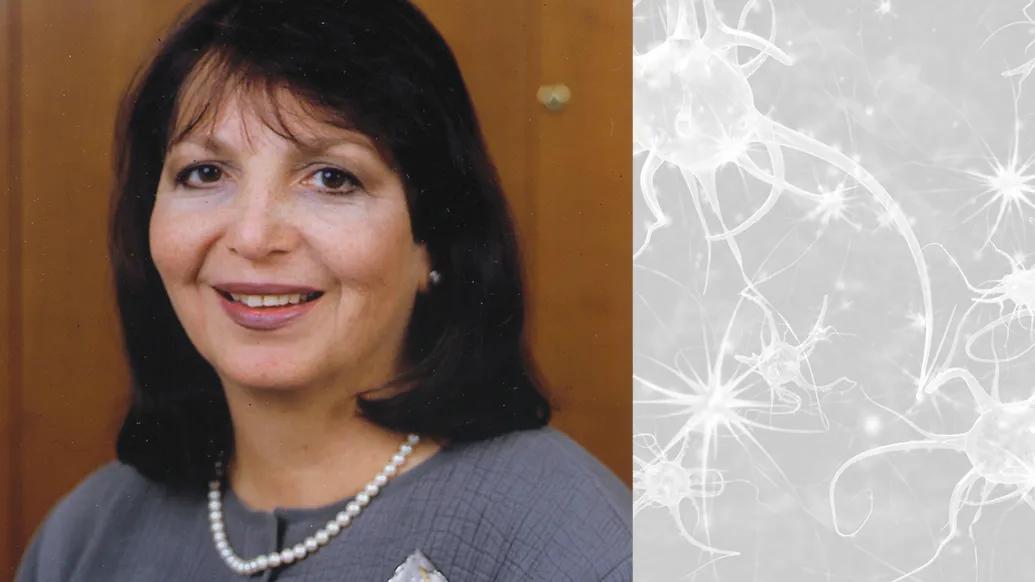
Call them the Brain Generation — the tens of thousands of college and graduate students working toward degrees in neuroscience. They've grown up in a time when exciting discoveries about the brain come out every day, fueled by a revolution in scientific tools. But they're worried about their futures in a time of tight research funding. That's why a team of senior neuroscientists has published a report about how neuroscience education must change to keep the discoveries coming, while also preparing students for paths beyond the traditional university research career.
Writing in the journal Neuron, the report's authors present key insights and recommendations from a 2014 workshop held by the Forum on Neuroscience and Nervous System Disorders of the National Academies of Sciences, Engineering and Medicine. Huda Akil, Ph.D., a University of Michigan Medical School neuroscientist who is the paper's corresponding author, says it's up to university programs to adapt to the new reality that more than half their graduates will someday work outside academia and train them appropriately.
"The number of opportunities is huge, within and outside academic institutions," says Akil, the Gardner Quarton Distinguished University Professor of Neurosciences in the Department of Psychiatry and co-director of the U-M Molecular and Behavioral Science Institute. "It's a perfect recipe for success — the question is how to proceed so we don't squash that opportunity."
The report points with hope to efforts made by U.S. federal research funding agencies to provide innovative funding for training. But authors say universities and other sectors must also change, at a time when many nations have launched massive neuroscience efforts such as the U.S. Brain Research through Advancing Innovative Neurotechnologies Initiative; China Brain; and the Human Brain Project in Europe.
"We need to be giving out hopeful signals that it's not a horrible risk to get a Ph.D. in neuroscience, and that you can make discoveries about the brain and apply them in many ways," says Akil. "Anyone smart enough, passionate enough and willing to be flexible and bring ideas together, we need them to stay with us."
Featured News & Stories
Doctors in the house: History of medical interns and residents at Michigan Medicine
Studying neurons using neurons
University of Michigan implants first-in-human Paradromics wireless brain-computer interface, designed to restore communication
Emergency EEG study suggests need for faster seizure diagnosis and care options

Helping an employee-turned-patient overcome a brain tumor