Saying Thanks for the Ultimate Gift to Medical Education

A unique ceremony at U-M helps medical students and others honor the body donors who teach them human anatomy.

1:00 PM

Author | Kara Gavin

Saying Thanks for the Ultimate Gift to Medical Education

One of the first people medical students meet in their journey to becoming a doctor is a teacher who can't speak, but still teaches more than any book ever could.

These teachers are the ordinary men and women who agree in life to donate their bodies after death so students can study human anatomy in its finest details. Around the country, thousands of such donors give this gift to education every year, and allow future doctors to explore the human body as preparation for careers of healing.

At the University of Michigan Medical School, students take time every year to recognize those donors in a unique ceremony filled with moving speeches and heartfelt musical performances. 

The families and friends of U-M's anatomical donors, as they're formally called, gather for the student-planned program, which includes medical, dental and biomedical engineering students who all learn anatomy from the donors.

The video above shows highlights from the 2015 memorial ceremony.

At this year's ceremony, medical student Kathryn Brown shared a letter she'd written to the person who donated the body she learned from in anatomy class.

"Donor, for the first time I am grasping the beauty that lies beneath the skin because you selflessly allowed us to see the beauty beneath yours," she wrote. "Like a good advisor, you've helped foster our dreams, confident that whatever we do will be worthy of your help. We won't let you down."

Brown wondered about what her donor did during life, about what their hands held and where their feet took them.

She ended, "At the end of the day, we learn the anatomy and physiology, but I think the most important thing you teach us is just how beautiful and incredible this thing we call life really is, and for that I thank you."

Learn more about the Anatomical Donations program at the U-M Medical School


More Articles About:

Med-U All Research Topics Hospitals & Centers Medical education Medical Students
Health Lab word mark overlaying blue cells

Health Lab

Explore thousands of health news & research stories by visiting the Health Lab homepage for more.

Media Contact

University Hospital at U-M Health in the spring with flowering trees in foreground and Survival Flight helicopter visible

Public Relations

Department of Communication at Michigan Medicine

[email protected]

734-764-2220

Stay Informed

Want top health & research news weekly? Sign up for Health Lab’s newsletters today!

Subscribe

Featured News & Stories

Blue and yellow illustration of DNA helix
Health Lab

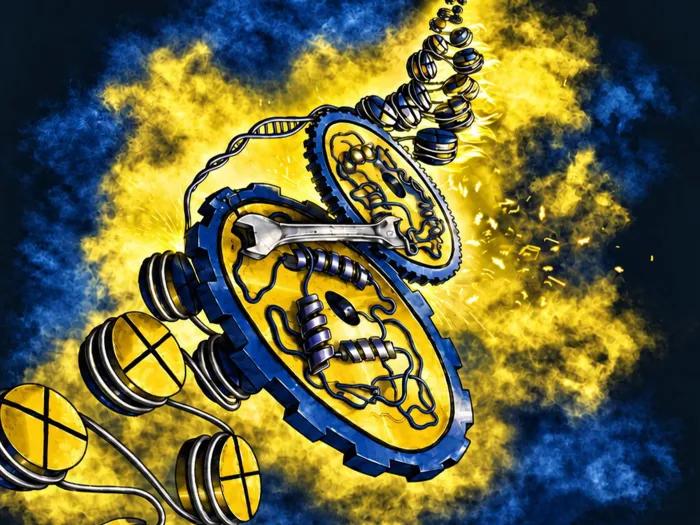
New anti-cancer strategy shows promise in preclinical studies
New cancer therapeutic strategy rewires protein interactions to improve efficacy and reduce potential side effects.
Closeup of newborn baby, whose head is held by a blue medical gloved hand. Blue gloved hand also holds a stethoscope to baby's chest.
Health Lab

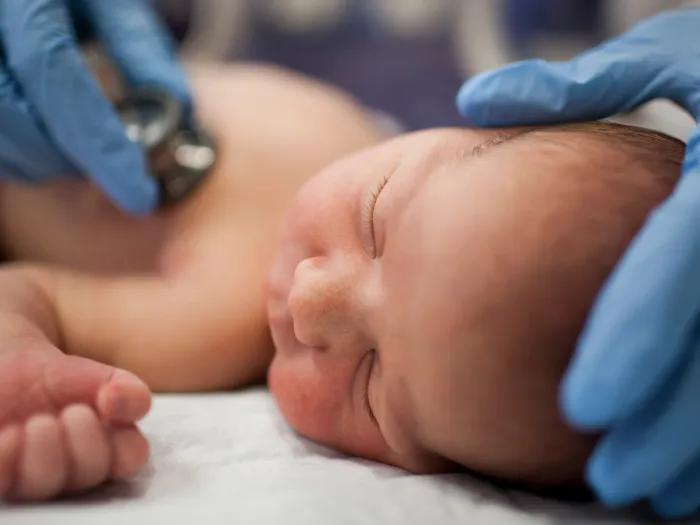
More babies with hypoplastic left heart syndrome surviving critical period between surgeries

Collaborative effort helped sustain improvements in survival for babies born with hypoplastic left heart syndrome (HLHS), a serious congenital heart condition that requires multiple surgeries.
Rachel Upjohn Building groundbreaking ceremony
News Release

How U-M helped bring depression out of the darkness
The history of the founding of the Eisenberg Family Depression Center at the University of Michigan, the nation's first center focused on research, community outreach and stigma reduction in depression and bipolar disorder.
UMich Med Mosaic on blue background with colorful geometric shapes
UMich Med Mosaic

Beyond the White Coat: Disability, Neurodiversity and Advocacy in Medical School
In this episode of UMich Med Mosaic, host Mackenzie Kay sits down with medical students Jill Maudlin, Sarah Renberg and Bella Johnson to discuss their experiences as disabled and neurodivergent trainees at the University of Michigan Medical School. They reflect on the personal journeys that led them to medicine, the challenges and strengths that accompany living with disabilities and chronic health conditions and the importance of representation within the medical profession. The conversation explores how disability shapes their approaches to patient care, advocacy and teamwork, as well as the role of the Medical Students for Disability Health Advocacy (MSDHA) organization in creating community and advancing accessibility initiatives. They also discuss Michigan’s accommodations in medical education, efforts to improve disability-related curriculum content and the importance of building a culture where disabled and neurodivergent students can thrive.
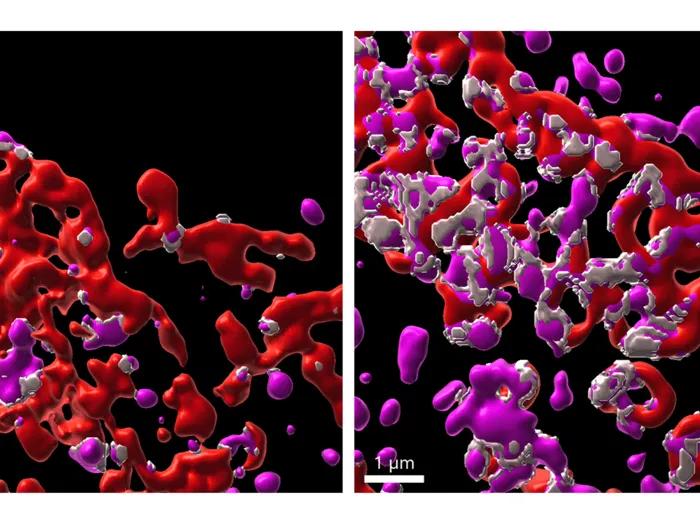
Perforin increases endosomal-mitochondrial contact sites in tumor cells. Left is without perforin; right has perforin.
Health Lab

Immune system protein is a cancer killer on its own, new study shows
New study finds perforin can kill cancer tumor cells even when major granzymes were missing.
Well-Being at Michigan Medicine with Dr. Elizabeth Harry
Well-Being at Michigan Medicine

Learning Together: Making Space for Growth at Work

What if well-being starts with how we learn together? On this episode of Well-Being at Michigan Medicine, Elizabeth Harry, M.D., is joined by Rajesh Mangrulkar, M.D., FNAP, Executive Director of U-M’s Center for Interprofessional Practice and Education (IPE), Executive Director of Michigan Medicine RISE (Research. Innovation. Scholarship. Education), and primary care physician of internal medicine whose work focuses on organizational leadership and innovation, and Johnny McGraw, M.A., Marketing & Communications Specialist for both RISE and IPE, about building teams through human connection, psychological safety and learning. They discuss a meeting practice, why leaders shape culture and how investments in collaboration can help health care teams work without asking people to carry everything alone.