Resident stories: Challenges and lessons learned caring for diverse, vulnerable populations in the ER
In-depth interviews with emergency department residents found not enough emphasis was placed on understanding and caring for diverse populations.
5:00 AM
Author |
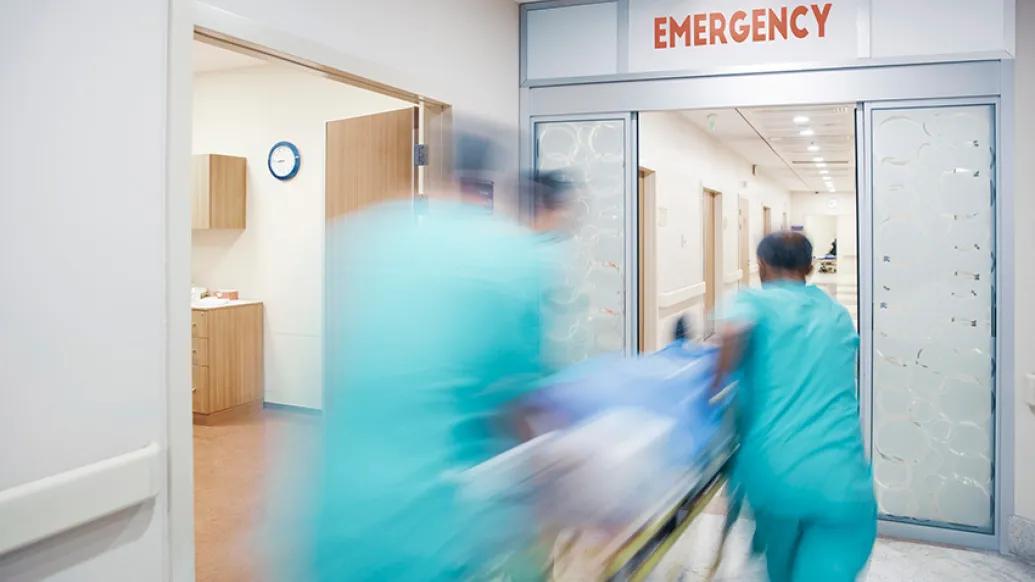
The clock is always ticking in the emergency room. A patient is rushed in with a condition that may be serious or life-threatening. Rapidly, the physician and staff must make decisions to keep the person alive.
In those moments, however, information about the patient is limited and relationships with them barely scratch the surface. This setting creates situations in which physicians may dismiss, or make assumptions about, patients from backgrounds that are not similar to their own, said Adrianne Haggins, M.D., assistant professor of emergency medicine at Michigan Medicine.
"You have so many things pulling you in different directions as an emergency physician, this can lead to miscommunications that affect the care you provide," Haggins said. "Despite requirements for all specialties to teach cultural competent care, the nature of emergency medicine and limited guidance by organizations makes delivering that education more difficult."
Haggins and a team of researchers interviewed 24 emergency residents from three different academic medical centers. They sought to understand how residents process caring for diverse patients or underserved communities, as well as the challenges they faced and lessons learned. All interviewees had experience training at an academic medical center, a suburban hospital and a low-resource public hospital.
Throughout the conversations, most residents emphasized the importance of their experiences and learning to deliver high-quality care to diverse populations, according to results published in AEM Education and Training Special Issue: Dismantling Racism with the Next Generation of Learners: Teaching Advocacy, Health Equity, and Social Justice.
"After spending time working at [these] sites, I feel like I can connect better culturally, linguistically with [the] patients," one resident said.
That skill was often shaped through modeling senior residents or faculty. With more diverse role models and teachers, many interviewees said they gained a deeper perspective and enhanced communication skills.
SEE ALSO: How One Doctor Aims to Combat Structural Racism in Medicine
"We have people with different sexual orientation, ethnicities [and religions] …that increases the odds of delivering good care because you just have a better understanding," a resident said. "Sometimes, if you don't have that supply or diverse experience [in the residency program], you can be missing out on the efficacy of your care."
Still, many of the residents did not feel their programs made enough effort to incorporate effective cultural competency education into the curriculum. These discussions often occur during medical school, but they taper off when you become a resident and are spending time caring for patients autonomously, Haggins said.
"If we want our residents to be high-quality doctors and perform at a level where they feel ready to care for diverse populations, we have to continue incorporating that within the teaching that we provide our residents," she said. "I am just not sure organizations are often equipped, through programming or faculty makeup, to properly have these discussions."
In the conversations, the research team urged residents to think of moments when their personal identity differed from a patient's and how that may have the affected care they provided.
One resident mentioned spending 15 minutes in a room with an affluent white patient, a person who closely matched their identity, compared to spending a few minutes with a less affluent Black patient presenting with a similar condition. Another noted their frustration when working with a patient who required a translator, worrying communication struggles may have resulted in less accurate care.
Several residents said their eagerness to work in underserved environments waned over time. They felt defeated – like they were not able to make the difference they envisioned.
"It became a repetitive thing that I leave my shifts very frustrated and being like, 'I didn't help anyone,'" one resident said. "It became just very frustrating for me in terms of [it being] hard to teach, educate and follow up. It almost felt like a broken system to me."
SEE ALSO: Addressing the Cumulative Cost of COVID-19 for Communities of Color
Haggins and her team saw this diminishing interest as a warning sign.
"If we continue to ignore this issue and simply expect residents to meet the goal of high-quality care for diverse populations without having more concrete discussions about race and its intersection with economics, social infrastructure and systemic racism, this might have lasting effects on who is willing to work with these populations and in low-resource areas," she said.
Participants told researchers they would benefit from more deliberate discussions on cultural competency, not necessarily meaning more lectures. Researchers found this to be an opportunity for programs to innovate and think of dynamic ways of engaging with the communities they serve.
"Community-based partnerships lead to more lasting, fruitful outcomes for our patients," Haggins said. "Moving forward, educators in emergency medicine should take insight from residents as a way to guide improvements to their training. Not addressing it in a more deliberate manner is potentially leading to errors in patient care. If emergency care is really going to be, 'anytime, anywhere, anyone,' we need to fill this gap."
Paper cited: "Untold Stories: Emergency medicine residents' experiences caring for diverse patient populations," AEM Education and Training Special Issue: Dismantling Racism with the Next Generation of Learners: Teaching Advocacy, Health Equity, and Social Justice. DOI: 10.1002/(ISSN)2472-5390

Health Lab
Explore thousands of health news & research stories by visiting the Health Lab homepage for more.
Media Contact

Public Relations
Department of Communication at Michigan Medicine
Stay Informed
Want top health & research news weekly? Sign up for Health Lab’s newsletters today!
Featured News & Stories

Court appointed medical guardian study reveals role in care of highly vulnerable older adults
What’s changing in Medicaid and what can you do?
Missed feedings in 10-day-old infant led to rare infantile botulism diagnosis
Michigan man undergoes complex heart repair after last minute surgery cancelation
Are you at risk of a genetic disease? Guidelines for testing should be updated, experts say