The reality of being rare
Living with a rare disease can be isolating, especially when doctors don’t know the condition exists in the first place. An endocrinologist says awareness and research are imperative
10:00 AM
Author |
This story was published on Feb. 28, 2020 and updated on Feb. 27, 2025.
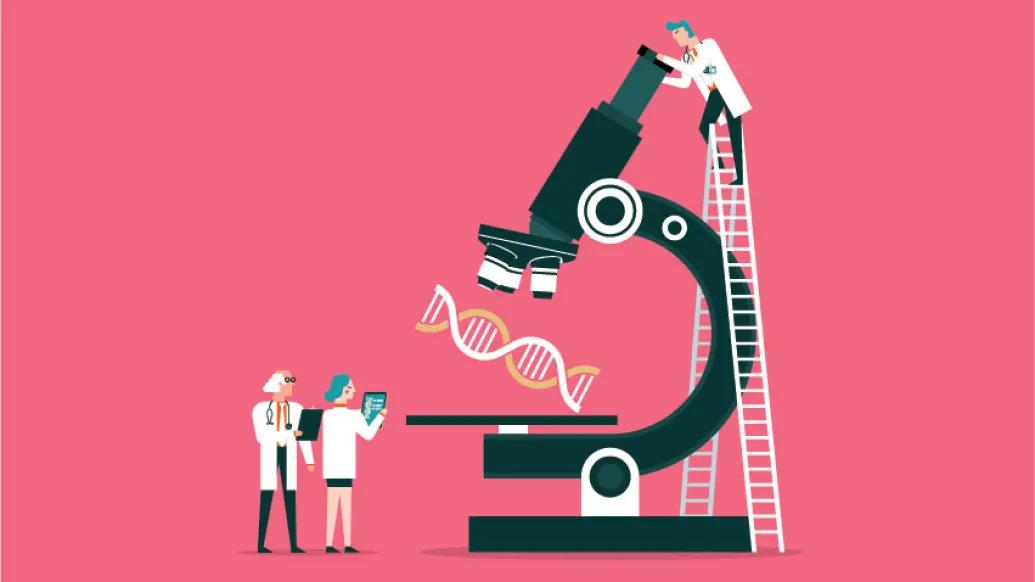
Say you're working on putting a puzzle together, but it's complicated with more than 1,000 puzzle pieces.
It's overwhelming, right?
But finding high contrast features on the pieces and putting those together may give you a clue as to what the whole picture looks like.
A human's genetic makeup is similar to this labyrinth.
Medical researchers who want to solve the puzzle may not know where to begin, especially if they're looking for the mechanism behind a rare disease.
They need to find those unique pieces in the DNA puzzle.
"The more we can learn about mechanisms of diseases, the more doors we open for affected patients. The more we educate ourselves about certain conditions, the more we can inform policy and improve someone's quality of life," said Elif Oral, M.D., an endocrinologist at Michigan Medicine.
Unfortunately, rare diseases don't often get the attention they need because, well, they're rare. According to the National Organization for Rare Disorders, a rare disease affects fewer than 200,000 people in the United States and the majority is children.
"People with rare diseases make up 8 to 9% of the population in North America, which doesn't sound like a large percentage but when you add all those people up, that's millions of people who, collectively, have thousands of diseases," Oral said.
For many of these diseases though, signs may be observed at birth or in childhood and result in death.
In fact, 30% of children with rare diseases won't live to see their fifth birthday and 35% of deaths in the first year of life are because of rare diseases.
This is a hopeful time in the study of rare diseases… We're on the brink of a revolution.
Those with diseases that aren't fatal often spend years going from doctor to doctor getting different tests done to try and figure out what's going on, if there isn't a specialist available. It can be difficult for a doctor to diagnose a disease if they haven't seen or heard of it before, which can lead to frustrated or discouraged patients.
Having a rare disease that makes you stand out, whether affecting your physical appearance or how you're able to interact with others, can be depressing.
Living in the unknown about what it is that made that person different can add an emotional burden.
This is why in 2008, Rare Disease Day was established by EURODIS and is celebrated the last day of February every year.
The goal is to raise awareness of rare diseases, connect those affected across the globe, inspire research and educate decision makers.
"Discovering disease mechanisms can lead to breakthroughs and novel treatment pathways," Oral said.
"Only 450 of 7,000 rare diseases have specific or certified therapies. We must recognize the importance of finding these treatments."
She adds that understanding the mechanism for the disease may provide information that has implications for common chronic diseases as well, like diabetes.
Deep gene sequencing may also lead a researcher to making a discovery that opens an opportunity for drug repurposing or applying an available drug for treating a condition different from the original treatment purposes.
And because most rare diseases are genetic, according to Oral, genetic testing is important for a family that may want to be aware of carrier status for current family members, as it may influence further family planning decisions.
For all of these reasons, Oral, together with the Michigan Medicine NORD Center of Excellence, organized a symposium dedicated to recognize rare diseases which took place February 28, 2025.
The center is co-directed by Catherine Keegan, M.D., Ph.D., a professor of pediatric genetics and Elizabeth Ames, M.D., Ph.D., a clinical assistant professor of pediatric genetics.
"This is a hopeful time in the study of rare diseases. We have technology that can look at the differences in our genome very deeply, and also at tissues for the expression of those genes. It's quicker and at a much lower cost than before," Oral said.
"We're on the brink of a revolution."

Health Lab
Explore thousands of health news & research stories by visiting the Health Lab homepage for more.
Media Contact

Public Relations
Department of Communication at Michigan Medicine
Stay Informed
Want top health & research news weekly? Sign up for Health Lab’s newsletters today!
Featured News & Stories
Are you at risk of a genetic disease? Guidelines for testing should be updated, experts say
Study reveals why a rare mutation behind Dravet syndrome is so deadly
Small Pauses, Bigger Impact: Mindfulness in Action

Major Changes to Medicaid

Sports gambling on the rise among college students