5 ways to manage politically induced stress
No matter where you fall on the political spectrum, a psychiatrist offers strategies for how to be mindful of depression and anxiety symptoms around the topic
11:05 AM
Originally published 2019; updated in November 2024 and 2026
No matter what your political beliefs or affiliations, it's safe to say all Americans are now living through a unique moment in our nation's history. Recent years have brought daily headlines about political turmoil that have added to the intense feelings that many people already feel around any major election such as this year's midterm elections.
News about politics -- and misinformation and disinformation shared by those trying to sway voters -- can cause distress no matter what someone's ideology is.
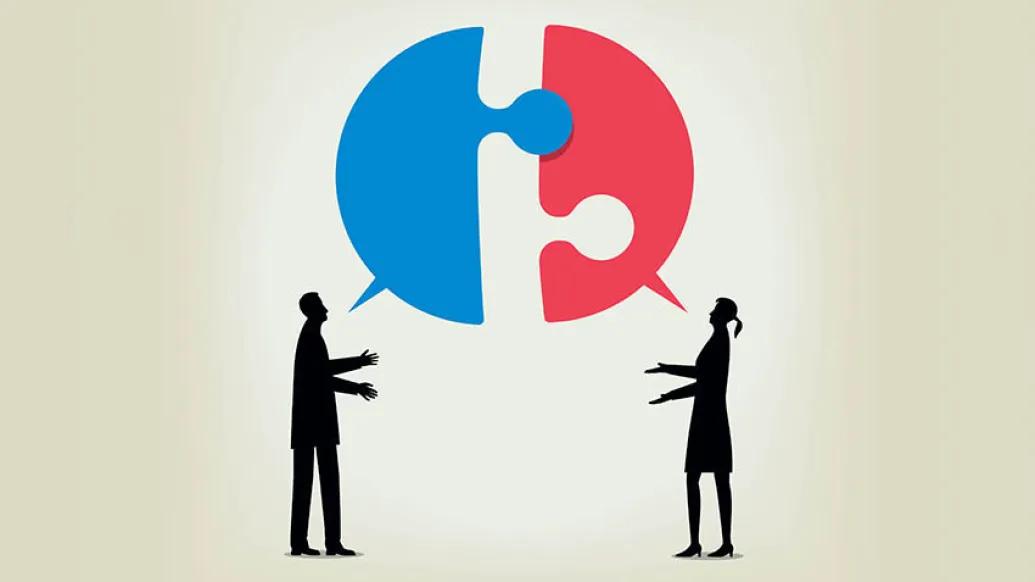
And then there's the distress of trying to come to terms with friends or family members who hold opposing views.
Even apolitical Americans may experience second-hand stress from the constant exposure to all of it, thanks to 24/7 news and social media cycles.
Even after polls close, there's the potential for days to pass before some races are officially called, and for legal challenges and competing claims to drag out for weeks.
Signs of political fatigue
"Given this political climate, I hear from patients who even say they're changing plans to avoid meeting with friends or family members who have differing views," said Michelle Riba, M.D., M.S., a Professor in the U-M Department of Psychiatry and member of the University of Michigan Eisenberg Family Depression Center.
Riba acknowledges the challenges of such conversations or online interactions, or just living in a politically saturated environment, especially in a "swing state" like Michigan.
She says many may not realize how this might affect their health.
Signs that you're overloaded and overwhelmed by political content, or national and world events, include:
- A higher blood pressure than usual
- Anxious or worried feelings
- Drastic mood changes
- Sleep struggles
- Increased use of substances (caffeine, sugar, alcohol, nicotine, cannabis, other)
If you or someone you know is experiencing these symptoms, Riba says that they shouldn't be ignored. If allowed to persist, they could take a serious toll on a person's well-being.
It may be a coincidence, but the first Wednesday of November, which often falls after major elections, also happens to be National Stress Awareness Day.
Fortunately, there are proven ways to combat stress of all kinds, whether caused by politics or something else.
Because nature is a key source of stress relief, U-M has scheduled its Nature Rx Day for the day after this year's election, with free in-person and online events that are open to the public.
Stress is a key contributor to depression risk, which is why the Eisenberg Family Depression Center emphasizes it in its newly updated toolkit for the public, with tips for stress management and relaxation and mindfulness.
5 ways to reduce politically induced stress
"I'm not a politician, but I want to be able to help my patients," said Riba. "If it's important to my patients, it's important to me."
Here she offers five ways you can be more thoughtful about what you're consuming and exposing others to:
1. Be aware of how much time you spend engaging with political content
Do you wake up and turn on the television to watch the morning news? Do you listen to radio commentary on your commute to work? Do you follow politicians and politically outspoken people on social media and check your feeds often?
"Think about how this content makes you feel when you consume it," said Riba. "If it makes you anxious or depressed, figure out from what sources you can cut the intake from."
Time spent engaging with political content should feel like quality time. Riba suggests limiting content to fact-based, reputable or primary sources, like national news outlets and fact-checking services.
This kind of intake may personally feel more valuable than reading the constant highlights from trending topics or online discussion groups aimed at people with particular views or affiliations.
Also remember that good sleep helps you handle stress. If you're tempted to stay up late on Election Day to wait for election results, remember that it can take time for officials to certify the results of races, especially when the results are close.
Speculation and misinformation can creep into the void until official results are available, and being exposed to false claims or repeating rumors can cause harm.
2. Be mindful of your surroundings when sharing opinions or speculations
How do you talk about politics in the home, at work or with friends? While educating or sharing thoughts on a certain political topic may promote engaged citizenship, it can also negatively affect bystanders.
On the other hand, during a stressful or difficult time, children in the home may benefit from adult oversight or guidance.
Some children may be struggling to understand the current political climate. If you sense your child or one who lives with you or is visiting is one of them, this may be a great opportunity to have an engaging, balanced conversation about current events.
But remember, "never make assumptions about other people, even your friends and family," said Riba. "They might not think or feel the way you do, so when you start a political discussion, potentially causing tension or bringing up uncomfortable feelings."
Even for like-minded, politically-engaged individuals, be conscious that the other person may be trying to limit the amount of political exposure they're having right now.
3. Be open to learning about other points of view
Imagine you're at a gathering with relatives and someone brings up politics. What may initially cause dread can be reframed as an educational opportunity.
There are reasons why people feel the way they do about certain issues or people, and someone may not ever know why unless they ask and are ready to listen. That interaction may also bring up a topic or person the other wants to learn more about.
"If you're not familiar with something brought up, ask questions about it, and where they learned that from or why that's important to them," said Riba.
Anticipating differences in opinions, as opposed to assuming those close to you think the same way you do, can help prepare yourself for difficult conversations and save yourself from the disenchantment.
Balanced, respectful discussions with others can help give someone an understanding of "the other side" Riba said. Being armed with facts and a greater understanding, subsequently, can help reduce political stress.
4. Step away from conversations
If the conversation at a gathering becomes one that makes you uncomfortable, Riba suggests a change in subject or taking a few minutes away from the table to preoccupy your mental space with something else.
"Maybe there's dishes that could be washed, or a sports or movie topic you could change the subject to, or you could excuse yourself to go for a walk," said Riba. Slipping away without making a parting comment is probably best.
5. Self-assess your interest - and the interest of the places you're getting your information
"If you want to be politically active or engaged, be proactive," said Riba. "Be cognizant of the physical and mental health effects it has on your body and what your motivations are for being engaged."
Assess why you consume political content, how much you consume, where you consume it from and how it makes you feel.
Maybe you're engaged with politics because you live with someone who never turns off the news. Maybe you're following a policy change because it's connected to a cause you're passionate about, or to your line of work.
But don't forget that social media and news platforms are fighting to keep your attention focused on them, as part of their business model. It can take a concerted effort to rip yourself away, but it's important to get the information you need most, and then detach.
"While it's important to be aware of what's going on in our country and the world, you need to take care of yourself and your mental health too," Riba said.
Quick ways to fight the effects of political stress:
No matter what the circumstance, the same exercises that stress experts recommend for stressed-out people can work for people experiencing politics-related stress:
- Box breathing: Breathe in for a few seconds, hold for a few seconds, breathe out for a few seconds, and hold for a few seconds before breathing in again.
- The 54321 exercise: Sitting or standing wherever you are, take a moment to notice and name out loud or to yourself five things you can see right now, four things you can touch, three things you can hear, two things you can smell and one thing you can taste.
- Calm breathing: Also called diaphragmatic breathing, this is a 10-minute exercise; the Depression Center offers a guide here.
- Progressive muscle relaxation: Stress is often stored in tensed muscles; this 10-minute exercise helps anyone notice and release that tension one muscle group at a time. The Depression Center offers a guide here.
- A movement or stretch break: Especially if you spend a lot of time in front of screens, where political content can pop up or be easy to access at any time, remembering to get up and stretch or move is important. U-M's MHealthy team has created brief videos with ideas for quick movement breaks.
Important note:
If you or someone you're in contact with have been feeling hopeless or even suicidal for any reason including the results of an election, it's crucial to get help.
Don't shy away from discussing how you are feeling or asking someone else if they want to talk or need help. If you sense that someone you know is not doing well, stay in touch or reach out repeatedly to show you care.
For urgent or life-threatening situations, contact the National Suicide & Crisis Lifeline by calling or texting 988, or clicking the link and using the chat function. You can contact the Lifeline on behalf of yourself or someone else, to reach a trained counselor and access information on local resources. Lifeline services for veterans, and for people who speak Spanish or other languages, or are Deaf or hard of hearing, are available.
Originally written by Jordyn Imhoff. Updated by Kara Gavin

Health Lab
Explore thousands of health news & research stories by visiting the Health Lab homepage for more.
Media Contact

Public Relations
Department of Communication at Michigan Medicine
In This Story

Michelle B Riba
Clinical Professor
Related

How Does Political News Affect Moods? New Study in Young Doctors Shows Real-time Effects
Survey: Months After the Election, Young People Still Feeling Stress and Anxiety
Stay Informed
Want top health & research news weekly? Sign up for Health Lab’s newsletters today!
Featured News & Stories

Sports gambling on the rise among college students

How U-M helped bring depression out of the darkness

Giving Voice to Lived Experience in Dementia Research

Exploring the mind’s mysteries: 130 years of mental health care & innovation at U-M

Small daily activities may help ease dementia caregivers’ stress