Treating Hypothyroidism to Stop a Stubborn Surgical Complication
For the first time, researchers have linked radiation-damaged thyroid glands to poor surgical outcomes. The solution may be as simple as a common hormone supplement.
7:00 AM
Author |
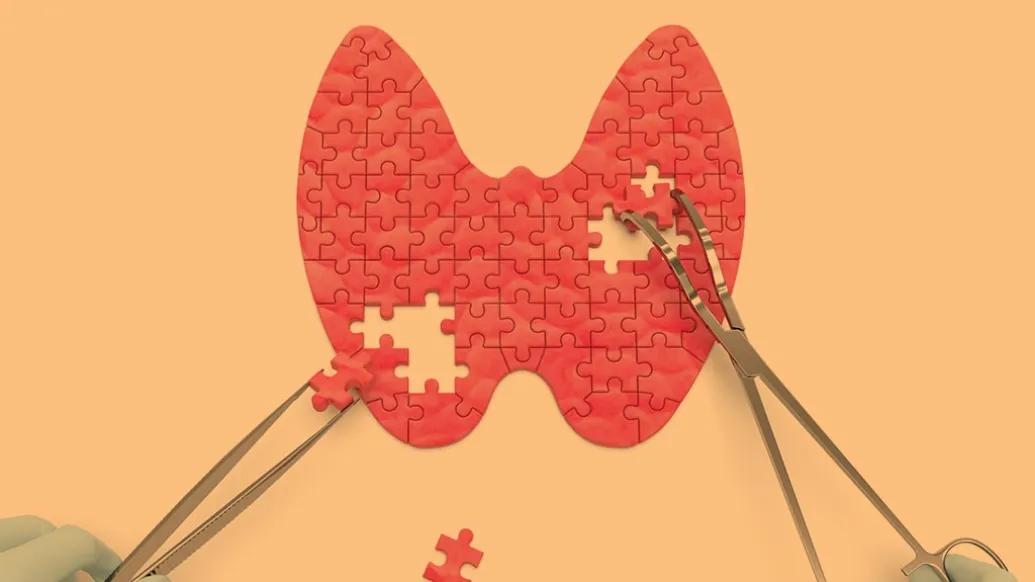
Researchers at the University of Michigan have discovered a link between low thyroid hormone levels and wound healing complications.
MORE FROM THE LAB: Subscribe to our weekly newsletter
The retrospective study looked at 182 patients with laryngeal squamous cell carcinoma who were first treated with radiation, but ultimately required a total laryngectomy, or removal of the voice box. The research published in the Annals of Surgical Oncology.
One of the common complications after this surgery is a fistula, or a leak of saliva from the throat into the neck. Forty to 50 percent of patients experience this disconcerting complication, which can lead to longer hospital stays and delays in being able to speak and swallow after surgery.
Researchers have tried to understand this problem for years, testing theories about blood count and nutritional status, and even rebuilding the throat with grafts from the leg or chest to support the tissue during healing. But the fistula rate remained high.
A team at Michigan Medicine took a new approach.
"We know that thyroid function is important, and that patients who are treated with radiation to the head and neck have a high risk of having low thyroid function," says study author Andrew Rosko, M.D., an otolaryngologist at Michigan Medicine. "We wanted to look at this group of patients and look at their thyroid hormone function after surgery and see how that related to how they healed."
The "aha moment"
What they found was that hypothyroid patients, or those with low thyroid function, had nearly four times the risk of fistula formation than those who had normal thyroid function. As the level of hypothyroidism increased, so did the corresponding risk of fistula formation and the need for another operation.
SEE ALSO: The Best Treatment for Laryngeal Cancer? This Approach Helps Decide
This study is the first to show the role of hypothyroidism as a predictor for these types of wound complications.
"This was our big aha moment," says senior author and otolaryngologist Matthew Spector, M.D. "The applicability is pretty obvious. You can give a thyroid hormone supplement to patients and it may decrease their rate of fistula and improve their wound healing in the postoperative period. And that adds less hospitalization, better utilization of hospital costs. Everything would get better from this."
Testing in patients
The team is now prospectively identifying patients for a trial to prove this theory.
"We have a trial that's ongoing that's doing very well," says Rosko. "We are treating patients after this surgery with thyroid hormone and we're seeing a reduction in fistulas."
Rosko and Spector see this as a game changer.
"You could say any surgery a patient would ever get after head and neck radiation should have thyroid hormone afterward," Spector says. "Today, almost every surgery gets antibiotic prophylaxis to prevent infection. We figured that out a long time ago. Now we're saying if you've had head and neck radiation, and your thyroid function is compromised, we're going to give you levothyroxine during your knee operation because we want to be sure you're going to be able to heal the wound properly."
Rosko says this was a simple and easy solution that was "just kind of staring at us."
"And thyroid hormone is very cheap," he says. "It's very well tolerated. It's just replacing what your body makes but just isn't making quite enough of in this situation."

Health Lab
Explore thousands of health news & research stories by visiting the Health Lab homepage for more.
Media Contact

Public Relations
Department of Communication at Michigan Medicine
Stay Informed
Want top health & research news weekly? Sign up for Health Lab’s newsletters today!
Featured News & Stories
Weight loss and surgery restore patient’s throat after near-death brush with likely COVID
Research may help better predict outcomes in kids with congenital cytomegalovirus
Human ability to focus on specific sounds not found to originate in auditory nerve, brainstem

U-M Health’s Ann Arbor hospitals recognized as No. 1 in Michigan, among best in nation by U.S. News & World Report
Uncovering the link between a common congenital viral infection and autism