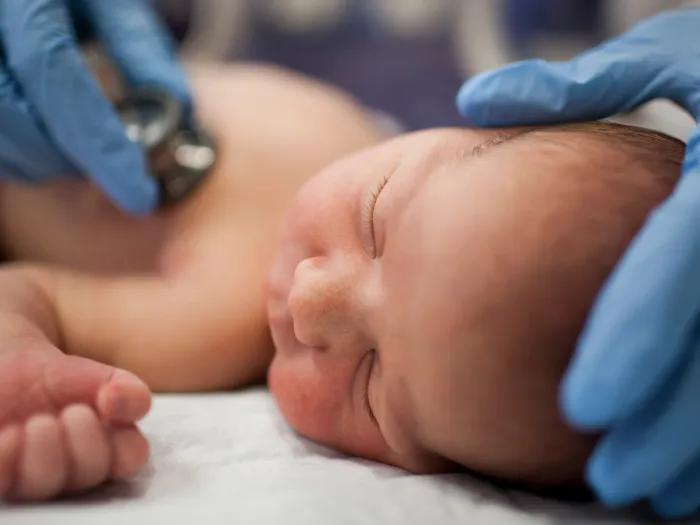
Spinal fluid sampling used to track treatment response in pediatric glioma
Findings suggest this method could provide data about tumors sooner than MRIs alone.
5:00 AM
Author |

Treatment for glioma has long relied on MRI imaging to track tumor markers and treatment response. But findings from a team at the University of Michigan Rogel Cancer Center, led by Carl Koschmann, M.D., pediatric neuro-oncologist at University of Michigan Health C.S. Mott Children's Hospital and researcher with the Chad Carr Pediatric Brain Tumor Center, suggest a new method could provide additional data about tumor markers before changes appear on an MRI, indicating possible strategies to help clinicians address this aggressive form of cancer. The recent study appeared in Neuro-Oncology.
As part of a phase 1, multi-site clinical trial, Koschmann's team collected cerebrospinal fluid and plasma from patients with Diffuse Midline Glioma, or DMG, through blood draws and lumbar punctures over many months, collecting hundreds of samples. They wanted to track changes in cell-free tumor DNA as patients received treatment concurrent with the clinical trial.
"We examined DNA floating in the plasma and CSF at various points in treatment and used a very sensitive machine called digital droplet polymerase chain reaction (ddPCR) to assess the fraction, called a variant allele fraction (VAF), of mutated DNA versus non-mutated," Koschmann said.
A higher VAF indicates more mutant DNA. Koschmann's team found that patients whose allele fraction went down after receiving the drug in the clinical trial took longer for the tumor to grow larger or relapse, data consistent with the team's expectations.
But the findings from the CSF also revealed a marker that hadn't been shown in this kind of study before, one that couldn't be found relying on MRI imaging alone.
"When the treatment wasn't working and tumors were growing, as captured on an MRI, that didn't always correlate with the VAF rising and the tumor DNA getting worse," said Evan Cantor M.D., first author of the study who performed work at U-M and is now a pediatric neuro-oncology fellow at Washington University. "More often, we saw a spike in the allele fraction in the tumor DNA before the tumor grew, on average about three to four months before."
Koschmann explains that this is the first study of its kind to collect serial CSF in a clinical trial for any type of glioma. "It is very clear that DNA in the CSF can provide a lot of new information about the state of the tumor," he said.
The method falls under the genre of liquid biopsy, which Koschmann describes as an exciting new space in cancer care. For some types of cancer like leukemia, testing blood and bone marrow samples allows patients and physicians to follow the status of the disease and offers a thorough sense of treatment response. But for solid tumors, especially brain tumors, access to multiple metrics to measure tumor growth or response is not possible.
"If you were to come into the clinic right now with a high-grade brain tumor, we'd take an MRI and then make inferences from that imaging about how things are going. But there's a lot of handwaving about what it means, because it's the only piece of data we have about how things are going," Koschmann said.
As these findings suggest, knowing that the increase in the allele fraction proceeds tumor growth, discovered through serial CSF sampling, could inform clinicians about different treatment needs much sooner than if only referencing MRIs. "As a patient or patient family member, you don't want to wait until the MRI worsens to change course," Koschmann said. "Having early information that you might need to adjust treatment is very valuable."
This study was conducted as an exploratory arm of a multisite phase 1 clinical trial across 15 institutions for pediatric patients with midline glioma tumors who have about a 12 to 18 month survival rate. Patients received a promising experimental therapy called ONC201 over the course of months and, in some cases, years.
Koschmann shared the findings from this study with the principal investigators planning the follow-up phase 2 clinical trial with ONC201 through the Pacific Neuro-Oncology Consortium (PNOC). Based on this, the investigators made serial spinal fluid collection standard for every patient on the clinical trial. Koschmann explains that this is one step closer to gathering enough data to see if this method can be integrated into future treatment options.
"If this study validates our early findings, we should be ready to make this part of routine clinical care for patients with DMG even off trial. By rolling this out at trial sites across the country, were pressing the gas pedal on bringing this test to the clinic."
Paper cited: "Serial H3K27M cell-free tumor DNA (cf-tDNA) tracking predicts ONC201 treatment response and progression in diffuse midline glioma," Neuro-Oncology. DOI: 10.1093/neuonc/noac030
Funding was provided by NIH/NINDS (K08-NS099427; R01-NS119231; R01NS124607; R01NS110572); Department of Defense (CA201129P1); the University of Michigan Chad Carr Pediatric Brain Tumor Center; the ChadTough Defeat DIPG Foundation; the DIPG Collaborative; Catching Up With Jack; The Pediatric Brain Tumor Foundation; Prayers from Maria; Yuvaan Tiwari Foundation; The Morgan Behen Golf Classic; and the Michael Miller Memorial Foundation. Clinical Trial was supported by Chimerix.
Like Podcasts? Add the Michigan Medicine News Break on iTunes, Google Podcasts or anywhere you listen to podcasts.

Health Lab
Explore thousands of health news & research stories by visiting the Health Lab homepage for more.
Media Contact

Public Relations
Department of Communication at Michigan Medicine
Stay Informed
Want top health & research news weekly? Sign up for Health Lab’s newsletters today!
Featured News & Stories

After 13 years of IV nutrition, teen finds freedom to just be a kid
A gift for Michigan’s most vulnerable babies
Updated prostate cancer screening guidelines emphasize benefits of early detection
From 20 seizures a day to more time for play: How personalized epilepsy care helped young patient
New anti-cancer strategy shows promise in preclinical studies