Repurposing Tocilizumab in Scleroderma Patients May Prevent Early Lung Disease
A phase 3 clinical trial finds an anti-inflammatory drug used in rheumatoid arthritis can preserve lung function in patients with systemic sclerosis.
1:13 PM
Author |
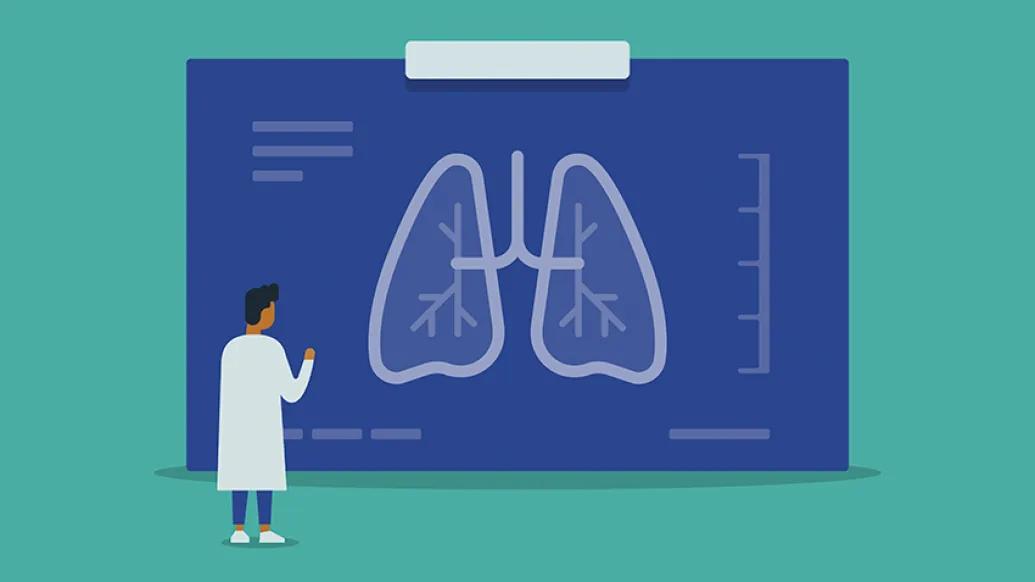
Research led by Michigan Medicine's Scleroderma Program and published in Arthritis & Rheumatology found that tocilizumab, a FDA-approved anti-inflammatory drug used to combat rheumatoid arthritis, can prevent lung disease in patients with systemic sclerosis if detected early enough in the disease course.
Systemic sclerosis is an autoimmune disease and the most serious form of scleroderma, the tightening and thickening of the skin. It can affect internal organs and lung disease is its leading cause of death, according to study author Dinesh Khanna, M.B.B.S., M.Sc., director of Michigan Medicine's Scleroderma Program.
"Some people have minimal lung disease; some people have life-threatening disease. The amount of lung scarring plays a major factor in those health outcomes," says Khanna. "When used in patients early in their disease course, those that usually have had the disease five years or less, our study found that tocilizumab preserved lung function over the course of 48 weeks."
When left undiagnosed and untreated, patients with systemic sclerosis can suffer a rapid decline in lung function. And unfortunately, this lung disease is irreversible.
Khanna's research, referred to as the focuSSced trial, was a phase 3, randomized placebo-controlled trial seeking to understand the impact of tocilizumab on lung function preservation in patients with mild, moderate and severe amounts of lung scarring.
"We also wanted to learn more about who would benefit the most from tocilizumab intervention," says study author David Roofeh, M.D., a new member of Michigan Medicine's Scleroderma Program. "Surprisingly, it didn't matter how much lung scarring the patient had or what percentage of the lung was involved in this population. They all reacted the same."
The research team found that of the 210 trial participants, tocilizumab treatment over the course of 48 weeks, compared to the placebo, stabilized forced vital capacity, which is the total amount of air exhaled during forced breathing.
According to Roofeh, this test, the FVC test, is the most important measurement of lung function.
Surprisingly, it didn't matter how much lung scarring the patient had or what percentage of the lung was involved in this population. They all reacted the same.David Roofeh, M.D.
Khanna and Roofeh's work suggests there's a window of opportunity for a select group of patients with systemic sclerosis where the anti-inflammatory drug can halt or prevent irreversible lung damage.
And the FDA agrees, just recently approving tocilizumab for slowing the rate of decline in lung function in adult patients with systemic sclerosis-associated interstitial lung disease. However, more research is needed to better understand this complex illness.
"This cohort of patients was carefully selected to represent those with highly inflammatory disease characteristics. More research is needed in clarifying if other patient demographics may respond to this type of therapy, perhaps earlier in the disease process," says Khanna. "Careful delineation of which patient and disease factors predict response may help improve disease outcomes for more than the select population studied here."
When asked what Khanna and Roofeh hope other health care providers take away from their work, the call was clear: screen, diagnose and treat patients early.
"Historically, a provider would wait to treat someone until they showed signs of illness," says Khanna. "I hope this data suggests a possible paradigm shift in terms of treatment for these patients, providing an option of early detection and secondary-prevention, identifying the disease in the subclinical state, rather than later trying to reduce the impact of clinically significant disease."
Roofeh was supported by the NIH/NIAMS T32 grant (AR007080). Khanna was supported by the NIH/National Institute of Arthritis and Musculoskeletal and Skin Diseases (K24-AR-063129 and 1R01-AR070470-01A1).
Conflict of interest: During the conduct of the study, Khanna reports grants and/or personal fees from Bristol Meyer Squib, NIH, Immune Tolerance Network, Bayer, Bristol Meyer Squib, Horizon, Pfizer, Acceleron, Acetlion, Amgen, Blade Therapeutics, Boehringer Ingelheim, CSL Behring, Corbus, Cytori, Galapagos, Genentech/Roche, GSK, Merck, Mitsubishi Tanabe Pharma, Regeneron, Sanofi-Aventis, United Therapeutics, Impact PH, Eicos Sciences, Inc. and CiviBioPharma/Eicos Sciences, Inc.
Paper cited: "Tocilizumab Prevents Progression of Early Systemic Sclerosis Associated Interstitial Lung Disease," Arthritis & Rheumatology. DOI: 10.1002/art.41668.

Health Lab
Explore thousands of health news & research stories by visiting the Health Lab homepage for more.
Media Contact

Public Relations
Department of Communication at Michigan Medicine
Stay Informed
Want top health & research news weekly? Sign up for Health Lab’s newsletters today!
Featured News & Stories

Court appointed medical guardian study reveals role in care of highly vulnerable older adults

What’s changing in Medicaid and what can you do?

Intermittent fasting can reverse diabetes in mice, study finds

Are you at risk of a genetic disease? Guidelines for testing should be updated, experts say

Study reveals why a rare mutation behind Dravet syndrome is so deadly