Patient deterioration predictor could surpass limits of traditional vital signs
The technology developed at the University of Michigan continuously uses data from a single electrocardiogram lead.
9:58 AM
Author |
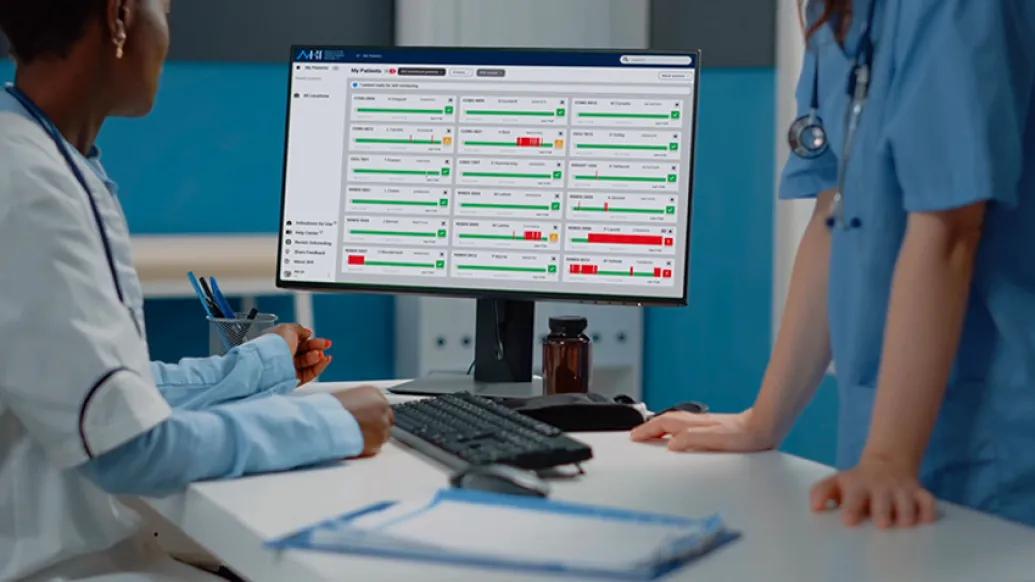
An artificial intelligence-driven device that works to detect and predict hemodynamic instability may provide a more accurate picture of patient deterioration than traditional vital sign measurements, a Michigan Medicine study suggests.
Researchers captured data from over 5,000 adult patients at University of Michigan Health with the Analytic for Hemodynamic Instability. Developed at the U-M Weil Institute for Critical Care Research and Innovation, AHI is a software as a medical device designed to detect and predict changes in hemodynamic status in real-time using data from a single electrocardiogram lead. The researchers compared the results against gold standard vital sign measurements of continuous heart rate and blood pressure measured by invasive arterial monitoring in several intensive care units to determine if the AHI could indicate hemodynamic instability in real-time.
SEE ALSO: New Technology Predicts ICU Need for COVID-19 and General Ward Patients
They found that the AHI detected standard indications of hemodynamic instability, a combination of elevated heart rate and low blood pressure, with nearly 97% sensitivity and 79% specificity. The results are published in Critical Care Explorations (a Society of Critical Care Medicine journal).
The findings suggest that the AHI may be able to provide continuous dynamic monitoring capabilities in patients who traditionally have intermittent static vital sign measurements, says senior author Ben Bassin, M.D., director of the Joyce and Don Massey Family Foundation Emergency Critical Care Center, also known as EC3, and an associate professor of emergency medicine at U-M Medical School.
Like Podcasts? Add the Michigan Medicine News Break on Spotify, Apple Podcasts or anywhere you listen to podcasts.
"AHI performs extremely well, and it functions in a way that we think may have transformative clinical utility," Bassin said. "Most vital signs measurements are static, subject to human error, and require validation and interpretation. AHI is the opposite of that. It's dynamic, produces a binary output of 'stable' or 'unstable,' and it may enable early martialing of resources to patients who may not have been on a clinician's radar."
Traditional vital signs have limitations, including limited accuracy in non-invasive monitoring and the fact that patients who are not at obvious risk for immediate deterioration may only be monitored periodically every 4-6 hours or longer. The AHI, which was approved by the United States Food and Drug Administration in 2021 and is licensed to Fifth Eye, Inc. (a U-M spinoff), was designed to address those limitations.
SEE ALSO: Why Timely Referrals Are Vital for Heart Failure Patients
"The vision of AHI was born out of our continued inability to identify unstable patients and to predict when patients would become unstable, especially in settings where they cannot be intensively monitored, said co-author Kevin Ward, M.D., executive director of the Weil Institute and professor of emergency medicine and biomedical engineering at Michigan Medicine.
"AHI is ideally suited to be utilized with wearable monitors such as ECG patches, that could make any hospital bed, waiting room or other setting into a sophisticated monitoring environment. The implication of such a technology is that it has the potential to save lives not only in the hospital, but also at home, in the ambulance and on the battlefield."
Researchers say future studies are needed to determine if AHI provides clinical and resource allocation benefits in patients undergoing infrequent blood pressure monitoring. The next phase of research will focus on how AHI is used at Michigan Medicine.
Live your healthiest life: Get tips from top experts weekly. Subscribe to the Michigan Health blog newsletter
Headlines from the frontlines: The power of scientific discovery harnessed and delivered to your inbox every week. Subscribe to the Michigan Health Lab blog newsletter
Additional authors include Florian F. Schmitzberger, M.D., M.S., Ashley E. Hall, M.D., Morgan E. Hughes, R.N., B.S.N., all of Michigan Medicine, and Ashwin Belle, Ph.D., Bryce Benson, Ph.D., of Fifth Eye, Inc.
Disclosures: The study referenced in this article was funded by Fifth Eye, Inc., and supported by the Max Harry Weil Institute for Critical Care Research and Innovation.
Kevin R. Ward, M.D., is an inventor of the AHI technology, which is patented through the University of Michigan and licensed to Fifth Eye, Inc. Two co-authors are employees of Fifth Eye, Inc. Ward has equity in Fifth Eye, Inc. The remaining authors have disclosed they have no potential conflicts of interest.
Paper cited: "Detection of Hemodynamic Status Using an Analytic Based on an Electrocardiogram Lead Waveform," Critical Care Explorations.
DOI: 10.1097/CCE.0000000000000693

Health Lab
Explore thousands of health news & research stories by visiting the Health Lab homepage for more.
Media Contact

Public Relations
Department of Communication at Michigan Medicine
Stay Informed
Want top health & research news weekly? Sign up for Health Lab’s newsletters today!
Featured News & Stories

The AI is listening: Implications of machine generated clinical notes on health care
Many hospitals still don’t do enough to prevent UTIs from catheters

Digital alerts support timely treatment decisions of critically ill cardiac patients

What’s changing in Medicaid and what can you do?

Rabies is on the rise: Experts offer advice