
P53 could be key to therapies for salivary gland cancer
Mouse models show that activating a non-mutated form of the gene could lead to developing therapies for this deadly form of cancer.
11:11 AM
Author |
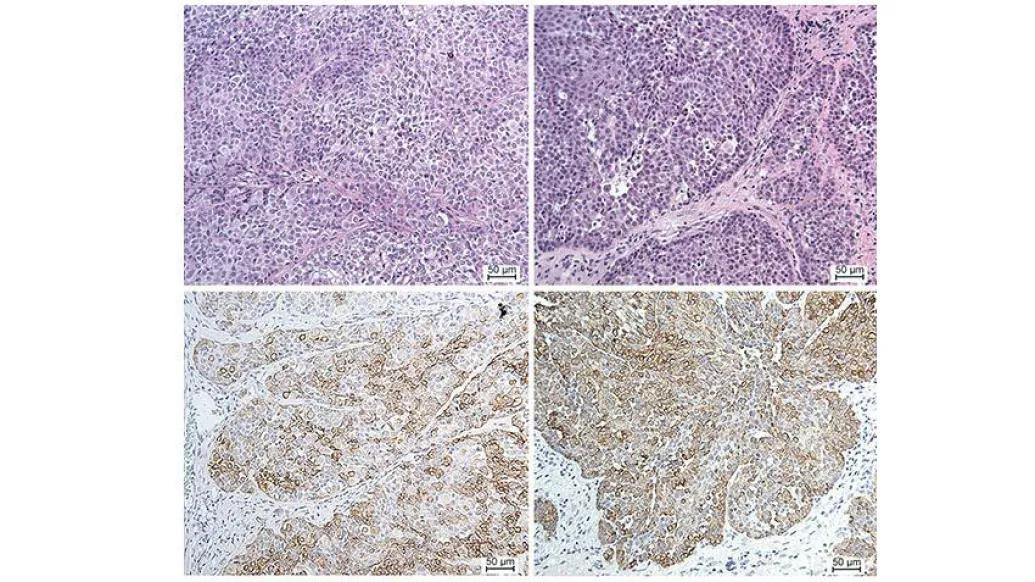
Researchers at the University of Michigan Rogel Cancer Center and School of Dentistry found that certain drugs can change the fundamental makeup of cancer stem cells in mouse models of mucoepidermoid carcinoma – a lethal form of salivary gland cancer that currently has no treatment options. These results appeared in Clinical Cancer Research.
"We observed that when we used small molecule inhibitors of MDM2 for a short period of time, the population of cancer stem cells decreased quite a bit," said Jacques Nor, D.D.S, M.S,. Ph.D., Donald Kerr Professor of Dentistry and lead author of this study. The team initially thought that the cancer stem cells were being selectively killed by this drug, but the study revealed something more profound. Cancer stem cells represent the small number of cells in a tumor that fuel cancer's growth and spread.
"We found that the drug actually changes the fundamental nature of the cells to make them more vulnerable to other therapies and less able to start new tumors."
Like Podcasts? Add the Michigan Medicine News Break on Spotify, Apple Podcasts or anywhere you listen to podcasts.
Nor's team also observed that the incidence of relapse in mice treated with this drug was much lower than in the mice that were not treated.
Mucoepidermoid carcinoma is the most common malignant salivary gland cancer with very limited therapeutic options. Over 3,000 people die of the disease in the United States every year, and to date there is no FDA approved drug to treat it.
"There is currently no effective therapy for this cancer. Right now, these patients are typically treated with radical surgery and radiation, and that usually is insufficient. Patients die because of tumor relapse and tumor metastasis. We need a systemic drug. This is one of the first outcomes that is showing some positive signs in terms of tumor regression or inhibiting tumor relapse," Nor said.
Nor has been studying for years drugs that activate P53 to see if this makes cancer cells more vulnerable to therapies. In 2019, he and his team published a study in Clinical Cancer Research that showed that small molecule inhibitors work well in mouse-models of MEC, but the team still hadn't figure out just how the drugs work. This new study moves the team one step closer to that understanding.
P53 is frequently mutated in most cancers but rarely in MEC, which made these small molecule inhibitors a good candidate to study. "This drug requires a non-mutated form of P53 to work," said Nor. "In mucoepidermoid carcinoma, this drug works well because P53 is not mutated." These results show that P53 is integral to MEC and suggest that therapeutic activation of p53 could present new treatment options for patients, possibilities that energize Nor and his team.
"The bottom line is we now have a drug that is in a clinical trial for patients with salivary gland cancer," he said.
Live your healthiest life: Get tips from top experts weekly. Subscribe to the Michigan Health blog newsletter
Headlines from the frontlines: The power of scientific discovery harnessed and delivered to your inbox every week. Subscribe to the Michigan Health Lab blog newsletter
Additional authors include Christie Rodriguez-Ramirez, Zhaocheng Zhang, Kristy A Warner 1, Alexandra E Herzog 1, Andrea Mantesso 1, Zhixiong Zhang, Eusik Yoon, Shaomeng Wang, Max S Wicha
Funding was provided by the National Institute of Dental and Craniofacial Research (R01-DE021139), J.E. Nor; National Institute of Dental and Craniofacial Research (R01-DE23220) J.E. Nor; National Institute of Dental and Craniofacial Research (R01-DE021139S1) C.Rodriguez-Ramirez
Paper cited: "p53 Inhibits Bmi-1-driven Self-Renewal and Defines Salivary Gland Cancer Stemness," Clinical Cancer Research. DOI: 10.1158/1078-0432.CCR-22-1357

Health Lab
Explore thousands of health news & research stories by visiting the Health Lab homepage for more.
Media Contact

Public Relations
Department of Communication at Michigan Medicine
Stay Informed
Want top health & research news weekly? Sign up for Health Lab’s newsletters today!
Featured News & Stories

Intuition pushed mom to keep checking for breast cancer
Immune system protein is a cancer killer on its own, new study shows

Online resources and coaching helped people seek genetic testing for cancer

The AI is listening: Implications of machine generated clinical notes on health care

Comprehensive DNA sequencing reveals hidden drivers of cancer

