Nonalcoholic Fatty Liver Disease and Heart Failure: Is There a Connection?
A Michigan Medicine team looks into the prevalence of NAFLD in patients with heart failure with preserved ejection fraction.
9:32 AM
Author |
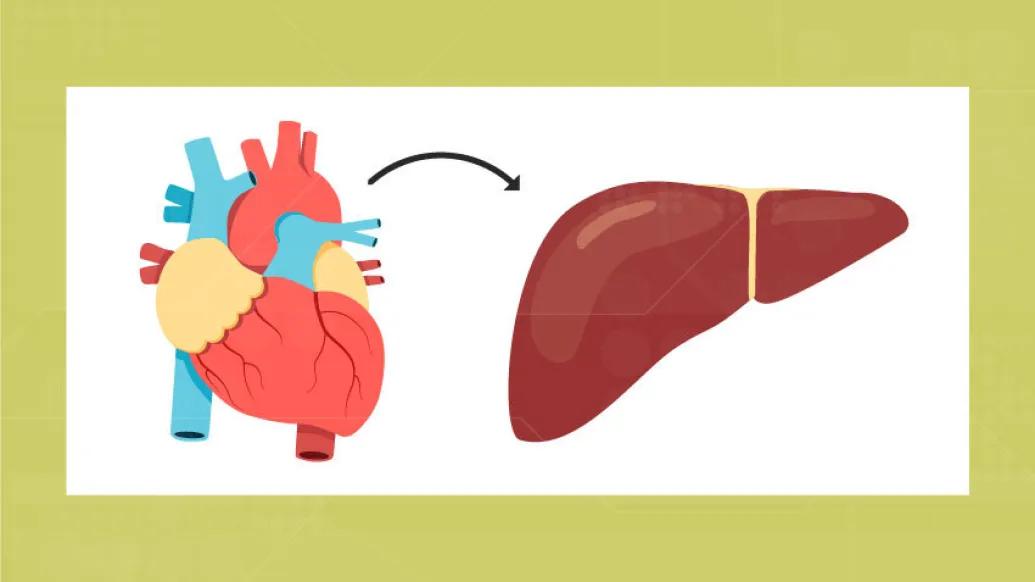
Heart failure with preserved ejection fraction, or HFpEF, occurs when the contraction of the heart muscle is able to pump blood normally and subsequently has a preserved ejection fraction, but the heart chambers are too stiff to relax and fill properly.
In the United States, HFpEF numbers are on the rise, as is the prevalence of adults with nonalcoholic fatty liver disease, or NAFLD, which remains the leading cause of liver disease in the country.
In a new study, Michigan Medicine researchers identified that 27% of patients had both of these conditions.
"This correlation can likely be attributed to the association between these diseases and obesity-related conditions like hypertension and insulin resistance," says Monica Tincopa, M.D., M.Sc., a hepatologist at the University of Michigan who treats patients with NAFLD. "While many studies have linked NAFLD with ischemic cardiovascular disease and also overall cardiovascular mortality, less is known about the relationship between NAFLD and heart failure."
This led Tincopa and a team of researchers to examine the prevalence of NAFLD among a group of patients with HFpEF. Their research was recently featured in Nature Scientific Reports.
"It is thought that insulin resistance and altered energy metabolism both play a role in the development of NAFLD and HFpEF," says Tincopa. "And that is why we set out to evaluate how often these conditions co-occur, and if there seems to be any synergistic impact on disease severity."
A total of 181 patients at Michigan Medicine were enrolled in a HFpEF clinical database, which the team later used to conduct their analysis.
"The patients in our study were primarily white women with obesity," says Tincopa. "A majority of them also had hypertension and dyslipidemia, which can be characterized as an abnormal amount of lipids (or fat) in the blood."
When it came to their cardiovascular health, 61% of the patients showed symptoms for severe heart failure, and diastolic dysfunction was observed in over 40% of the patients via echocardiography.
"A total of 49 patients met the criteria for NAFLD, while 12 showed imaging consistent with cirrhosis," says Tincopa. "On average, the patients with NAFLD had a higher BMI and more frequently had diabetes and heart failure."
Tincopa adds that nearly half of the study group, 48.6%, had advanced fibrosis or cirrhosis, with 54% of the individuals with NAFLD having non-invasive testing scores consistent with at least advanced fibrosis.
"Fibrosis can be described as the formation of large amounts of scar tissue within the liver," says Tincopa. "It often occurs when the liver is trying to repair itself and replace damaged cells. And while fibrosis causes no symptoms, severe scarring can result in cirrhosis, which can cause symptoms. So, these findings were very significant."
Tincopa adds that the team's analysis showed that in this well-characterized group of patients with HFpEF, the prevalence of NAFLD was doubled. And patients with both NAFLD and HFpEF appeared to have more advanced fibrosis, including cirrhosis.
"It is clear to us that our findings support strong consideration for evaluating underlying liver disease in HFpEF patients. As new treatments for NAFLD become available, it's important for clinicians to assess the impact of these treatments on myocardial metabolism, structure and function due to this correlation."
Paper cited: "Prevalence and staging of non‑alcoholic fatty liver disease among patients with heart failure with preserved ejection fraction," Nature Scientific Reports. DOI: 10.1038/s41598-020-69013-y

Health Lab
Explore thousands of health news & research stories by visiting the Health Lab homepage for more.
Media Contact

Public Relations
Department of Communication at Michigan Medicine
Stay Informed
Want top health & research news weekly? Sign up for Health Lab’s newsletters today!
Featured News & Stories

Mobile health app improves heart failure medication use, dosing after hospitalization

What’s changing in Medicaid and what can you do?

Could a diabetes medication be the next wonder drug?

The AI is listening: Implications of machine generated clinical notes on health care

A second chance at life