New biomarker strategy devised to screen for, diagnose deadly heart complication from cancer treatment
Myocarditis related to immune checkpoint inhibitors always co-occurs with damage to skeletal muscle, the study finds.
2:00 PM
Author |
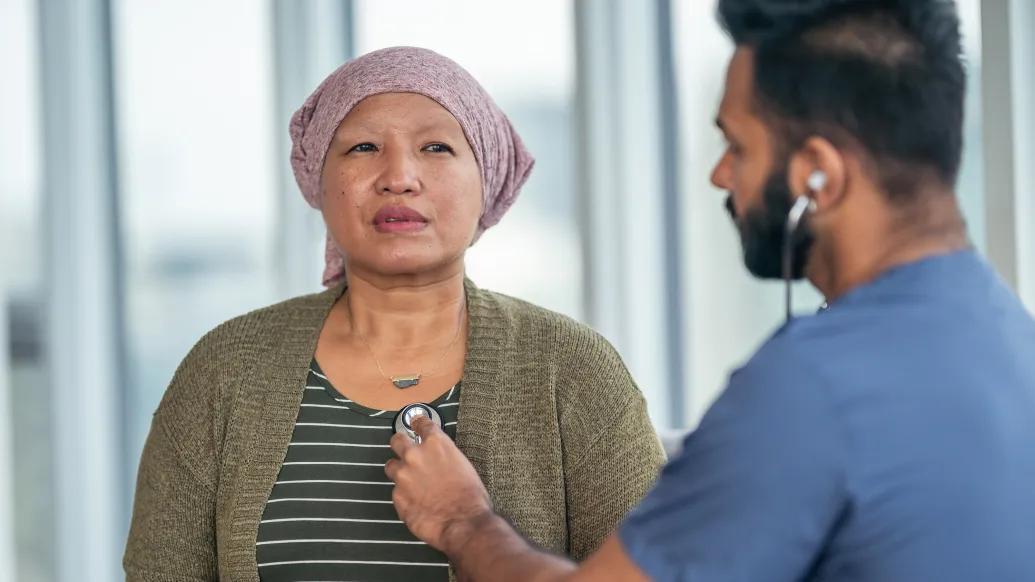
Researchers at Michigan Medicine have devised a new biomarker-based strategy to screen for a rare and deadly complication caused by monoclonal antibodies used to treat several cancers.
In a study published in JACC: CardioOncology, investigators found that nearly all patients with cancer who were diagnosed with myocarditis after being treated with immune checkpoint inhibitors had early signs of muscle destruction and liver damage.
“While immune checkpoint inhibitors have revolutionized the treatment of various cancers, patients who develop the rare complication of myocarditis often present late with at least a 50% chance of death,” said Salim Hayek, M.D., senior author of the study and medical director of the University of Michigan Health Frankel Cardiovascular Center Clinics.
“Diagnosing immune checkpoint inhibitor myocarditis is challenging, given that there is no one test that can differentiate it from other causes of cardiac injury. By the time patients present to the hospital, it is often too late,” Hayek said. “Diagnosing patients early allows us to start immunosuppressive therapy sooner and give patients a better chance of survival.”
Immune checkpoint inhibitors, or ICIs, are monoclonal antibodies that enhance the body’s immune system and its response against cancerous cells. There is potential risk that the heightened immune activity from the medication can turn against the body itself, causing damage to almost any of organ system, with myocarditis being the most severe complication.
Researchers analyzed more than 2,600 patients with cancer treated with immune checkpoint inhibitors at University of Michigan Health between June 2014 and Dec. 2021. The vast majority of patients diagnosed with ICI myocarditis also had early signs of muscle injury and liver damage, even prior to hospitalization. Of these patients, 95% had at least three elevated biomarkers, compared to just 5% of patients without myocarditis.
Among non-cardiac biomarkers, creatine phosphokinase, which signals muscle injury, was most strongly linked to the development of ICI myocarditis, as well as all-cause death.
“It makes sense that myocarditis related to immune checkpoint inhibitors does not occur in isolation, given a raging immune system is expected to affect several organs and particularly the muscles,” said co-author Joe-Elie Salem, M.D. Ph.D., professor of medicine at Sorbonne Université in Paris and a leading expert in the field of ICI myocarditis. “A large variety of antigens targeted by auto-reactive T-cells boosted by ICIs are shared between the myocardium and the peripheral muscles. Myositis, or muscle injury, is a central component of complications related to this class of drugs.”
Researchers conclude that clinicians should monitor patients on ICIs regularly for biomarkers of damage elsewhere in the body, including creatine phosphokinase for muscle injury, aspartate and alanine aminotransferase for liver injury, and lactate dehydrogenase for tissue injury.
“Abnormalities in these biomarkers should prompt clinicians to test for cardiac injury using high sensitivity troponin,” Hayek said. “Conversely, patient suspected of immune checkpoint myocarditis should have creatine phosphokinase levels measured. If low, or within normal limits, then the diagnosis of immune checkpoint myocarditis is highly unlikely.”
The University of Michigan is one of the few centers worldwide with the expertise in the diagnosis and management of cardiovascular complications of immune checkpoint inhibitors in addition to other cancer treatments.
Live your healthiest life: Get tips from top experts weekly. Subscribe to the Michigan Health blog newsletter
Headlines from the frontlines: The power of scientific discovery harnessed and delivered to your inbox every week. Subscribe to the Michigan Health Lab blog newsletter
Like Podcasts? Add the Michigan Medicine News Break on Spotify, Apple Podcasts or anywhere you listen to podcasts.
Additional authors include YeeAnn Chen, PharmD, Adrien Procureur, M.D., Allison Gradone, M.D., Tariq U. Azam, M.D., Daniel Perry, M.D., Husam Shadid, M.D., Elizabeth Anderson, M.P.H., Tonimarie Catalan, Pennelope Blakely, Namratha Nelapudi, Mohamad Fardous, Sarah K. Adie, PharmD, BCCP, Kristen T. Pogue, PharmD, Monika Leja, M.D., Sara Yentz, M.D., Bryan Schneider, M.D., Leslie A. Fecher, M.D., Christopher D. Lao, M.D., all of University of Michigan, Joe-Elie Salem M.D., Ph.D., Marie C Bretagne, M.D., of Pitié-Salpetriere Hospital, Sorbonne Universite.
Paper cited: “Biomarker Trends, Incidence, and Outcomes of Immune Checkpoint Inhibitor Induced Myocarditis” JACC: CardioOncology. DOI: 10.1016/j.jaccao.2022.11.004

Health Lab
Explore thousands of health news & research stories by visiting the Health Lab homepage for more.
Media Contact

Public Relations
Department of Communication at Michigan Medicine
Stay Informed
Want top health & research news weekly? Sign up for Health Lab’s newsletters today!
Featured News & Stories
More babies with hypoplastic left heart syndrome surviving critical period between surgeries

Mobile health app improves heart failure medication use, dosing after hospitalization

Distance, insurance, social factors may hinder access to lifesaving heart monitoring for children

Could a diabetes medication be the next wonder drug?

Online resources and coaching helped people seek genetic testing for cancer