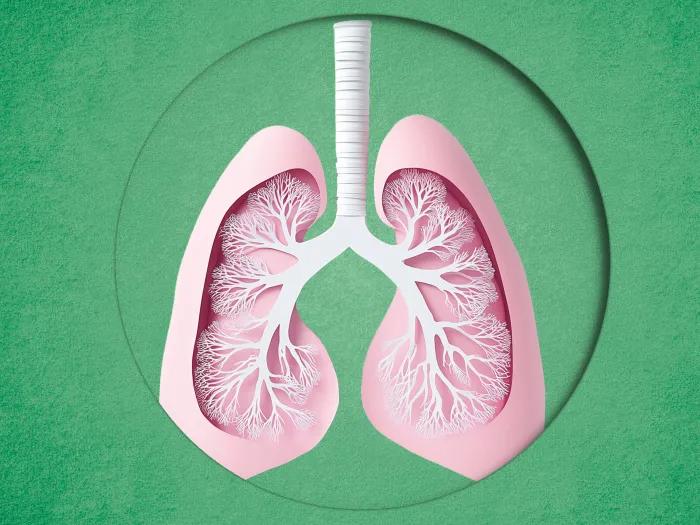
Lab-Grown Human ‘Mini Lungs’ Successfully Engraft in Mice, a Respiratory Research Breakthrough
Scientists can now grow 3-D models of various organs from stem cells, creating new ways to study disease.
7:00 AM
Author |
More than a year ago, scientists made studying lung cells in a petri dish appear old-fashioned.
A team led by University of Michigan Medical School researchers coaxed stem cells to grow into three-dimensional miniature lungs, which mimic several aspects of the structure and complexity of human lungs.
MORE FROM THE LAB: Subscribe to our weekly newsletter
Now, the researchers have transplanted the 3-D mini lungs into immunosuppressed mice and have shown that the mini lungs can survive, grow and mature. The milestone is published in the Nov. 1 issue of eLife.
"In many ways, the transplanted mini lungs were indistinguishable from human adult tissue," says senior study author Jason Spence, Ph.D., associate professor in the Department of Internal Medicine and the Department of Cell and Developmental Biology at the U-M Medical School.
Respiratory diseases account for nearly 1 in 5 deaths worldwide, and lung cancer survival rates remain poor despite numerous therapeutic advances during the past 30 years. These numbers highlight the need for new, physiologically relevant models for translational lung research.
Lab-grown lungs can help because they provide a human model to screen drugs, understand gene function, generate transplantable tissue and study complex human diseases, such as asthma.
And they're not the only tissues in development. As a developmental biologist, Spence has been tinkering with creating other tissues from stem cells, termed "organoids."
Researchers in the Spence Lab have had remarkable success with what some have called "intestines in a dish," for example, which may help with the study of inflammatory bowel disease.
In just eight weeks, the resulting transplanted tissue had impressive tube-shaped airway structures similar to the adult lung airways.Briana Dye, lead study author
How to make a human lung
Lead study author Briana Dye, a graduate student in the U-M Department of Cell and Developmental Biology, used numerous signaling pathways involved with cell growth and organ formation to coax stem cells — the body's master cells — to make the miniature lungs. The researchers' previous study showed mini lungs grown in a dish consisted of structures that exemplified both the airways that move air in and out of the body, known as bronchi, and the small lung sacs called alveoli, which are critical to gas exchange during breathing. The researchers also noted, however, that the lung tissue was immature and disorganized.
SEE ALSO: Artificial Placenta Holds Promise for Extremely Premature Infants
To overcome the immature and disorganized structure, the researchers attempted to transplant the miniature lungs into mice, an approach that has been widely adopted in the stem cell field. Several initial strategies to transplant the mini lungs into mice were unsuccessful.
Working with Lonnie Shea, Ph.D., professor of biomedical engineering at the University of Michigan, the team used a biodegradable scaffold, which had been developed for transplanting tissue into animals, to achieve successful transplantation of the mini lungs into mice.
The scaffold provided a stiff structure that supported growth of the mini lungs after transplantation while still allowing the transplanted tissue to become vascularized to receive a blood supply from the host.
Finally, the team created the controlled environment the tissue needed in order to survive and mature.
"In just eight weeks, the resulting transplanted tissue had impressive tube-shaped airway structures similar to the adult lung airways," Dye says.
One drawback was that the alveolar cell types did not grow in the transplants. Still, several specialized lung cell types were present, including mucus-producing cells, multiciliated cells and stem cells found in the adult lung.
Researchers characterized the transplanted mini lungs as well-developed tissue that possessed a highly organized epithelial layer lining the lungs. The transplanted human lung tissue holds promise, authors say, as an important new tool to study lung disease, and may open up new avenues for drug discovery.

Health Lab
Explore thousands of health news & research stories by visiting the Health Lab homepage for more.
Media Contact

Public Relations
Department of Communication at Michigan Medicine
Stay Informed
Want top health & research news weekly? Sign up for Health Lab’s newsletters today!
Featured News & Stories
Advancements and trends in lung transplantation
Nicotine pouches: Youth survey shows opportunity for prevention
Lung health expert weighs in on Zyn and other nicotine pouches
A gene discovery that changed cystic fibrosis care, and genetic research, forever

Lung transplant recipient wins gold in World Transplant Games