How Proinsulin Misfolding is a Prelude to Type 2 Diabetes
Michigan Medicine’s Arvan Lab reveals how proinsulin misfolding is a hallmark of prediabetes that can actually make the condition worse.
5:00 AM
Author |
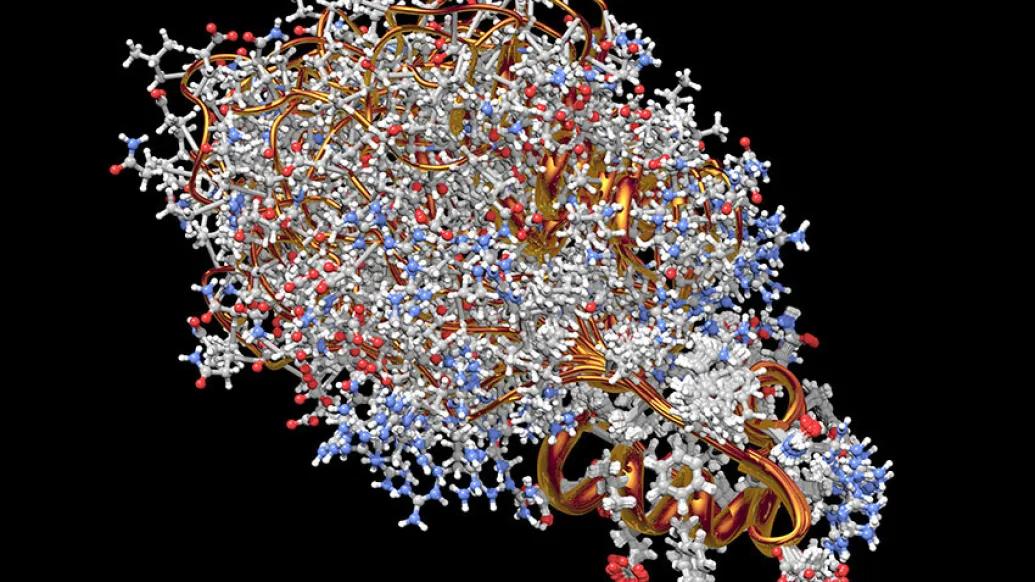
An astounding 86 million people in the United States have prediabetes, a condition marked by elevated blood sugar that gives rise to type 2 diabetes. Of these individuals, 90% don't know that they have the condition, which increases their risk of developing heart disease and stroke.
When an individual has prediabetes, the increased sugar in their blood triggers the body to produce larger amounts of insulin. However, if the beta cells in their pancreas (which are responsible for making insulin) fail to keep up, full-blown diabetes takes effect.
This notion inspired a team of Michigan Medicine endocrinologists led by Peter Arvan, M.D., Ph.D., chief of the Division of Metabolism, Endocrinology & Diabetes, and including Anoop Arunagiri, Ph.D., and Leena Haataja, Ph.D., to investigate the folding patterns of proinsulin, a protein molecule (or "prohormone") in the endoplasmic reticulum of beta cells that turns into insulin when the beta cells are working properly.
"We knew that previous research had shown that in the early stages of type 2 diabetes, the beta cells can show signs of abnormally increased endoplasmic reticulum stress," says Arvan. "But we wanted to explore the actual causes of this early beta cell damage to learn more about why these cells don't produce enough insulin."
Their groundbreaking diabetes research was recently published in eLife.
LISTEN UP: Add the new Michigan Medicine News Break to your Alexa-enabled device, or subscribe to our daily updates on iTunes, Google Play and Stitcher.
Next steps
Using a series of specific antibodies to detect folded and misfolded proinsulin, the team studied proinsulin folding in the beta cells of non-diabetic, prediabetic and diabetic mice, as well as in humans.
"Importantly, even when the clinical record of human patients shows no evidence of diabetes, that alone does not assure complete normality in the islet beta cells of different individuals," says Arvan.
Detecting and then fixing early problems associated with type 2 diabetes may help stop the disease in its tracks, and we are certain that our proinsulin research will help.
When all the islets were tested, the team found that even non-diabetic pancreatic islets contained a subset of improperly folded proinsulin molecules. What's worse, in both the human and rodent islets, proinsulin could become abnormally entangled with each other in intermolecular disulfide-linked complexes.
Arvan and his team also discovered that the misfolded proinsulin was actually accumulating inside the endoplasmic reticulum of pancreatic beta cells. And in genetically obese mice, the abnormal disulfide-linked complexes of proinsulin were far more abundant.
The team observed large amounts of misfolded proinsulin molecules in the endoplasmic reticulum of beta cells during prediabetes, before the onset of actual diabetes. This misfolding may be a trigger for the progression of the disease.

Future impact
"Our work showed that increased proinsulin misfolding via disulfide-linked complexes is an early event associated with beta cell dysfunction that worsens with the onset of prediabetes," says Arvan. "Remarkably, obese mice destined to develop diabetes had the highest levels of abnormal proinsulin in their beta cells even before their blood sugar had become noticeably elevated."
MORE FROM MICHIGAN: Sign up for our weekly newsletter
And this is one of the earliest detectable beta cell defects as diabetes develops.
"Hundreds of millions of people around the world have type 2 diabetes, and this number is rising quickly," says Arvan. "Detecting, and then fixing, early problems associated with the condition may help stop the disease in its tracks, and we are certain that our proinsulin research will help."

Health Lab
Explore thousands of health news & research stories by visiting the Health Lab homepage for more.
Media Contact

Public Relations
Department of Communication at Michigan Medicine
Stay Informed
Want top health & research news weekly? Sign up for Health Lab’s newsletters today!
Featured News & Stories
Gene editing is coming for common diseases. Are we ready?

New insight into how lipodystrophy can affect overall health

Is the United States Lagging Behind Europe in Memory Improvement?

Tap dancer’s foot rescued after lifesaving heart surgery
What should you know before starting a GLP-1?