Gut Bacteria Leads to Obesity? Not So Fast
Despite recent headlines linking weight problems to microbiome disruptions, a new review finds no clear connection.
1:00 PM
Author |
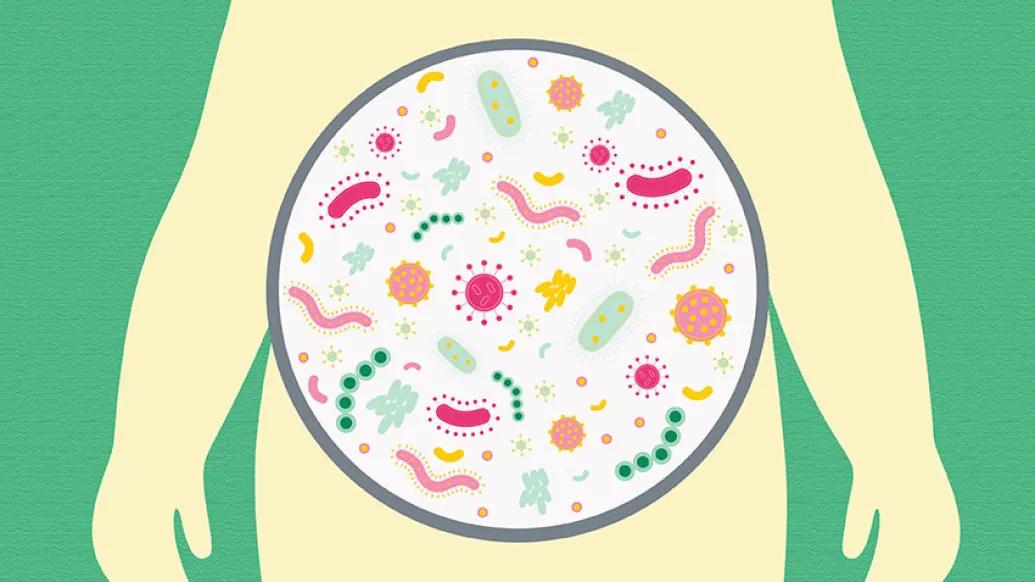
In recent years, researchers studying the microscopic creatures inside our bodies reported possible links between obesity and out-of-balance microbes.
SEE ALSO: Discovery of Gut Bacteria in Critically Ill Lungs Could Change ICU Care
But new research, which pooled data from many of those past studies, disputes the idea that extra pounds may stem from an imbalance in the microbiome.
The study, published in the journal mBio, finds no clear common characteristic of the microbiomes in the digestive systems of people who are obese compared to those of a healthy weight.
This lack of a clear signature across more than 1,000 volunteers from 10 of the largest studies to date may disappoint those looking for an explanation for obesity, as well as the companies that sell products claiming to alter the gut's microscopic population through fiber, nutrients and "good" bacteria.
But to the researchers from the University of Michigan Medical School, it's exciting. It means that there's much more complexity to discover on the relationship between our microbiome and our health.
Marc Sze, Ph.D., the U-M postdoctoral research fellow who published the analysis with U-M microbiology professor Patrick Schloss, Ph.D., says the scale of the obesity problem means it's that much more important to be certain about the science.
"Obesity is currently a health risk of epidemic proportions, and many have suggested that the bacterial microbiome is not only different between obese and nonobese, but also can predict obesity," says Sze. "We wanted to see if this was really what the existing literature suggested, since these claims could have a lot of positive impact on the management of this epidemic if true."
Adds Schloss, "In the end, we found that there are no clear signatures or predictors of obesity across the microbiome data reported thus far, and that if there is any signature at all related to diversity of microbes, it's not biologically useful. This is a cautionary tale that points to the need to do more work to clarify what we know and don't know."
This is a cautionary tale that points to the need to do more work to clarify what we know and don't know.Pat Schloss, Ph.D.
Pooling the data
The idea that obesity and imbalanced microbiomes are linked started with the observation that obese animals tended to have a certain ratio of two groups of bacteria species. That led to the studies in humans — some with just a few dozen participants — which grabbed headlines in recent years.
But people and rodents are very different, and large samples of people are needed to say anything definitive about human health and its link to the microbiome.
Sze and Schloss used machine-learning computing tools developed in Schloss's lab to perform their analysis, including a program called mothur that gives researchers a free open-source tool for studying the vast amount of data emerging from microbiome studies.
They created a classification model that takes into account all the data about the different microbe species present in an individual's microbiome and other information. They then tried to use it to predict whether that individual was obese.
While the tool worked somewhat on data from one of the 10 past studies, it did not predict obesity well at all when used on data from the other papers.
"There really is no one 'healthy' microbiome," says Schloss, a member of the Host Microbiome Initiative at U-M Medical School. "You could look at hundreds of people, and they could all have very different populations of microbes in their guts. So the idea that we can correct your microbiome by doing one simple thing also doesn't hold up."
That said, generally accepted healthy eating habits that give gut microbes lots of fiber and nutrients to chew on can't hurt, he adds.
Next steps for the research
The researchers created an open online site where other researchers can see the U-M team's work and add more data from gut microbiome studies in obese and nonobese people to continue the search for links.
SEE ALSO: Study: Water Intake Overlooked in Obese Individuals
As the data grow, the trustworthiness of the findings will, too. And perhaps specific linkages and signatures will be found in future.
The team is also developing a similar tool for evaluating the gut microbiome's possible links to colon cancer. Earlier this year, they published results from an analysis of several hundred people, and showed that their tool has reasonable accuracy in detecting the microbiome signatures more common in people with colon cancer than those without.
"We will continue to apply these approaches to look at the microbiome and colorectal cancer," says Sze. "We also want to take the lessons that we earned from working with large data sets and apply them to our research on how the bacterial microbiome in families might have an impact on inherited colorectal cancers."
Ultimately, the goal of this work could be a new diagnostic tool to detect colon cancer or cancer risk from a stool sample.
Another potential area for study is not the diversity of microbes present in the gut, but rather the extent they are producing the breakdown products of their role in the digestive process. These molecules, called metabolites, may form a more meaningful signature of microbe activity.
No matter what, Schloss says, the important thing in all microbiome work is to not take exciting initial results as the final word.
"We need to move the science forward and think more critically about the results we get," he says. "There's a need to cross-validate, and to understand that we might get different results with different populations."

Health Lab
Explore thousands of health news & research stories by visiting the Health Lab homepage for more.
Media Contact

Public Relations
Department of Communication at Michigan Medicine
Stay Informed
Want top health & research news weekly? Sign up for Health Lab’s newsletters today!
Featured News & Stories
Full, but Still Feasting: How the Urge to Eat Overpowers the Signal to Stop

The AI is listening: Implications of machine generated clinical notes on health care

$3.9 million NIH grant to fuel U-M effort to develop first targeted therapy for fatal childhood brain disorder

15 years of data will help uncover how flu spreads—and how to reduce its impact
Bigger data reveals the second, third and fourth switches controlling a gene