Flu Shot Associated With Fewer, Less Severe COVID Cases
A new study finds encouraging associations between flu shots and less severe COVID infections.
5:00 AM
Author |
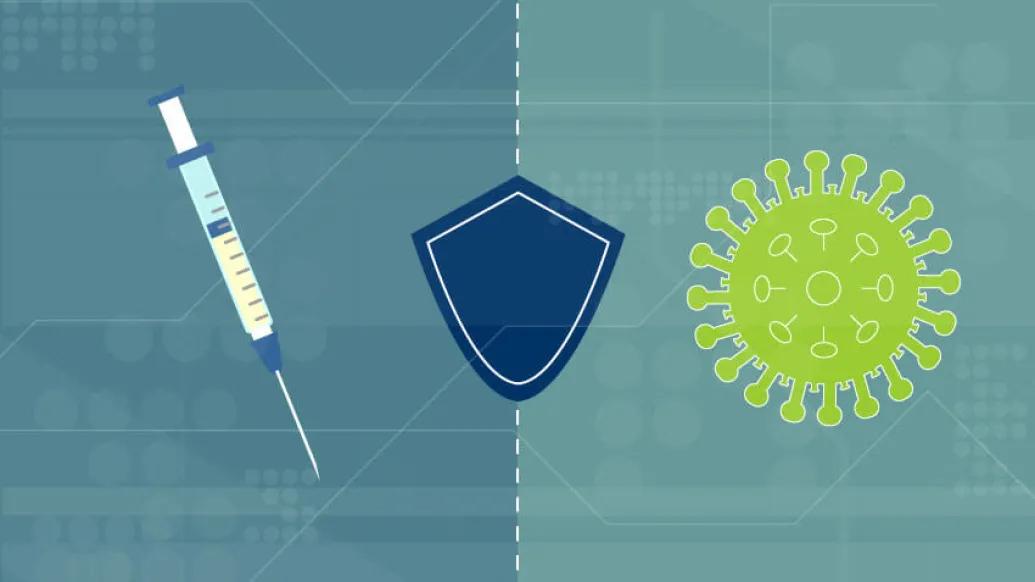
People who received a flu shot last flu season were significantly less likely to test positive for a COVID-19 infection when the pandemic hit, according to a new study. And those who did test positive for COVID-19 had fewer complications if they received their flu shot.
These new findings mean senior author Marion Hofmann Bowman, M.D., is continuing to recommend the flu shot to her patients even as the flu season may be winding down.
"It's particularly relevant for vaccine hesitance, and maybe taking the flu shot this year can ease some angst about the new COVID-19 vaccine," says Hofmann, an associate professor of internal medicine and a cardiologist at the Michigan Medicine Frankel Cardiovascular Center.
Like Podcasts? Add the Michigan Medicine News Break on iTunes or anywhere you listen to podcasts.
Researchers reviewed medical charts for more than 27,000 patients who were tested for a COVID-19 infection at Michigan Medicine between March and mid-July of 2020. Of the nearly 13,000 who got a flu shot in the previous year, 4% tested positive for COVID-19. Of the 14,000 who hadn't gotten a flu shot, nearly 5% tested positive for COVID-19. The association remained significant after controlling for other variables including ethnicity, race, gender, age, BMI, smoking status and many comorbid conditions, Hofmann says.
People who received their flu shot were also significantly less likely to require hospitalization, although the researchers didn't find a significant difference in mortality between the two groups. No one in the study tested positive for both infections at the same time.
Instead of a concerning connection between COVID-19 and the flu shot, our publication provides more confidence that getting your flu shot is associated with staying out of the hospital for COVID-19.Marion Hofmann Bowman, M.D.
The underlying mechanism behind the association isn't yet clear, Hofmann says.
"It is possible that patients who receive their flu vaccine are also people who are practicing more social distancing and following CDC guidelines. However, it is also plausible that there could be a direct biological effect of the flu vaccine on the immune system relevant for the fight against SARS-CoV-2 virus," she says.
Prospective longitudinal studies to examine the effect of the flu vaccine on respiratory illness are ongoing, including the Household Influenza Vaccine Evaluation (HIVE) study through the University of Michigan's School of Public Health.
"It's powerful to give providers another tool to encourage their patients to take advantage of available, effective, safe immunizations," says co-first author Carmel Ashur, M.D., M.S., an assistant professor of internal medicine and a hospitalist at Michigan Medicine.
Months ago, Hofmann was concerned about misinformation she kept seeing online that connected the flu vaccine with a COVID-19 infection. Prominent media outlets like Reuters debunked this theory, and she knew her team's data could also help address vaccine hesitancy.
MORE FROM THE LAB: Subscribe to our weekly newsletter
"Instead of a concerning connection between COVID-19 and the flu shot, our publication provides more confidence that getting your flu shot is associated with staying out of the hospital for COVID-19," she says.
Before the pandemic hit, Hofmann and co-first author Anna Conlon, Ph.D., a U-M Medical School student, educated Frankel CVC patients about another encouraging association with the flu vaccine: cardiovascular protective effects.
"There's robust data that the flu shot prevents heart attack and hospitalizations for heart failure, which is an additional reason to get your vaccine every flu season," Conlon says.
Paper cited: "Impact of the influenza vaccine on COVID-19 infection rates and severity," American Journal of Infection Control. DOI: 10.1016/j.ajic.2021.02.012

Health Lab
Explore thousands of health news & research stories by visiting the Health Lab homepage for more.
Media Contact

Public Relations
Department of Communication at Michigan Medicine
Stay Informed
Want top health & research news weekly? Sign up for Health Lab’s newsletters today!
Featured News & Stories

Human Rabies Exposures Growing Across the Country

Many hospitals still don’t do enough to prevent UTIs from catheters
15 years of data will help uncover how flu spreads—and how to reduce its impact

Rabies is on the rise: Experts offer advice
Cyclospora: What to Know About the Parasite Sweeping the Nation