A Potential New Way to Treat Some of the Most Common Blinding Diseases
Inhibition of atypical kinase C may help manage macular edema and vision loss associated with eye diseases
8:35 AM
Author |
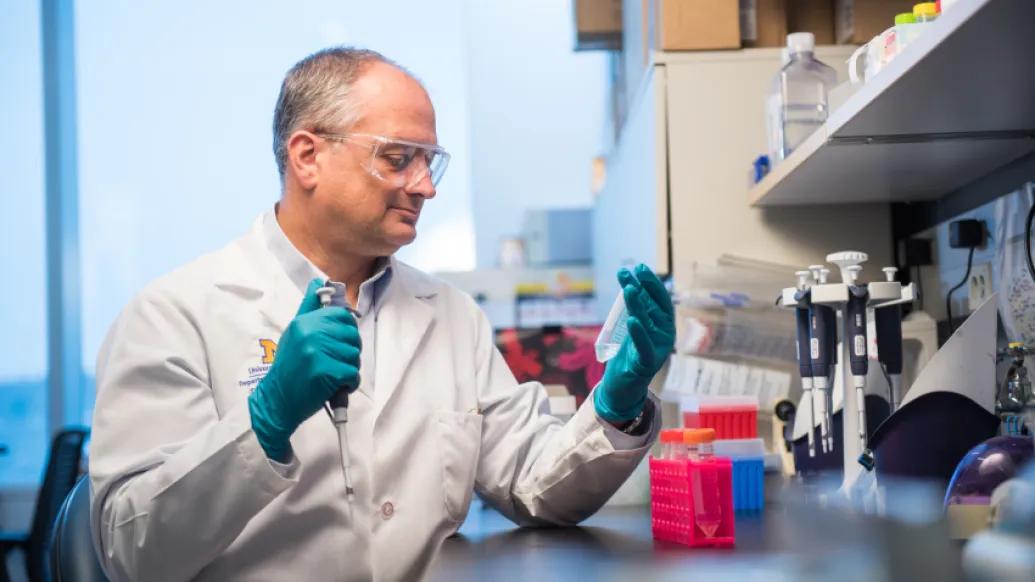
Many eye diseases, including diabetic retinopathy and macular degeneration, exhibit increased permeability of blood vessels in the retina.
LISTEN UP: Add the new Michigan Medicine News Break to your Alexa-enabled device, or subscribe to our daily audio updates on iTunes, Google Play and Stitcher.
These leaky vessels in the central part of the eye can lead to abnormal fluid accumulation and vision loss. Eye injections targeting a specific cytokine, vascular endothelial growth factor (VEGF), have transformed care for these diseases; however, not all patients respond well.
Research by University of Michigan Kellogg Eye Center shows that inhibiting a specific molecule, atypical protein kinase C (aPKC), either genetically or pharmacologically, reduces increased vessel permeability and blocks inflammation.
Blocking a PKC may help protect vision in patients with potentially blinding eye diseases.
"Our data reveal aPKC as an interesting target both for vascular permeability and inflammation and developing aPKC inhibitors may provide a new therapeutic option for blinding eye diseases," says David A. Antonetti, Ph.D., the Roger W. Kittendorf Research Professor of Ophthalmology and Visual Sciences.
"Our research may help patients with diabetic retinopathy, the leading cause of blindness in working age adults in the United States, and may also lead to new treatments for uveitis, a spectrum of diseases that leads to inflammation of the eye, as well as for retinal vein and artery occlusions," Antonetti says in a Journal announcement.
SEE ALSO: Patient Data Could Help Predict Need for Diabetic Eye Injections
In a recent study in the American Journal of Pathology, he and colleagues explore the protective effect of an experimental small-molecule aPKC inhibitor. The pre-clinical effects are promising.
Blood-retinal barrier
Good vision requires retinal neurons to send signals to the brain, and retinal neurons must be protected and kept in a healthy microenvironment within the eye.
The microenvironment is maintained, in part, by the blood-retinal barrier.
However, injury or chronic disease can weaken the blood-retinal barrier and increase vessel permeability.
Although VEGF and TNF, a protein that causes inflammation, possess distinct signaling mechanisms, both eventually activate a common pathway, aPKC signaling, to change vessel permeability. Further, aPKC promotes inflammation.
Using genetic mouse models, Antonetti and colleagues showed small molecule inhibitors to aPKC reduced vascular permeability and inflammation, according to the Pathology study findings.
MORE FROM MICHIGAN: Sign up for our weekly newsletter
Saving vision
Antonetti, Kellogg's scientific director, is one of the world's experts in the blood-retinal barrier that is essential to sight. He has spent two decades studying how this barrier develops and how diseases such as diabetic retinopathy damage it and lead to vision loss.
He is part of a team that is advancing approaches to protect and restore the barrier so that vision can be saved and restored.
The team, along with other University of Michigan colleagues, also is investigating the formation and loss of the blood-brain and blood-retinal barrier in cancer and stroke.
The work may not only benefit the millions of people with diabetes, but has implications for those who might have a stroke and other brain diseases.

Health Lab
Explore thousands of health news & research stories by visiting the Health Lab homepage for more.
Media Contact

Public Relations
Department of Communication at Michigan Medicine
Stay Informed
Want top health & research news weekly? Sign up for Health Lab’s newsletters today!
Featured News & Stories
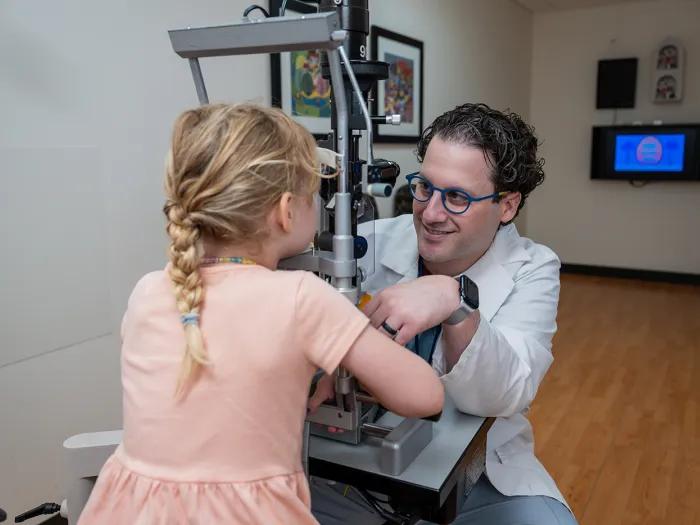
Innovative children’s vision research gets a boost from the Knights Templar Eye Foundation

Many hospitals still don’t do enough to prevent UTIs from catheters

Nerf gun accident causes retinal detachment in pediatric patient

Kellogg care inspires gift to vision research

Mediterranean diet can slow progression of age-related macular degeneration