Sleep Apnea Not Associated with Wake-Up Stroke

Stroke onset while asleep does not seem to be the direct link between sleep apnea and stroke.

2:28 PM

Author | Haley Otman
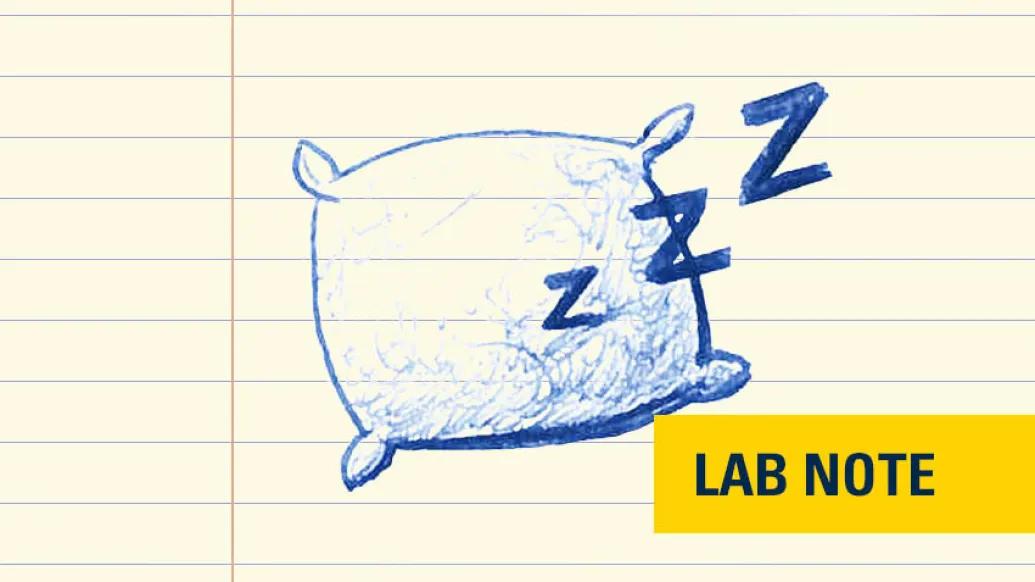
pillow drawn in blue ink on lined paper with yellow and navy font badge saying "lab note" on bottom right
Credit: Michigan Medicine

Although the connection between obstructive sleep apnea and stroke is well known, a recent study does not show an association between those who had sleep apnea and those whose strokes began while they were sleeping.

"When someone wakes up with stroke symptoms, it's unclear when the event actually began," explains first author Sonja Schuetz, M.D., M.S., an assistant professor of neurology at Michigan Medicine. This is known as wake-up stroke, and was reported in 30% of the stroke survivors in the study. "Every minute matters in stroke care, so wake-up strokes complicate treatment. We wanted to explore if there's a link between wake-up stroke and obstructive sleep apnea."

Instead of confirming a link, senior author Devin Brown, M.D., M.S., says the team's work reaffirms its previous findings that wake-up stroke is not associated with sleep-disordered breathing in women, this time failing to find a significant association in either sex.

Researchers analyzed data from 837 participants of the BASIC (Brain Attack Surveillance in Corpus Christi) project in Nueces County, Texas, who had completed a baseline interview responding to whether their ischemic stroke occurred during sleep. Almost one-third of the patients also took home sleep apnea tests after their stroke.

Paper cited: "Wake-up stroke is not associated with obstructive sleep apnea," Sleep Medicine. DOI: 10.1016/j.sleep.2021.02.010


More Articles About:

Lab Notes stroke Neurological (Brain) Conditions Sleep Disorders Cardiovascular: Diseases & Conditions
Health Lab word mark overlaying blue cells

Health Lab

Explore thousands of health news & research stories by visiting the Health Lab homepage for more.

Media Contact

University Hospital at U-M Health in the spring with flowering trees in foreground and Survival Flight helicopter visible

Public Relations

Department of Communication at Michigan Medicine

[email protected]

734-764-2220

Stay Informed

Want top health & research news weekly? Sign up for Health Lab’s newsletters today!

Subscribe

Featured News & Stories

Cole, wearing sunglasses and a purple Calming the Storm t-shirt with a rainbow, is seated on a blanket outdoors and holding a Mott teddy bear.
Philanthropy News

A pediatric epilepsy fundraiser that changes lives

Your support of Calming the Storm advances pediatric epilepsy research and patient care programs. There are many ways you can contribute to make a difference for so many children and families.
Two people in medical scrubs are in a blurred hospital setting. In the foreground, hands are holding a digital tablet.
Health Lab

Digital alerts support timely treatment decisions of critically ill cardiac patients

Well-designed alerts for critically ill cardiac patients can change what happens at the bedside, according to new Michigan Medicine research.
Minding memory above a microphone on a blue background
Minding Memory

Is the United States Lagging Behind Europe in Memory Improvement?

In this episode, Lauren & Matt speak with Neil Mehta, PhD who is the associate dean for research and a professor in the Department of Epidemiology at the University of Texas Medical Branch in Galveston. Dr. Mehta’s research focuses on US life expectancy trends, the effects of obesity on disability and mortality, the sources of socioeconomic status disparities in mortality, and patterns of health in the United States and Europe. Dr. Mehta talks about a recent manuscript from the NIA-funded TRENDS study called “Trends in Memory Function and Memory Impairment Among Older Adults in the United States and Europe, 1996 to 2018.”, which looks at data from several sources to compare trends in memory function across 13 different countries.
Doctor performing a test
News Release

Michigan Alzheimer's Disease Research Center receives $22M to advance efforts statewide
NIH renews $22M for Michigan Alzheimer's Disease Research Center, supporting a first-of-its-kind statewide partnership and dementia research.
cells close up blue and green background microscope
Health Lab

Engineered nanoparticles sensitize gliomas to radiotherapy
University of Michigan researchers discovered a new pathway that sensitizes mIDH1 gliomas to radiation in human and mouse mIDH1 glioma cells and mouse models, paving the way for phase 1 clinical trials in humans
surgeons in surgery operating room
Health Lab

Reducing infections after heart surgery could save Medicare $441 million per year

Study finds reducing infection rates after heart surgery could prevent 2,600 infections and save Medicare $441 million annually by bringing hospitals up to top performers.