Nanoparticle reduces skin and lung scarring for scleroderma, mouse study finds
The findings provide promise of targeted treatment for patients with the disease.
8:16 AM
Author |
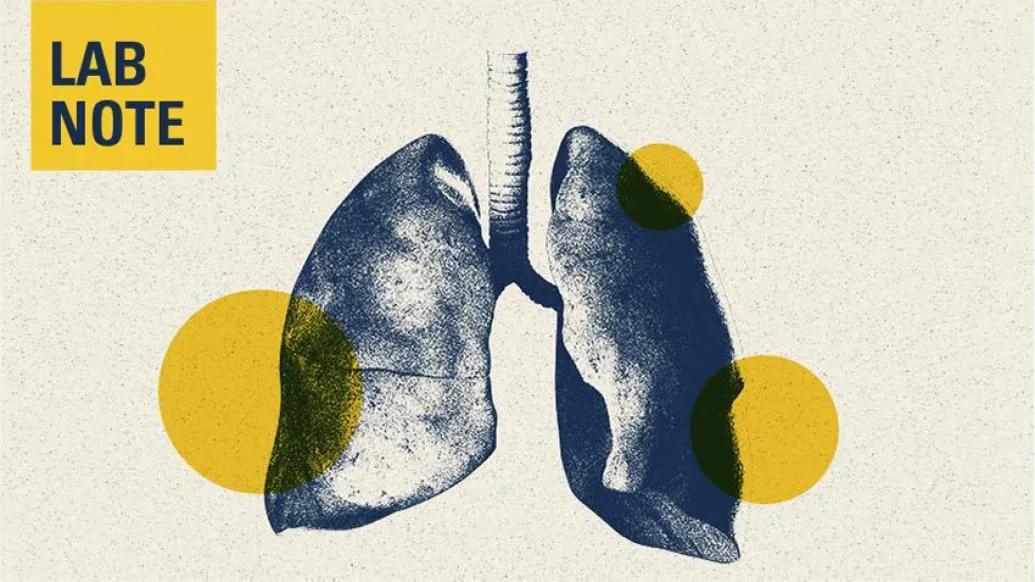
Investigators have discovered that a biodegradable nanoparticle used in medical sutures could combat a rare, sometimes-fatal autoimmune disease.
Researchers found that a unique macrophage, an immune cell that removes bacteria or dead cells, plays a key role in the chronic inflammation and scarring in the lungs and skin of people with scleroderma, or systemic sclerosis. This macrophage, called MARCO+, was found to be elevated in people with the orphan disease, which affects around 70,000 Americans and currently has no effective treatment.
The research team injected mice with biodegradable PLG nanoparticles, short for poly (lactic-co-glycolic) acid. The results, published in JCI Insight, reveal that PLG specifically targeted MARCO+ inflammatory cells and prevented skin and lung fibrosis. Even more striking, nanoparticle treatment could even reverse fibrosis in these mice, says John Varga, M.D., senior author of the paper and chief of the Michigan Medicine Division of Rheumatology.
"The findings reveal a stark difference: untreated mice had terrible scarring in the lungs, and those treated with this nanoparticle saw the disease decease in severity or completely disappear," said John Varga, M.D., senior author of the paper and chief of the Michigan Medicine Division of Rheumatology. "This is a promising step towards targeted treatment for patients with early scleroderma that could potentially mitigate the worst effects of the disease."
The research team believes the MARCO+ cells become activated in people with scleroderma and circulate in the blood stream, traveling to the tissues and causing scar formation. While the PLG nanoparticle reduced fibrosis in mouse models, Varga says future studies are needed to determine exactly how it prevents the MARCO+ activation.
SEE ALSO: Patients with rare scleroderma have deadlier organ damage, despite getting standard treatment
PLG is already approved by the U.S. Food and Drug Administration for creating biodegradable sutures. In previous studies, Varga's co-authors found that PLG decreased inflammation in mouse models of myocardial infarction. It is not currently available as a treatment for patients.
"We hope that this type of therapy will one day be evaluated in clinical trials for scleroderma," Varga said. "People with scleroderma are at great risk for skin and lung thickening that impacts function, and we look for any way to stop that from happening."
Disclosures: Stephen D. Miller is a co-founder of, member of the Scientific Advisory Board, grantee of, and holds stock options in COUR Pharmaceutical Development Company and onCOUR Pharma, Inc., which holds the patent for the PLG nanoparticle technology.
Additional authors include Swati Bhattacharyya, Swarna Bale, both of Michigan Medicine, and Dan Xu, Wenxia Wang, Igal Ifergan, Ming-Yi Alice Chiang Wong, Daniele Procissi, Anjana Yeldandi, Robert G Marangoni, Craig Horbinski, and Stephen D. Miller, all of Northwestern University Feinberg School of Medicine.
Paper Cited: "PLG nanoparticles target fibroblasts and MARCO+ monocytes to reverse multi-organ fibrosis," JCI Insight. DOI: 10.1172/jci.insight.151037

Health Lab
Explore thousands of health news & research stories by visiting the Health Lab homepage for more.
Media Contact

Public Relations
Department of Communication at Michigan Medicine
Stay Informed
Want top health & research news weekly? Sign up for Health Lab’s newsletters today!
Featured News & Stories
U-M-led consortium to receive up to $52 million in NIH funding to study why viral respiratory infections affect children differently
A metabolic “switch” that could help reset scar-producing cells in scleroderma

Pain, psychological factors and physical function closely linked in people with systemic sclerosis

Rheumatologist finds contentment and community through family farm
Rethinking how clinicians learn to feel disease