Just over half of Michigan pharmacies offer overdose-fighting naloxone without prescription
Some pharmacies participated in the standing order but did not have any naloxone available on the shelf.
11:50 AM
Author |
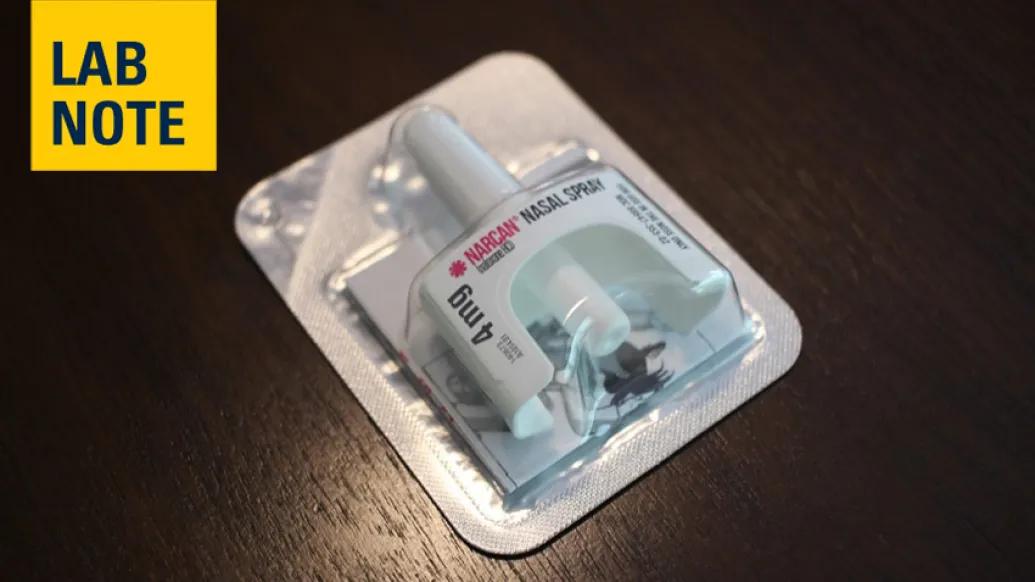
Despite the ability of any Michigan pharmacy to dispense medication to combat opioid overdose without writing prescriptions, slightly more than half of pharmacies in the state offer the drug in such a way.
The standing order for naloxone, commonly known as Narcan, was passed by the Michigan legislature in 2016. This allows any pharmacist to dispense the overdose reversal drug without a prescription – allowing friends, family members or other individuals to obtain naloxone for emergency use.
Researchers at Michigan Medicine conducted a survey of 662 standing order pharmacies for the paper published in the American Journal of Drug and Alcohol Abuse. Findings reveal that just 54% of Michigan pharmacies offer naloxone without requiring a prescription.
"Our county maps reveal that areas with higher fatality rates had fewer pharmacies participating in the standing order or lacked any nearby pharmacy access," said Chin Hwa (Gina) Dahlem, Ph.D., FNP-C, FAANP, lead author of the paper, nurse practitioner and a researcher at the University of Michigan School of Nursing. "Naloxone is a life-saving medication for a person experiencing an opioid overdose. We need to continue our efforts to expand naloxone access through pharmacies, hospitals and community naloxone distribution programs to prevent overdose deaths."
Among pharmacies participating in the standing order in eight southeastern Michigan counties, 85% percent actually had naloxone available and 82% had ever dispensed it.
"It's not just enough to participate in the standing order, but you also have to have naloxone available on the shelves in those moments when somebody asks for it," said Keith Kocher, M.D., M.P.H., senior author of the paper and an emergency physician at University of Michigan Health. "The more pharmacies make naloxone available and have it on the shelves, the more likely we can get it into the hands of individuals at risk for an overdose to reduce harm and death from opioids."
Additional authors include Matthew Myers, M.P.H., Jason Goldstick, Ph.D., James G. Stevenson, PharmD, FASHP, FFIP, Joan Kellenberg, M.S., M.P.H., Chad Brummet, M.D., all of Michigan Medicine, George Gray, B. S, Loyola University Chicago Stritch School of Medicine, Sarah Rockhill, M.P.H., Agency for Toxic Substances and Disease Registry, Aaron Dora-Laskey, M.D., Medical College of Wisconsin
Paper Cited: "Factors associated with naloxone availability and dispensing through Michigan's pharmacy standing order," American Journal of Drug and Alcohol Abuse. DOI: 10.1080/00952990.2022.2047714

Health Lab
Explore thousands of health news & research stories by visiting the Health Lab homepage for more.
Media Contact

Public Relations
Department of Communication at Michigan Medicine
Stay Informed
Want top health & research news weekly? Sign up for Health Lab’s newsletters today!
Featured News & Stories

What’s the latest on 7-OH and kratom availability and addiction care?

Better prenatal care data could help prevent maternal complications, experts say

Nerf gun accident causes retinal detachment in pediatric patient

Rabies is on the rise: Experts offer advice

E-Bikes are everywhere, but most parents say they don’t know enough about them