Amino Acid Connected to Fatty Liver Disease Could Provide Treatment Clues
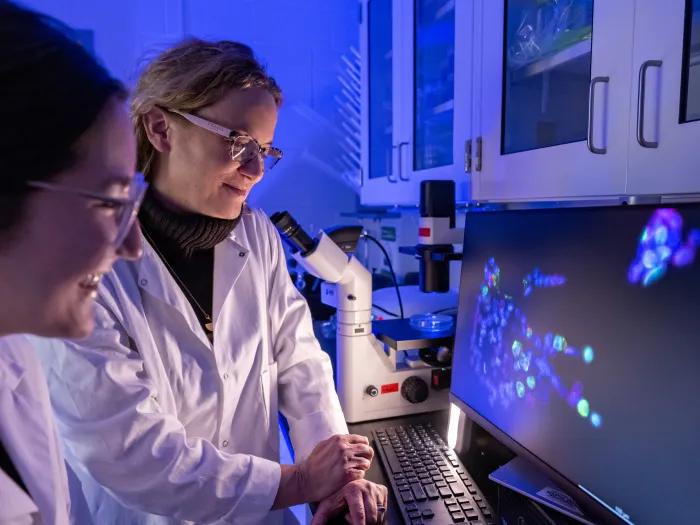
Basic science research explores the effects of impaired glycine metabolism in nonalcoholic fatty liver disease and how to potentially use glycine-based treatment to help people with NAFLD.
8:48 AM
Author |
A new study further implicates low levels of the amino acid glycine in development of nonalcoholic fatty liver disease, or NAFLD. It also suggests addressing this might hold the key to a future treatment for the disease.
"We've uncovered a new metabolic pathway and potential novel treatment," says senior author Y. Eugene Chen, M.D., Ph.D., a professor of internal medicine, cardiac surgery, physiology, pharmacology and medicinal chemistry, from the Michigan Medicine Frankel Cardiovascular Center. His team collaborated with researchers from the University of Michigan, Wayne State University and Technion-Israel Institute of Technology.
Chen says there is a large need to expand treatment options for patients with NAFLD. Although it's the most common chronic liver disease, there are currently no approved drugs to treat it.
Lead author Oren Rom, Ph.D., R.D., a research fellow at the Michigan Medicine Frankel Cardiovascular Center, says the team focused on the poorly understood relationship between dysregulated amino acid metabolism and NAFLD.
"In particular, lower circulating glycine is consistently reported in patients with NAFLD and related comorbidities including diabetes, obesity and cardiovascular diseases," Rom says. "Our studies not only offer a metabolic explanation for defective glycine metabolism in NAFLD, but also uncover a potential glycine-based treatment."
The researchers were able to improve body composition and several other measures in mouse models using a tripeptide known as DT-109.
"Glycine-based treatment attenuates experimental NAFLD by stimulating hepatic fatty acid oxidation and glutathione synthesis, thus warranting clinical evaluation," the authors write.
Paper cited: "Glycine-based treatment ameliorates NAFLD by modulating fatty acid oxidation, glutathione synthesis, and the gut microbiome," Science Translational Medicine. DOI: 10.1126/scitranslmed.aaz2841
Disclosure: Chen is an inventor of the compound DT-109. The University of Michigan has patented it and licensed it to Diapin Therapeutics. Chen and the university have an ownership interest in Diapin. The company is further developing the compound.

Health Lab
Explore thousands of health news & research stories by visiting the Health Lab homepage for more.
Media Contact

Public Relations
Department of Communication at Michigan Medicine
Stay Informed
Want top health & research news weekly? Sign up for Health Lab’s newsletters today!
Featured News & Stories

The AI is listening: Implications of machine generated clinical notes on health care

A second chance at life

Exceptional response to immunotherapy gives patient with liver cancer more milestones to celebrate

Liver cancer can be preventable. Do you know the treatable risk factors?

15 years of data will help uncover how flu spreads—and how to reduce its impact