
What’s Threatening Access to a Key Tool in Fighting the Opioid Epidemic?
Unless Congress closes a loophole in the orphan drug law, new products containing the opioid addiction treatment buprenorphine could be blocked from the market until 2024.
5:00 AM
Author |
Opioid addiction isn't rare. And one of the medications that's most effective at treating it is profitable, making billions of dollars for the company that makes several popular forms of it.
But for most of the past 26 years, that medication – buprenorphine – has enjoyed "orphan drug" status, which can only be granted to drugs that treat rare diseases or drugs that treat non-rare diseases but are unlikely to be profitable.
Buprenorphine was designated as an orphan drug in 1994 after a maker of buprenorphine products sponsored an application to the United States Food and Drug Administration for that special status. It based its application on the claim that the drug wouldn't be profitable – but in fact, it turned out to be just the opposite.
Despite this, when the sponsor developed a new way to deliver buprenorphine through a monthly extended-release injection called Sublocade in 2017, the FDA automatically grandfathered the 1994 orphan designation to the new drug. It didn't ask the sponsor to prove that Sublocade would be unprofitable.
MORE FROM THE LAB: Subscribe to our weekly newsletter
As a result, Sublocade was entitled to a seven year period of "exclusivity" during which competitors couldn't market other buprenorphine products for opioid addiction until 2024.
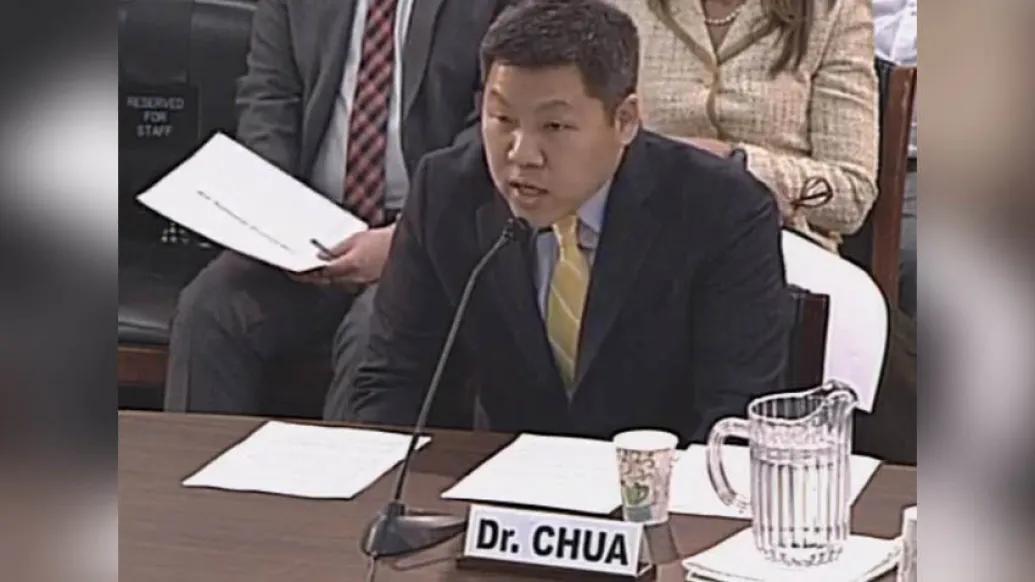
Experts fear this would decrease innovation, competition, affordability and patient choice at a time when the country needs new and more accessible opioid addiction treatments more than ever, says a University of Michigan researcher who testified in Congress this week on the issue.
"For example, the list price for a single monthly dose of Sublocade is $2,000, and that price would continue to be in place or even go up during the exclusivity period because there would be no competition from other extended-release buprenorphine injection products," says Kao-Ping Chua, M.D., Ph.D. "The high prices could prompt some insurers not to cover the drug and could also increase out-of-pocket costs for patients, decreasing adherence."
The FDA recently reversed course and blocked exclusivity for Sublocade. As a result, a new extended-release buprenorphine injection made by another company may become available later this year to treat opioid use disorder. If the FDA hadn't acted, that product would have had to wait four more years to be sold in the U.S.
We need to do whatever we can to increase use, choice and innovation, to make sure there are products for different patients, and do everything we can to give patients with opioid addiction the best chance at recovery.Kao-Ping Chua, M.D., Ph.D.
But Chua and others want to make absolutely sure that the loophole that almost allowed Sublocade to receive exclusivity gets closed for good.
Chua, a health policy researcher at the University of Michigan and a pediatrician at Michigan Medicine, testified about the issue recently at a hearing of the U.S. House Subcommittee on Health of the Energy and Commerce Committee. He's a member of the Susan B. Meister Child Health Evaluation and Research Center and the U-M Institute for Healthcare Policy and Innovation.
The subcommittee is considering H.R. 4712, a bipartisan bill. For drugs designated as orphan drugs because they were supposedly unprofitable, the bill wouldn't allow exclusivity unless sponsors proved that profitability is still unlikely at the time a new form of the drug is approved.
The sponsor of Sublocade wouldn't be able to make this argument because of buprenorphine's high sales, meaning the possibility of exclusivity would be permanently blocked -- even if FDA's recent reversal is overturned in court.
Like podcasts? Add the Michigan Medicine News Break to your Alexa-enabled device, or subscribe for updates on iTunes, Google Play and Stitcher.
"In my view, passing H.R. 4712 is a common sense step that will be good for orphan drug policy, good for public health and good for the millions of Americans with opioid use disorder," says Chua, who laid out the case for closing the loophole last summer in a post on the Health Affairs website with Rena Conti, Ph.D., a health economist at Boston University.
"We know that medications to treat opioid use disorder are extremely effective, yet widely underused," he says. "We need to do whatever we can to increase use, choice and innovation, to make sure there are products for different patients, and do everything we can to give patients with opioid addiction the best chance at recovery."

Health Lab
Explore thousands of health news & research stories by visiting the Health Lab homepage for more.
Media Contact

Public Relations
Department of Communication at Michigan Medicine
Stay Informed
Want top health & research news weekly? Sign up for Health Lab’s newsletters today!
Featured News & Stories

Major Changes to Medicaid
Sports gambling on the rise among college students
What’s changing in Medicaid and what can you do?
Top 7 tips for choosing Medicare prescription drug coverage for 2027

Many older adults make Medicare decisions quickly and most don’t change plans, poll finds

