To Improve Global Health, a Standard List of Essential Diagnostic Tests
Global health funding helps get more than 300 “essential medicines” to developing nations. A group of experts compiled a parallel list of tests it says could help doctors best use these medicines to improve health worldwide.
7:00 AM
Author |
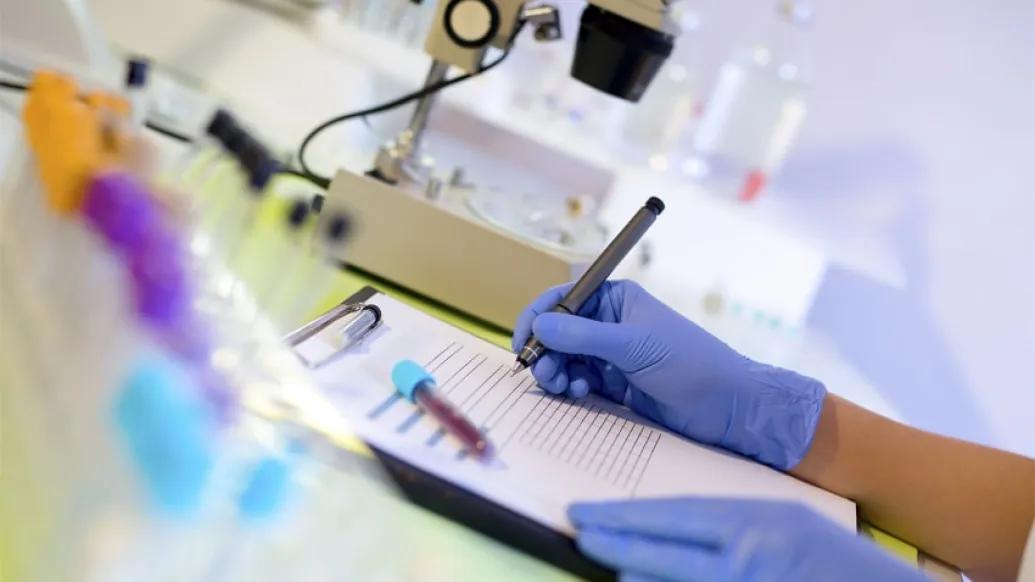
In a typical doctor's office or hospital in the U.S., patients don't think twice about giving a blood or urine sample that can be used to diagnose a disease or infection, or to show if medicines are working. The samples are rushed to a testing lab with modern equipment that's held to high quality standards.
But in developing nations, many of those tests aren't available. Or if they are, doctors may not put much faith in them because of the state of local testing labs.
SEE ALSO: Surgery Surprise: Small, Rural Hospitals May Be Safer for Common Operations
Some of those tests — which can detect emerging viruses such as Zika or Ebola — could make a difference in outbreaks that can affect the rest of the world.
In hopes of changing this situation, a team of experts put together a list of the key tests they think every country should have available along with high-quality standards.
Writing in the New England Journal of Medicine, the experts propose a list of tests that syncs with another more established list: the Model List of Essential Medicines, or EML, published by the World Health Organization.
For the past 40 years, the EML has guided billions of dollars in spending on more than 300 vital pharmaceuticals by government agencies, health care organizations and charity groups worldwide. When a medicine makes the list, a global health funding mechanism jumpstarts to ensure the medicine flows to developing countries.
A parallel Model List of Essential Diagnostics, which the new paper proposes, could make the most of that spending. When performed correctly, these tests can help health teams identify which medication a patient needs and at what dose, track their response to treatment and monitor for medication toxicity.
"Efficient delivery of health care requires diagnostic testing," says Lee F. Schroeder, M.D., Ph.D., lead author of the new paper and an assistant professor of pathology at the University of Michigan Medical School. "You can't treat what you can't test. This list includes the most critical tests for diagnosing conditions, monitoring drug effects and toxicity, reducing over-prescription of antibiotics, and enabling surveillance of infectious threats."
Efficient delivery of healthcare requires diagnostic testing. You can't treat what you can't test.Lee F. Schroeder, M.D., Ph.D.
Compiling the list
Schroeder and his colleagues, including Timothy Amukele, M.D., Ph.D., of Johns Hopkins University, scoured expert databases on diagnostic testing to determine which tests are needed to support the use of each medicine on the EML.
SEE ALSO: 'Moonshot' to Cure Cancer Will Take Collaboration
The resulting list includes 147 essential laboratory tests in 57 categories. A single diagnostic test can guide the use of many different EML drugs.
The paper includes a table of 19 test categories that can guide the use of 10 or more EML medicines, including:
-
Accurate counts of different types of blood cells in a sample, which can directly affect the use of 136 different items on the EML list
-
Accurate blood tests assessing liver toxicity, which can support the use of 104 EML drugs
-
Accurate blood tests for kidney function, which should be used in conjunction with more than 80 items on the EML
-
Standardized use of microscope-based diagnostic tests, which can guide the best use of 85 essential medicines, most of them aimed at treating and preventing infectious disease
-
Urinalysis, when performed well, can monitor the use of 64 EML drugs
-
Tests that look for DNA signatures from an infectious microbe, or isolate and grow that microbe from a sample taken from a patient. These tests can make a difference in outbreaks and the use of 62 EMLs
"Many developing countries have high-quality central public health labs in large cities; the missing piece in global health is a network of smaller but still high-quality labs throughout the country," says Schroeder. Poor test quality, or inappropriate storage of testing materials, can erode doctors' trust in test results.
In fact, a recent WHO literature review identified multiple studies reporting that between 2 and 10 percent of diagnosed HIV patients in the developing world may not have ever been infected by HIV. Rather, these misdiagnoses were based on inappropriate use of diagnostic testing — leading people to believe they have the virus that causes AIDS when in fact they don't.
In another recent study, Schroeder, Amukele and colleagues at a hospital that Johns Hopkins runs jointly with Makerere University in Kampala, Uganda, evaluated diagnostic test availability in that city. While 822 labs offered malaria testing, only five offered testing that's essential to long-term management of diabetes and avoidance of complications, such as blindness, amputation and kidney failure.
Although it will take time and resources to ensure that developing nations have high quality testing capability for even some of the essential diagnostics, Schroeder predicts that it will prove cost-effective in the long run.
"The Model List of Essential Medicines is probably the single most important tool in global health," he says. "We believe a list of essential diagnostics is long overdue and could amplify the impact of current global health investment."
The team is planning further research on the topic and hopes to encourage the global health community to embrace the idea of the Model List of Essential Diagnostics.

Health Lab
Explore thousands of health news & research stories by visiting the Health Lab homepage for more.
Media Contact

Public Relations
Department of Communication at Michigan Medicine
Stay Informed
Want top health & research news weekly? Sign up for Health Lab’s newsletters today!
Featured News & Stories

Carrots Plus Sticks: What Works to Reduce Low Value Care

Top 7 tips for choosing Medicare prescription drug coverage for 2027

Many older adults make Medicare decisions quickly and most don’t change plans, poll finds

What’s the latest on 7-OH and kratom availability and addiction care?
Better prenatal care data could help prevent maternal complications, experts say