
Improving Care for Children During Disasters
Regional hospitals unite to strengthen emergency response plans for children impacted by such crises as a pandemic, hurricane, flood or mass shooting.
5:00 AM
Author |
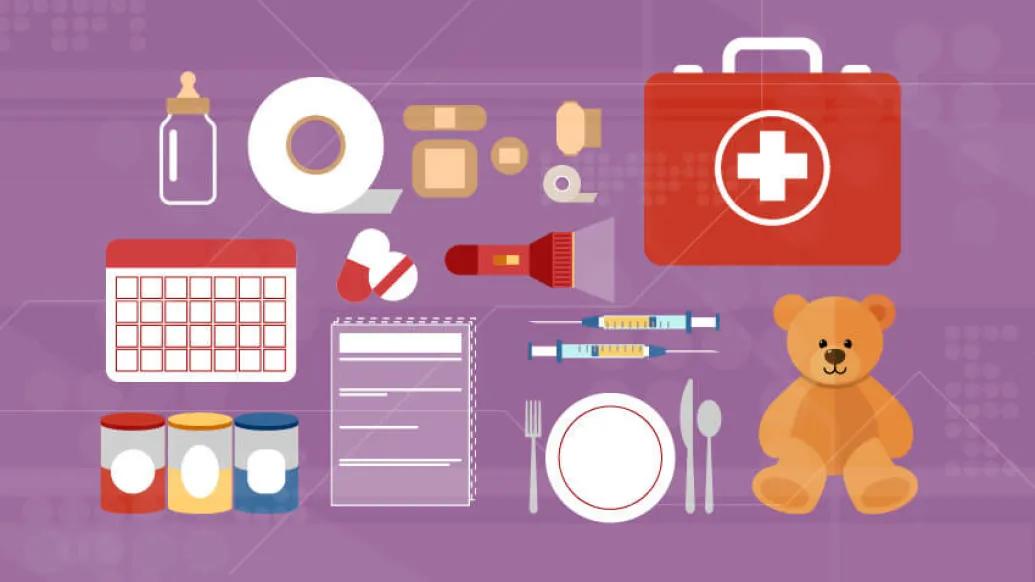
When a hurricane, flood or health disaster strikes, impacted children have unique needs.
Those who are separated from parents may experience severe trauma and psychological distress and need help reunifying with guardians.
Others may need diapers, baby formula and chaperones to keep them safe at shelters.
LISTEN UP: Add the new Michigan Medicine News Break to your Alexa-enabled device, or subscribe to our daily updates on iTunes, Google Play and Stitcher.
And children who get severely sick or injured will need specialized pediatric emergency care.
But when it comes to disaster preparedness, most agencies' response plans are primarily designed with adults in mind – not children.
Now, six Michigan and Ohio hospitals have come together through the Eastern Great Lakes Pediatric Consortium for Disaster Response to change that.
The group unites private and public entities, including trauma centers, pediatric medical centers, government agencies and industry experts, to coordinate and strengthen pediatric emergency capabilities at the local, state and regional levels.
"We recognized major gaps that negatively impact how we care for children affected by disasters," says Marie Lozon, M.D., Chief of Staff at Michigan Medicine and pediatric emergency physician at C.S. Mott Children's Hospital.
"Disaster plans are often focused on adult concerns and medical care. There aren't as many experts specializing in care for children or thinking about their needs. Whether it be diapers at a shelter during a natural disaster, emotional support after a mass shooting or resources to care for a large influx of sick children in a pandemic, we need to be able to meet kids' physical and psychological needs."
"Our goal is to ensure that children's issues are prioritized in disaster response plans."
Hospitals join forces to improve pediatric emergency and disaster care
The consortium launched in 2019 after the six regional hospitals received a $3 million grant from the Assistant Secretary for Preparedness and Response, or ASPR, which leads the nation's medical and public health preparedness for public health emergencies.
Led by Rainbow Babies and Children's Hospital in Cleveland, the group also includes Helen DeVos/Spectrum Health, Children's Hospital of Michigan, Cincinnati Children's and Nationwide Children's Hospital.
Among goals: to strengthen simulation education, drill scenario expertise, resources and research that could improve emergency care for children.
"This model allows for a multi-pronged approach to address gaps in disaster mitigation, preparedness and response for millions of children," Lozon says.
"Our goal is to harness and develop best-practices and share it with other hospitals and entities in the region."
COVID-19's impact on disaster planning efforts
Months after forming, consortium members found themselves responding to a health crisis in real time: the COVID-19 pandemic.
But what became quickly clear was that most children were largely spared from the most serious COVID-19 symptoms. Meanwhile, older adults were becoming critically ill at faster rates.
Units normally dedicated to children's care were transformed into wings used for adult COVID-19 cases to expand capacity. At Michigan Medicine, for example, the Regional Infectious Containment Unit dedicated to COVID care was housed at Mott, and some caregivers normally handling pediatric services pivoted to caring for adults.
"Even though the virus didn't impact children as severely, children's hospitals greatly contributed to the care of COVID-19 patients in their communities," Lozon says.
"Everyone quickly adapted as needed. This meant many of the people thinking about pediatric disaster preparedness in our group were the same people serving their hospital or health system's disaster response for COVID."
Like Podcasts? Add the Michigan Medicine News Break on iTunes or anywhere you listen to podcasts.
"It created a group of people trying to make sure pediatric centers would have the skills and understanding to care for adult patients if we needed to."
For consortium members, it raised a major question: if the scenario were flipped and children were the ones seriously impacted by the virus, could adult hospitals and providers care for pediatric patients?
"The pediatric community responded to the crisis by taking care of patients not normally in their specialty area. It made us think about how we could educate places that are not used to having large numbers of sick kids to care for at once," Lozon says.
"If we ever did get hit with a virus outbreak that seriously impacted children in larger numbers, we would need to be able to tap into all of our resources to appropriately respond. This has become a big focus of our consortium's work."
Strengthening children's disaster resources
Practicing for a crisis is another focal point, Lozon says.
Member hospitals recently hosted a virtual tabletop event involving more than 600 participants to help experts think through pediatric needs if a disaster involved an influx of sick children.
In the hypothetical emergency, COVID-19 had resurged and infected entire families, influenza cases were rampant, and more children were experiencing a rare, COVID-related illness known as multisystem inflammatory syndrome in children, or MIS-C.
Our mission is to develop innovative ways to stretch and best use our resources so we don't have gaps during a crisis and to make sure all children have the best chance of high quality care and survival no matter where they are.Marie Lozon, M.D.
Hospitals had also run out of pediatric intensive care unit beds in the state of Michigan.
Participants quickly identified their top priority in this type of potential disaster: developing a strong process for coordinating care between institutions specializing in pediatric care and those with less experience caring for children in emergencies.
"It can be difficult to diagnose MIS-C if providers don't have enough experience and pediatric expertise," Lozon says. "We would like to create the ability to send deployable teams (whether they be physical or virtual) of experts to areas experiencing a surge in pediatric illness or injury."
"We also talked about ways we could we use telemedicine skills to make a proper diagnosis and determine whether patients need to be transferred to a different hospital."
The group is now actively working with multiple experts to lead research on best practices – particularly in virtual care – to better prepare for children in disasters, Lozon says.
For example, technology partners are helping the group explore innovative virtual platforms that may allow hospitals to help each other respond to critically sick children in a disaster.
"When virtual care exploded during COVID, we said we need to take this a step further and study how we can improve care of children in places that don't necessarily have pediatric specialty care," Lozon says. "We need to develop a more sophisticated response that allows us to be nimble."
Possibilities may include creating safe ways to exchange information via handheld devices or sharing a child's ultrasound image with a provider from miles away in real time.
Technology may also make it possible to virtually coach non-children's hospitals treating children, particularly in rural and underserved areas.
"Our goal is to leverage technology to share medical records in a HIPAA compliant way so we can more easily transmit information from an ambulance to a hospital, allowing providers to understand a child's history before they arrive," Lozon says.
MORE FROM THE LAB: Subscribe to our weekly newsletter
"We are working to strengthen the ability for all hospitals with emergency departments to be able to care for children better and know where they can call for help," she adds. "Instead of just having phone conversations, we want to develop tools that can transmit images and data. That's going to take a long time but we are committed."
The group is also looking into geospatial tools to create maps that allow institutions to hover over certain regions and immediately identify how many hospital beds or ambulances they have and better predict resource availability in particular areas.
"Our mission is to develop innovative ways to stretch and best use our resources so we don't have gaps during a crisis and to make sure all children have the best chance of high quality care and survival no matter where they are," Lozon says

Health Lab
Explore thousands of health news & research stories by visiting the Health Lab homepage for more.
Media Contact

Public Relations
Department of Communication at Michigan Medicine
Stay Informed
Want top health & research news weekly? Sign up for Health Lab’s newsletters today!
Featured News & Stories

Continuing the legacy of a doctor’s doctor

Top 7 tips for choosing Medicare prescription drug coverage for 2027

U-M-led consortium to receive up to $52 million in NIH funding to study why viral respiratory infections affect children differently

4 in 5 parents say having a baby is too expensive

Many older adults make Medicare decisions quickly and most don’t change plans, poll finds

