Hospitals Sending the Most Heart Patients to ICUs Report Worst Results
A new study raises questions on the best use of intensive care units, and the need to improve use of vetted tests and treatments.
2:00 PM
Author |
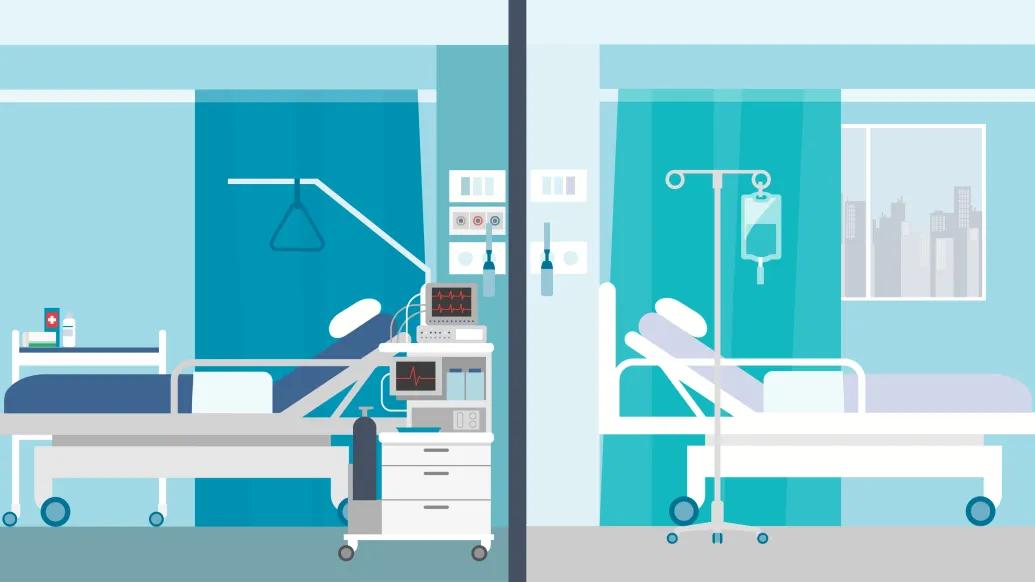
Patients who have heart attacks, or flare-ups of congestive heart failure, can receive care in a variety of hospital locations. But a new study suggests that they'll fare worse in hospitals that rely heavily on intensive care units for patients like them.
In fact, depending on where patients go, they may be half as likely to get certain proven tests and treatments — and less likely to survive a month after their hospital stay.
The findings add to growing evidence that the use of ICU beds in America varies widely. For the first time in heart care, the study shows that hospitals sending the highest percentage of patients to ICUs perform worse on measures of health care quality.
This suggests that more standardization in deciding which patients need an ICU, and increased focus on care quality in hospitals with the highest ICU use, could benefit patients nationwide, according to the authors of the paper published online in the journal CHEST.
"In this country, we still have an open question of what to use the ICU for, and when, and very little evidence to guide physicians," says first author Thomas Valley, M.D., a critical care specialist who takes care of patients in the U-M Health System's Critical Care Medicine Unit.
"Is it for those who were already sick and got worse, or is it a place to send people proactively when we think they might get sicker? And the answer can vary on different days, or based on how many beds are available right then. We hope to build a body of evidence about how to use this valuable resource in the most effective way."
We hope to build a body of evidence about how to use ICUs in the most effective way.
High ICU use and patient outcomes
Valley and his colleagues at the University of Michigan Medical School examined Medicare records from more than 570,000 hospital stays in 2010.
SEE ALSO: How Hospitals Can Improve Crisis Management When Tragedy Strikes
Of more than 150,000 hospitalizations at nearly 1,700 hospitals for heart attack, 46 percent included care in an ICU. A lower, but still sizable, 16 percent of the more than 400,000 hospitalizations for heart failure included an ICU stay at one of 2,199 hospitals.
The team used the federal government's Hospital Compare website, which reports hospital performance, to study how well each hospital did at providing high-quality care, and what percentage of their patients died or returned to the hospital within a month of the hospital stay. They divided all the hospitals into five groups, from lowest ICU use to highest.
The results show that hospitals with the highest percentage of patients admitted to the ICU tended to be those with the smallest total numbers of heart attack and heart failure patients, perhaps suggesting a lack of familiarity with these conditions. They were also more likely to be for-profit hospitals. Patients treated in them were more likely to be from low-income ZIP codes.
The overall quality of care tended to be good and the differences in evidence-based care were relatively small. Although the data still indicate tens of thousands of patients received suboptimal care.
For instance, the high-ICU hospitals were less likely to give heart attack patients aspirin and other drugs known to improve outcomes when they arrived. But they performed as well as other hospitals on several other quality measures.
In heart failure, the high-ICU hospitals were less likely to give important medications, perform key tests of heart function and counsel patients on stopping smoking. They performed as well as other hospitals on educating patients about caring for themselves after they left the hospital.
The biggest difference was in the risk of dying within 30 days of discharge. Heart attack patients treated in high-ICU hospitals were 6 percent more likely to die than patients admitted to low-ICU hospitals. The difference was about 8 percent for heart failure patients. There were no differences in the odds of being hospitalized again, or in total spending on care.
"These studies suggest that hospitals using the ICU frequently could be targets for improvement. If we find out why hospitals are using ICU beds more often for these patients, we could intervene to improve care overall," says Valley.
What the findings mean for patients
Valley and his colleagues note that patients and families of people hospitalized for heart attack and heart failure need to speak up about the patient's wishes for the intensity of care they should receive.
"It's important to understand why you or your loved one are being admitted to the ICU and talk about whether it's in line with your or their wishes," says Valley.
It's important to understand both the benefits and risks of an ICU stay, he notes, such as closer monitoring from nurses, but also the risk of infections and complications resulting from the more invasive nature of care in ICUs.
The group will continue to study data from large groups of patients to determine which ones benefit most from ICU-level care — and which characteristics of ICU care could be safely tried on general hospital floors.

Health Lab
Explore thousands of health news & research stories by visiting the Health Lab homepage for more.
Media Contact

Public Relations
Department of Communication at Michigan Medicine
Stay Informed
Want top health & research news weekly? Sign up for Health Lab’s newsletters today!
Featured News & Stories

More babies with hypoplastic left heart syndrome surviving critical period between surgeries

Distance, insurance, social factors may hinder access to lifesaving heart monitoring for children

Mobile health app improves heart failure medication use, dosing after hospitalization

Jalen Hurts’ blood clot diagnosis: doctors answer common questions

Could a diabetes medication be the next wonder drug?