Teen can eat again following specialized minimally invasive procedure
C.S. Mott Children's Hospital is among few sites in the country to now offer non-surgical “POEM” procedure for pediatric patients to treat swallowing disorder achalasia.
12:30 PM
Author |
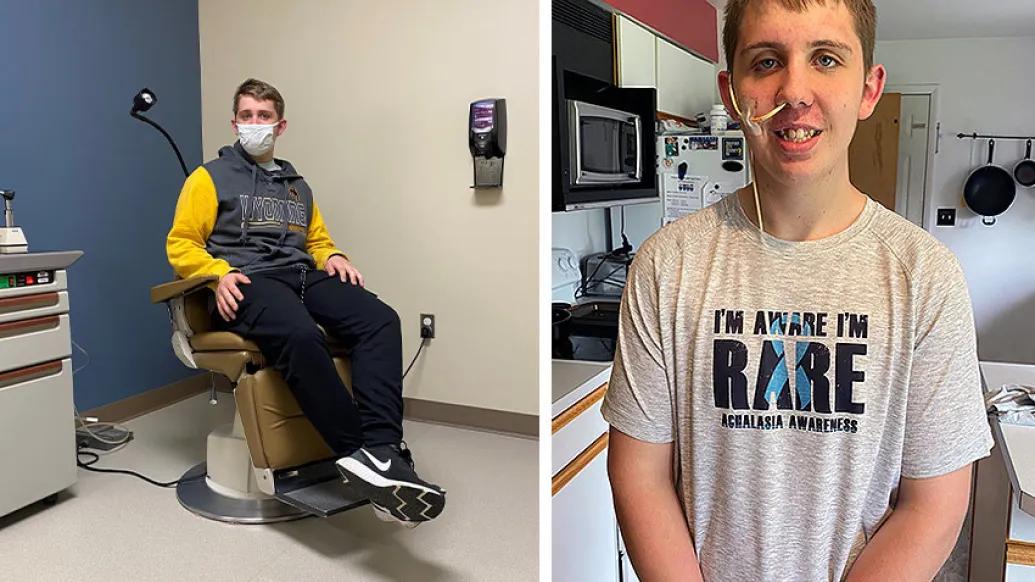
After months of not being able to eat regular meals, 16-year-old Seth Kent knew exactly how he wanted to celebrate his first night back at a restaurant: a macaroni and cheese pizza dinner.
Today, the teenager is grateful every time he takes a bite from any of his favorite foods – bread bowls, chicken and rice and peppermint patties just to name a few.
It wasn’t that long ago that trying to eat any of those things could be life-threatening.
Because of a rare swallowing disorder called achalasia, muscles in Seth’s esophagus would tighten, not allowing food or drinks to pass into the stomach and making choking a serious risk.
In spring, 2022 Seth became one of the first pediatric patients to undergo a non-surgical procedure to treat the condition at University of Michigan Health C.S. Mott Children’s Hospital. The minimally invasive procedure known as peroral endoscopic myotomy, or POEM, allows surgeons to use a flexible tube through the mouth and make a small incision in the esophagus to cut muscle fibers and relax them.
Unlike alternative surgical treatments, the POEM avoids any surgical wounds in the chest or abdomen.
“We were glad Seth had the opportunity to have this procedure so he could avoid invasive surgery,” his mom Jeanette Corbin said.
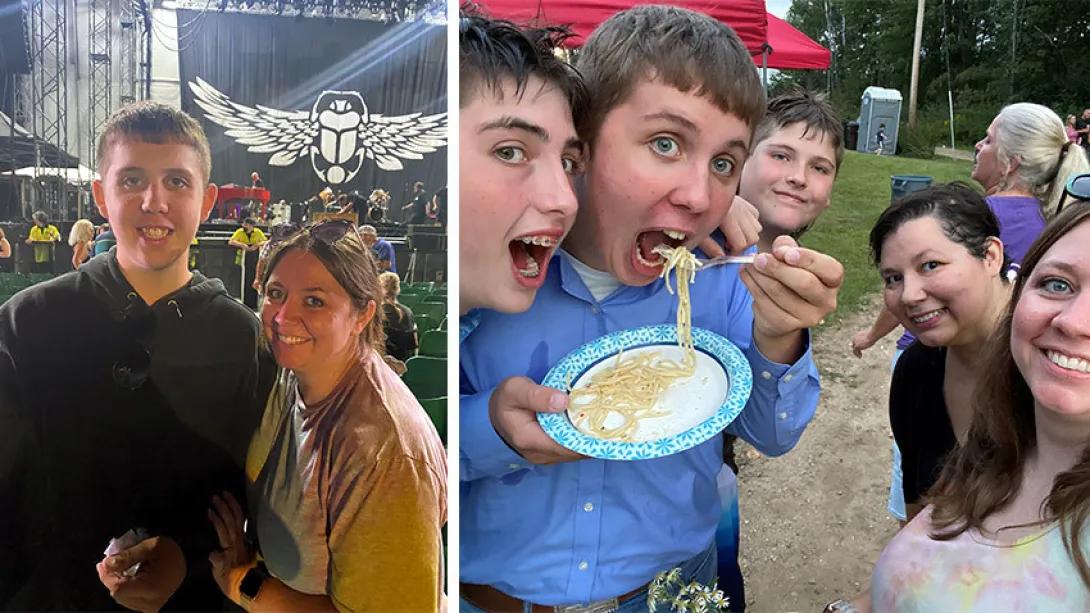
“It’s so great to see him back to being a regular teen, eating his favorite foods and enjoying social activities again.”
Pioneered in Japan, POEM is a relatively new procedure in the United States that is only available at a handful of centers and more commonly used for adults, including at U-M Health. Mott recently became among a select few sites in the country to offer it to eligible pediatric patients as well.
“The POEM procedure has persistently proven to have equal outcomes to surgical options to treat achalasia. It means no incisions, a smoother recovery and reduces surgery risks like infection,” said Mott pediatric surgeon James Geiger, M.D., who performed Seth’s procedure.
“This is a highly specialized procedure not available at many centers, especially for teens and kids, and we’re pleased that we can now offer this less invasive option for our young patients at Mott. We are always trying to bring innovations to our patients with the goal of delivering care in the best way possible.”
“There’s nothing I won’t eat now”
Now a sophomore at Saint Louis High School, Seth has returned to eating without fear.
But it’s been a difficult journey that started nearly a year ago when swallowing food suddenly became uncomfortable, progressively growing worse.
This is a highly specialized procedure not available at many centers, especially for teens and kids, and we’re pleased that we can now offer this less invasive option for our young patients at Mott.
“Food just wouldn’t go down, even when I took a drink,” he said. “One morning I was eating a sandwich on the way to school and immediately threw up. My parents took me to see someone that same day.”
During a swallow study with a local provider, an Xray showed that his lower esophagus was tightening, pushing food back up.
Seth’s family was told he had a serious condition that could make eating dangerous.
His parents took him to U-M Health where he underwent several tests and received the official diagnosis.
“We had no idea what achalasia was, and I joined all these online groups to talk to other parents whose kids had it,” Corbin said. “Some people had to wait much longer for a diagnosis so we were grateful that they quickly identified the problem at U-M so we could move on to treatment.”
Geiger let the family know that Seth was a candidate for the POEM procedure newly offered to pediatric patients at Mott.
“We had researched it and knew POEM was a much better option than the surgical alternatives,” Corbin said. “U-M is one of the best places to be and we knew if they were offering it, they were confident about it. That made us confident that this was the right choice for Seth.”
For weeks while waiting for surgery, Seth relied on a feeding tube for nutrition and was unable to eat or drink before bed to reduce risk of aspirating. It dampened school and social plans since he couldn’t eat with friends, stay the night anywhere or travel as easily.
As a high school athlete on the football, wrestling and track teams, Seth also had to take a break from extracurricular activities.
He underwent the POEM procedure in June 2022. As his esophagus slowly healed over the next few months, he introduced foods back into his diet, starting with soups and liquids, then pureed food and finally regular solids again.
“Food is such a central part of life. So much revolves around it,” Corbin said. “It was so hard watching Seth go through this, but he had such a fantastic attitude the whole time with minimal complains. I just wanted it to be over for him, and I’m glad he was able to get this treatment in Michigan.”
She said she still worries about the future, since a reoccurrence of achalasia and need for further treatment is always possible.
“As a mom it’s still always in the back of my mind. When I see him eat something and he doesn’t seem to chew it well, I’m worried. I’m always asking him if everything is OK, probably driving him crazy. But I’m so happy to see him living fearlessly again and managing it well with such a good attitude," said Corbin.
Seth is also enjoying teen life with many activities to look forward to, including getting his driver’s license, enjoying his new hobby of playing guitar, returning to sports and spending time with friends and family, which includes three younger brothers.
“I can really appreciate everything in a different way. There’s nothing I won’t eat now,” he said. “It’s true that you don’t know what you have until you lose it.”

Health Lab
Explore thousands of health news & research stories by visiting the Health Lab homepage for more.
Media Contact

Public Relations
Department of Communication at Michigan Medicine
Stay Informed
Want top health & research news weekly? Sign up for Health Lab’s newsletters today!
Featured News & Stories
Continuing the legacy of a doctor’s doctor

4 ways to teach your teen safe driving habits
U-M-led consortium to receive up to $52 million in NIH funding to study why viral respiratory infections affect children differently
The AI is listening: Implications of machine generated clinical notes on health care

4 in 5 parents say having a baby is too expensive