Minimally Invasive Procedure Increases Options for Mitral Valve Repair
A new clinical trial is testing a catheter-based approach to treating mitral valve regurgitation, providing a faster procedure with a shorter recovery time.
7:00 AM
Author |
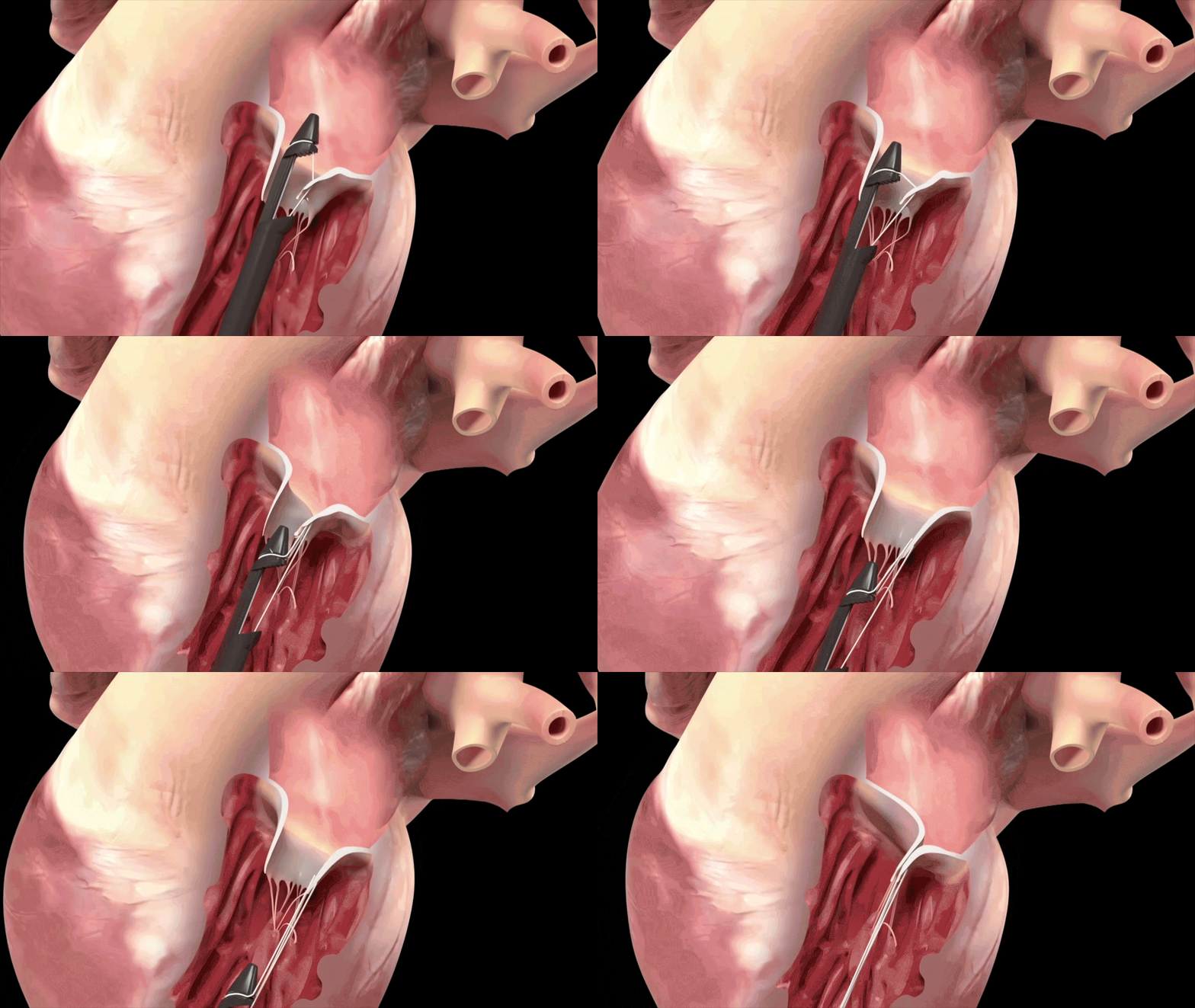
Some heart patients haven't yet been able to access the growing trend toward minimally invasive procedures. A new clinical trial, though, makes a form of mitral valve repair an option without an open-heart surgery.
MORE FROM THE LAB: Subscribe to our weekly newsletter
Matthew Romano, M.D., a cardiac surgeon at Michigan Medicine, is leading the ReChord Trial at the University of Michigan Frankel Cardiovascular Center, the only site in Michigan participating. Previously, such patients would have undergone traditional open-heart surgery using the heart-lung machine and stopping the heart to repair or replace the valve, he says. A catheter-based procedure wasn't an option.
"This is a significant advance in treating mitral valve disease in a less invasive way with less pain and faster recovery," Romano says of the clinical trial.
Targeting the chords
Before treatment, patients with mitral valve disease may have symptoms such as shortness of breath, lightheadedness, fatigue and coughing.
In mitral regurgitation, the leaky valve is unable to keep blood flowing in its journey from the lungs to the rest of the body. The heart pumps harder to get the job done, yet the blood still leaks back into the left atrium where it came from.
The culprit? Tiny strings that tether the mitral valve and keep everything in order. When these chords rupture or elongate, they can't keep the valve in place and functional, so the valve can't seal and close, Romano says. The result is severe regurgitation, or a leaky valve. In a mitral valve repair, the leaflets that control the opening and closing of the valve must be fixed.
Romano's valve repair trial uses a catheter-based system called the NeoChord to re-establish normal leaflet function. He inserts a device about the size of a pencil into the heart while it's beating. It is threaded with artificial chords like the ones in the valve that aren't doing their job.
"Under ultrasound imaging, we then adjust the length of the chords we put in using the NeoChord system to re-establish a normal leaflet motion and resolve the regurgitation," Romano says.
SEE ALSO: Heart Bypasses Cost Billions, but There's Opportunity for Improvement
The procedure is intended for patients who have a prolapse of the anterior or posterior leaflet of the mitral valve with severe mitral regurgitation, Romano says. It takes about an hour — much faster than previously available open-heart options and without use of a heart-lung bypass machine. Romano is performing the procedures in the cardiovascular center's new hybrid operating room, which opened in 2017.
Mitral valve treatment typically allows patients to return to an active lifestyle if used early in the disease course. But recovery from a few-centimeter incision without the need for the heart-lung machine compared with open-surgery makes the process even quicker, he says.
Increasing options for mitral valve disease
The NeoChord procedure in Romano's trial is an option for patients from low to high risk, he says, in contrast to some other trials. For example, transcatheter aortic valve replacement (TAVR) trials began with high-risk surgical patients. While U-M has performed more than 1,000 TAVR procedures, clinical trials for low-risk patients are still in progress.
Other treatment options for mitral regurgitation include medication therapy to ease symptoms, open-heart surgery and other transcatheter procedures, including another U-M trial of transcatheter mitral valve replacement and, for high-risk surgical patients, the MitraClip procedure. For a small number of cases, a full valve replacement is needed.
Mitral stenosis, in which the valve's leaflets thicken or stiffen rather than prolapse, is treated with similar options including a minimally invasive procedure called valvuloplasty to open the valve.
Without timely treatment, mitral valve disease can lead to dangerous complications, including blood clots, an enlarged heart, pulmonary hypertension, irregular heartbeat, heart failure and stroke.

Health Lab
Explore thousands of health news & research stories by visiting the Health Lab homepage for more.
Media Contact

Public Relations
Department of Communication at Michigan Medicine
Stay Informed
Want top health & research news weekly? Sign up for Health Lab’s newsletters today!
Featured News & Stories

Digital alerts support timely treatment decisions of critically ill cardiac patients

Is the United States Lagging Behind Europe in Memory Improvement?

Reducing infections after heart surgery could save Medicare $441 million per year

Young father survives aortic dissection after delayed diagnosis

Weighing TAVR vs. SAVR for aortic stenosis treatment