First-of-its-kind whole lung simulator helps predict new treatments and vaccines for tuberculosis
The research team is the first to perform virtual clinical trials using a multi-scale lung model, with early results expected next year, to examine this reemerging global health threat.
11:41 AM
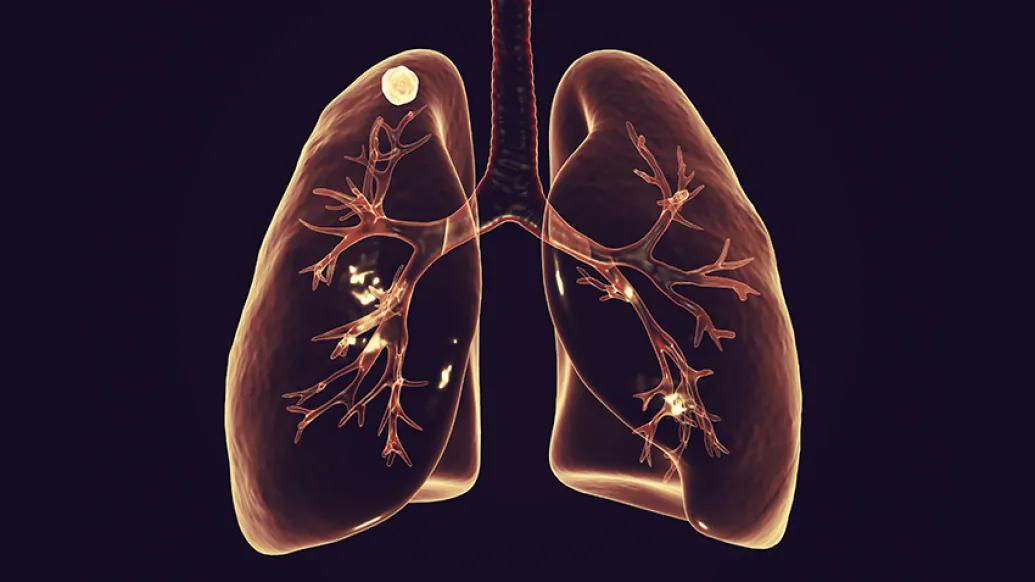
As the second leading infectious killer after COVID-19, tuberculosis is considered a major worldwide health threat – accounting for nearly two million deaths annually, according to the World Health Organization. A team of University of Michigan researchers may have discovered the secret to advancing new treatments and vaccines for TB for the first time in a century: mathematics.
By applying machine learning algorithms, utilizing complex mathematical and computational formulas, and writing hundreds of thousands of lines of computer code, applied mathematicians at the U-M Medical School have created a groundbreaking whole lung simulation capable of reproducing activity in the lungs, lymph nodes, and blood vessels during a pulmonary TB infection.
The first-of-its kind represents more than two decades of work to understand how the disease behaves in humans. Researchers are now using it to hold virtual clinical trials to test new drug regimens and develop novel vaccine approaches, something that hasn't been done since the first vaccine was developed in 1921.
"No one has ever been able to do this before," said Denise Kirschner, Ph.D., a mathematical biologist who heads a lab studying the computational immunology of tuberculosis.
"Because we're accurately illustrating the disease dynamics occurring from the molecular level through the cellular level to whole organ levels, we're able to identify which drug regimens and which doses will work better to treat the bacteria that causes TB, and which vaccines will be most effective in preventing infection."
This work is important because TB is notoriously challenging to treat due to the nature of granulomas (spherical, tumor-like clusters of immune cells) that form around invading bacteria in the lung as part of the body's immune response. Kirschner explained that their formation, growth, propagation, and fate hold the key to modelling and understanding how to effectively treat TB, and the simulation offers researchers an unprecedented view into what's happening.
"The goal is to develop better treatments and vaccines because the one developed a century ago is no longer protecting people," she said, pointing to a recent rise in TB cases reported in Washington and California as an example that no place is immune to reemergence of the disease. "This is an eradicable disease, but if we don't have the resources and understanding, we can't get at it."
Kirschner's team is currently working with the National Institutes for Health (NIH), Bill & Melinda Gates Foundation and the Wellcome Trust, U.K. to identify treatments that perform better in a shorter amount of time, with fewer side effects and fewer required drugs.
For example, the current regimen requires TB patients to take four drugs over the course of six to nine months. Failure to complete the entire course of prescribed antibiotics allows strains of TB to become drug resistant, which creates an even bigger problem.
Researchers using simulations—which are based on a digitized model of a healthy monkey lung and rely on vast amounts of biological data from experiments that were conducted at the TB non-human primate center at the University of Pittsburgh (headed by JoAnne Flynn)—researchers track the action inside the lung during an immune response to see exactly how different drugs penetrate and distribute to kill the bacteria responsible for infection. Early results of the technique, which is also being used to test new vaccine candidates, will be published next year.
"We've been able to do things differently because now we can 'see' the whole picture — from the lung to the lymph nodes it drains to, to granulomas within the lungs, to the bacteria within the immune cells, and even the proteins that are secreted and communicating between cells during infection," said Kirschner, who hopes to extend her work to build an entire virtual human model in the future.
"While this disease has been endemic throughout the world with two billion people currently infected, it has largely been under control within the U.S. and U.K. Now that it's on the rise again, we're going to need new approaches to treat and prevent it."
Learn more about this project.
About Society for Industrial and Applied Mathematics (www.siam.org)
Society for Industrial and Applied Mathematics (SIAM), headquartered in Philadelphia, Pennsylvania, is an international society of more than 14,000 individual, academic and corporate members from 85 countries. SIAM helps build cooperation between mathematics and the worlds of science and technology to solve real-world problems through publications, conferences, and communities like chapters, sections and activity groups.

Health Lab
Explore thousands of health news & research stories by visiting the Health Lab homepage for more.
Media Contact

Public Relations
Department of Communication at Michigan Medicine
Stay Informed
Want top health & research news weekly? Sign up for Health Lab’s newsletters today!
Featured News & Stories
The AI is listening: Implications of machine generated clinical notes on health care

Comprehensive DNA sequencing reveals hidden drivers of cancer
‘Molecular glue’ stabilizes protein that inhibits development of non-small cell lung cancer and uterine cancer

4 in 5 parents say having a baby is too expensive

Many older adults make Medicare decisions quickly and most don’t change plans, poll finds