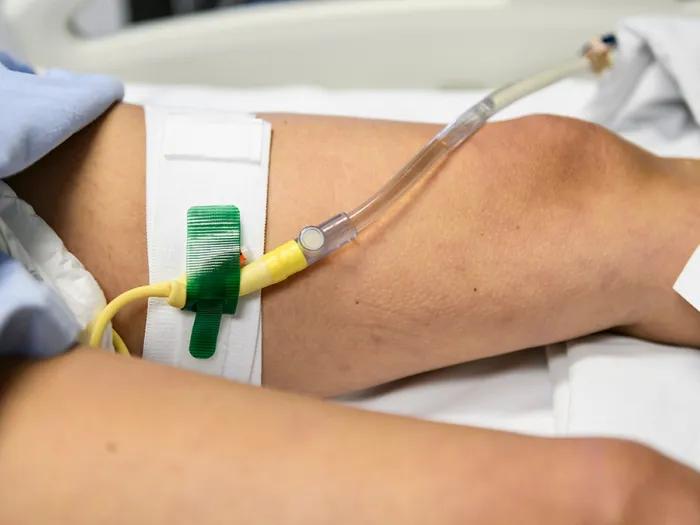
ECMO offers sickest COVID patients a chance to survive, but a slimmer one than previously thought
New findings show importance of carefully selecting patients for a critical care treatment requiring intense staffing, specialized equipment and advanced expertise.
6:30 PM
Author |
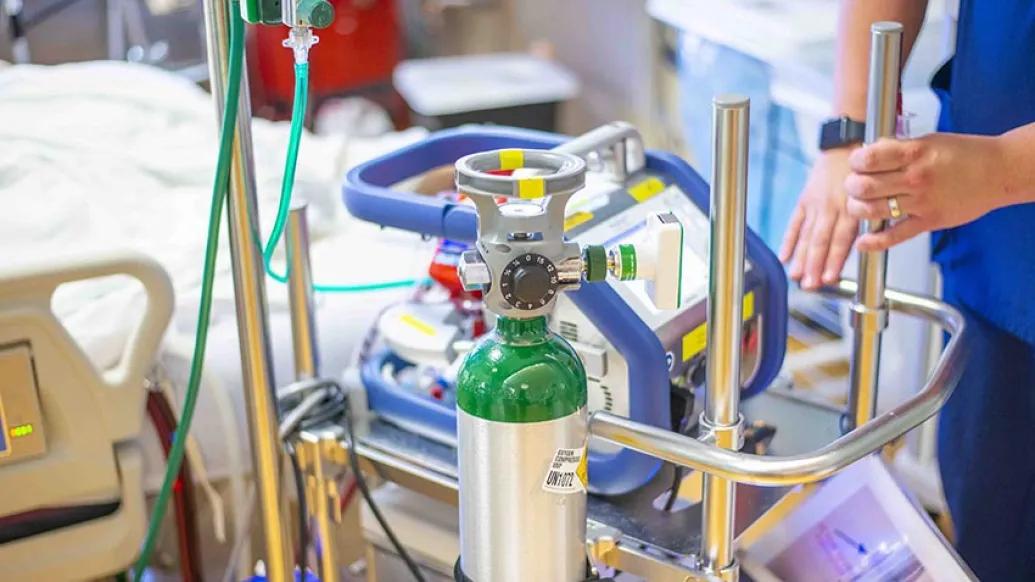
The life-support system called ECMO can rescue COVID-19 patients from the brink of death, but not at the rates seen early in the pandemic, a new international study finds.
Where once about 60% of such patients survived at least 90 days in spring 2020, by the end of the year just under half of COVID patients on ECMO survived that long.
The decreased survival over time might be due to a combination of factors, including which critically ill patients clinicians chose to place on ECMO as the pandemic went on, and the treatments the patients had received before they started on ECMO.
The new findings show how important it is for hospitals that offer ECMO to choose carefully which patients get access to this labor-intensive level of care, the authors say.
Hospitals should also make policies that can guide such choices when ECMO circuits are in high demand because of a pandemic surge, they advise.
The new findings are published in Lancet by an international team co-led by ECMO experts from the University of Michigan, Singapore and Columbia University. The paper uses data from more than 4,800 patients over age 16 who were treated with ECMO for advanced COVID-19 in 41 countries during 2020.
The data for the study were contributed by ECMO centers to a registry run by ELSO, an international organization devoted to ECMO and other forms of advanced life support.
A last-chance option
ECMO, short for extracorporeal membrane oxygenation, has been used for decades in select hospitals to treat critically ill children and adults. It takes over for both the heart and lungs temporarily, circulating the blood outside the body under constant supervision of trained providers.
At the start of the pandemic, some experts had strong reservations about placing COVID-19 patients on ECMO, for fear of harming their lungs. As more centers began to try it, the survival rate mirrored that of ECMO's use in other forms of acute lung failure, as the team behind the new paper reported a year ago.
But all the centers in that first study had begun offering ECMO before May of 2020, and most were highly experienced with providing ECMO in general, says Ryan Barbaro, M.D., M.S., co-first author of the new paper, associate professor at the U-M Medical School and intensive care physician at Michigan Medicine, the University of Michigan's academic medical center.
The new study breaks the patients into three groups: those treated before May 1, 2020, those treated in these "early adopter" hospitals after May 1, and those treated with ECMO in other hospitals from May 1 through the end of 2020. May 1 was chosen because the evidence for how best to treat critically ill COVID-19 patients had evolved considerably by then.
MORE FROM THE LAB: Subscribe to our weekly newsletter
"What we noticed right away is that the patients treated later in the pandemic were staying on ECMO longer, going from an average of 14 days to 20 days. They were dying more often, and these deaths were different," said Barbaro. "This shows that we need to be thoughtful about who we're putting on ECMO and when we're making the decision to take patients off who aren't getting better. Across the U.S. right now, we have places where ECMO is a scarce resource whereas in Michigan it's not quite at that point, but we anticipate it might be."
Within the "early adopter" centers, mortality rates increased from 37% in the months before May, to 52% after May. At the centers that didn't start providing ECMO until at least May, 58% of the patients died within 90 days of being placed on an ECMO circuit.
Patients treated with ECMO later in the pandemic were more likely to have received medications such as remdesivir and dexamethasone, and to have received non-invasive ventilation before being intubated for total breathing support.
Decisions and ethics during a pandemic surge
Having patients stay on ECMO for a longer time ties up many resources, including the machines and tubing that make up an ECMO circuit, and the specially trained nurses, respiratory therapists and other staff it takes to keep a circuit operating safely.
When a hospital has a large number of COVID-19 patients and others in intensive care, the team's ability to provide the same level of care that they did before the surge can suffer, and mortality might increase.
If many hospitals in a region or collection of states are coping with a large number of critically ill COVID-19 patients, it can be hard to find an ECMO-capable hospital to transfer patients to. Sending more ECMO circuits – the pumps, tubes and controllers used in the treatment – to these hospitals is not sufficient; specially trained teams, adequate blood supply and other factors are all needed to support each ECMO patient.
So, the authors say, it's important for ECMO centers to carefully consider which risk factors and personal characteristics might make a patient more or less likely to survive if placed on ECMO, especially if they might need to be on for a while. ELSO offers resources and guidelines can help with patient assessment.
The research team used methods developed by U-M School of Public Health statistician Philip Boonstra to adjust the data to make apples-to-apples comparisons. This allowed them to ensure, for instance, that the survival percentages were not affected by the fact that so many more patients were transferred out of their ECMO hospital later in the pandemic compared with at the start.
In addition to working on the ELSO COVID-19 registry, Barbaro is leading a clinical observational study called ASCEND that is tracking ECMO outcomes in children and adolescents at nearly 100 hospitals around the world. As the Delta variant of the novel coronavirus spreads rapidly, the research team has already noticed that the majority of pediatric patients being placed on ECMO at this time are needing it because of COVID-19.
Like Podcasts? Add the Michigan Medicine News Break on iTunes, Google Podcasts or anywhere you listen to podcasts.
"In these moments of crisis, our ability to meet demand presents ethical challenges, and COVID has drawn out the weaknesses in our system, as well as showing how those with resources and relatives who can advocate on their behalf are more able to find out about ECMO and seek the opportunity for their loved one to be treated," Barbaro said. "Meanwhile, hospitals in non-surge areas need to reflect on what policies and procedures they'll use if they experience another surge, to foster ethical allocation when resources are constrained."
Paper cited: "Extracorporeal membrane oxygenation for COVID-19: evolving outcomes from the international Extracorporeal Life Support Organization Registry," Lancet. DOI: 10.1016/S0140-6736(21)01960-7

Health Lab
Explore thousands of health news & research stories by visiting the Health Lab homepage for more.
Media Contact

Public Relations
Department of Communication at Michigan Medicine
Stay Informed
Want top health & research news weekly? Sign up for Health Lab’s newsletters today!
Featured News & Stories
Human Rabies Exposures Growing Across the Country
Top 7 tips for choosing Medicare prescription drug coverage for 2027

Many older adults make Medicare decisions quickly and most don’t change plans, poll finds
What’s the latest on 7-OH and kratom availability and addiction care?
Better prenatal care data could help prevent maternal complications, experts say