Deep Learning Algorithm Detects Acute Respiratory Distress Syndrome with Expert-Level Accuracy
The algorithm analyzes chest x-rays to detect this common, but under-recognized, critical illness syndrome.
2:51 PM
Author |
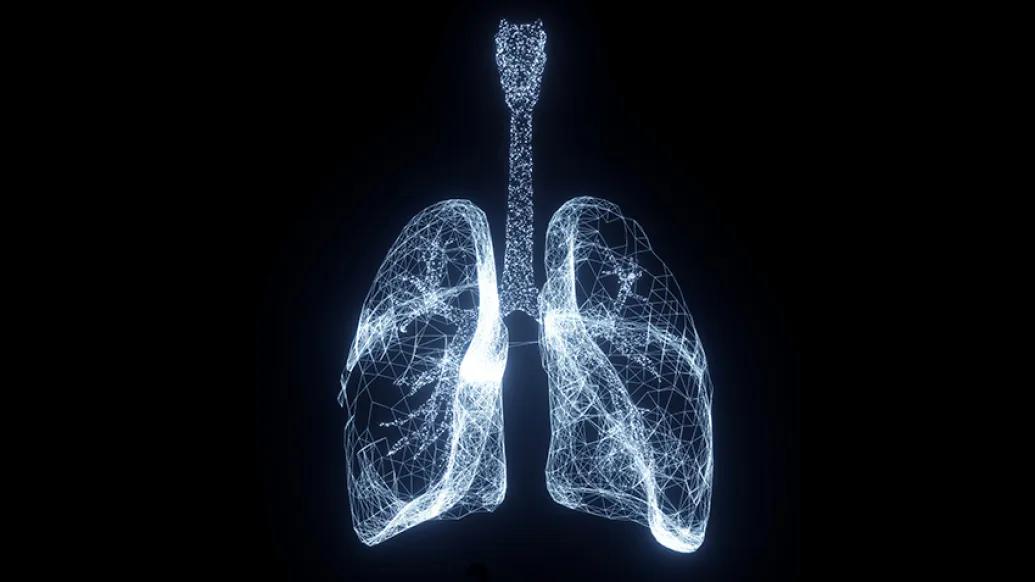
Acute Respiratory Distress Syndrome, or ARDS, is a life-threatening lung injury that progresses rapidly and can often lead to long-term health problems or death. Yet, it can be difficult for physicians to recognize. As a result, ARDS patients may not always receive the right care.
Now researchers at Michigan Medicine and the Michigan Center for Integrative Research in Critical Care, or MCIRCC, may have a solution.
"In our previous work, we found that physicians have difficulty identifying findings of ARDS on chest x-rays," says Michael Sjoding, M.D., a pulmonary critical physician at Michigan Medicine and lead author of the study. "Early recognition and treatment are key factors in treating ARDS. Delays can be catastrophic."
Like Podcasts? Add the Michigan Medicine News Break on iTunes, Google Podcast or anywhere you listen to podcasts.
To address this problem, the research team developed a new artificial intelligence algorithm that analyzes chest x-rays for ARDS.
In a study published in Lancet Digital Health, the team showed that it could, in fact, identify ARDS findings with higher accuracy than many physicians. It also performed well when it was externally validated in patients from another hospital system.
Behind the algorithm creation
Developing the algorithm was no small task.
"These types of algorithms are very 'data hungry'," says Dr. Sjoding, "which means they need a large amount of data to learn from."
The algorithm they used, a type of machine-learning model called deep convolutional neural networks, or CNNs, had 121 layers and 7 million parameters.
Using an innovative approach, the team then trained the algorithm to identify common radiologic findings, but not ARDS, on 450,000 chest x-rays from publicly available sources.
Then they trained the algorithm to detect ARDS using a unique dataset of 8,000 chest x-ray studies carefully reviewed and annotated for ARDS by Michigan Medicine physicians. This approach is called transfer learning, which has many parallels to how humans learn.
"Newborns might first learn to recognize simple objects like a cup or an apple before they recognize more sophisticated objects like a space shuttle," says Sardar Ansari, M.D., director of the MCIRCC Data Science Unit and a research assistant professor at Michigan Medicine. "The same principle is at play here. We build a model to perform a simpler task before repurposing it for a related, but more difficult, problem."
Further research is needed to evaluate the impact of the algorithm in a clinical setting, but the team at MCIRCC is confident that it will be game-changer.
They envision it will help physicians identify ARDS patients more quickly and accurately, and ensure patients receive evidence-based care. The tool could also accelerate ARDS research, Sjoding notes, "We now have a highly reliable way to identify ARDS patients, which will also allow us to study them more effectively."
"This is another great example of MCIRCC's team science approach bringing together clinicians, engineers, data scientists and others to solve significant challenges in critical care," says MCIRCC's executive director Kevin Ward, M.D. "The creative approach of using deep learning networks trained using transfer learning for ARDS detection will be a fundamental leap forward in ARDS care, especially in resource-challenged environments."
Paper cited: "Deep learning to detect acute respiratory distress syndrome on chest radiographs: a retrospective study with external validation," The Lancet. DOI: 10.1016/S2589-7500(21)00056-X

Health Lab
Explore thousands of health news & research stories by visiting the Health Lab homepage for more.
Media Contact

Public Relations
Department of Communication at Michigan Medicine
Stay Informed
Want top health & research news weekly? Sign up for Health Lab’s newsletters today!
Featured News & Stories

Emergency room intervention pairs smartphone, telehealth counseling to reduce risky firearm behavior

Many hospitals still don’t do enough to prevent UTIs from catheters

Digital alerts support timely treatment decisions of critically ill cardiac patients

Have an MCAS diagnosis? Well, maybe not

Rheumatologist finds contentment and community through family farm