Study: 99% of Chronic Sinusitis Diagnoses by Nonspecialists Are Wrong
New data suggests that if you were diagnosed with chronic sinusitis by a non-otolaryngologist, you should follow up with a specialist.
8:00 AM
Author |
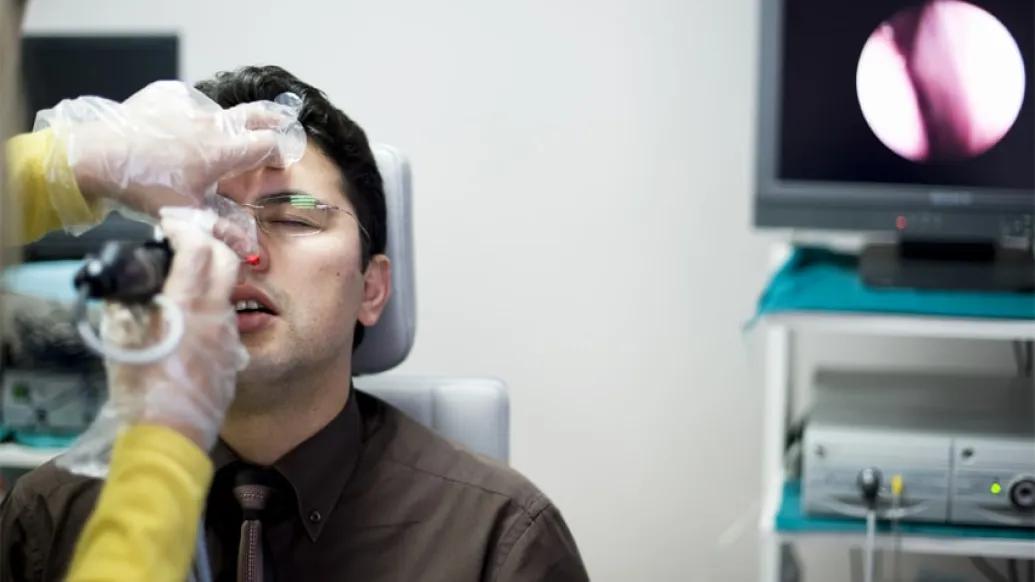
If you've been diagnosed with chronic sinusitis, you may want to follow up with an ear, nose and throat doctor, or an otolaryngologist, to see if you really have it.
A recent University of Michigan study found more than 99 percent of patients did not actually have chronic sinusitis when their diagnosis came from the emergency department or their primary care physician.
Only one out of 114 individuals newly diagnosed with chronic sinusitis met the diagnostic criteria when they were seen in the emergency department or by their primary care physician.
"Diagnosis with a chronic condition has a major impact on patients — economically, psychologically and socially," says lead author Sarah Novis, M.D., a former U-M resident physician now practicing in Florida. "For many patients misdiagnosed with chronic sinusitis, time and money is wasted on the wrong treatment."
Symptoms of chronic sinusitis include:
-
Thick yellow or green nasal drainage
-
Facial fullness or pressure
-
Inability to breathe through the nose
-
Decreased sense of smell and taste
-
Evidence of inflammation on exam, endoscopy or CT scan
-
Long-lasting symptoms (more than 3 months)
These symptoms overlap with those of multiple other common problems, including migraine or tension headaches, viral infections, allergies or a deviated nasal septum.
Primary care and emergency physicians were less likely to follow the criteria that ear, nose and throat doctors use to make a correct diagnosis of chronic sinusitis.Melissa Pynnonen, M.D.
Different conditions, different treatments
In the study, only 11 percent of patients had symptoms lasting the required three months or more before receiving a diagnosis of chronic sinusitis. Patients with symptoms lasting less than three months may still have sinusitis, but it would be acute rather than chronic.
"The distinction between acute and chronic sinusitis is important because these two conditions are treated differently," Novis says. "Acute sinusitis often resolves without treatment or with only a short course of antibiotics or nasal steroid spray. Chronic sinusitis, though, has a more complicated treatment. It requires a longer course of antibiotics, often guided by nasal cultures, and may also require oral steroids and allergy treatment. "
It can be difficult to get the correct diagnosis in a regular clinic or emergency room setting, which may lack specific tools like a CT scan, endoscopy or the option for an otolaryngology consultation. The specific symptom and time criteria needed for this diagnosis may also be less familiar to non-otolaryngology providers who do not deal with the condition as frequently.
"Primary care and emergency physicians were less likely to follow the criteria that ear, nose and throat doctors use to make a correct diagnosis of chronic sinusitis," says principal investigator Melissa Pynnonen, M.D., associate professor of otolaryngology at U-M.
The researchers are now investigating what other diagnoses these patients went on to receive that may better explain their symptoms, including migraine headaches, allergies and other nasal problems.
"If you were diagnosed with chronic sinusitis in an emergency room or primary care setting and still have symptoms, despite completing the recommended treatment, you may want to consider evaluation by an ear, nose and throat/otolaryngology specialist," Novis says.
The American Rhinologic Society, the Triological Society, the Michigan Institute for Clinical and Health Research and the National Institutes of Health funded the research.

Health Lab
Explore thousands of health news & research stories by visiting the Health Lab homepage for more.
Media Contact

Public Relations
Department of Communication at Michigan Medicine
Stay Informed
Want top health & research news weekly? Sign up for Health Lab’s newsletters today!
Featured News & Stories

5 things to know about ALS

Weight loss and surgery restore patient’s throat after near-death brush with likely COVID

Research may help better predict outcomes in kids with congenital cytomegalovirus

How Student Debt is Impacting Nursing

Pollen exposure linked to worse quality of life for chronic sinus infection sufferers