Most older adults are wary of mixing health care and religion or spirituality, poll finds
But majority see role for health care providers in finding meaning or hope in the face of illness, and are comfortable discussing their beliefs with their providers.
8:00 AM
Author |
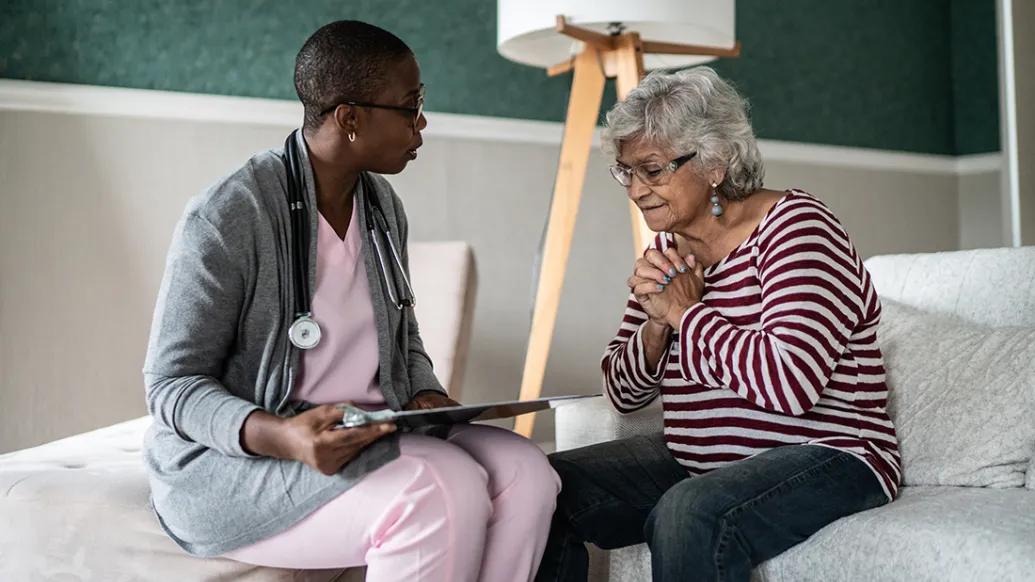
When it comes to matters of personal beliefs, most older Americans prefer to keep their health care and their spiritual or religious lives separate, a University of Michigan poll finds.
But they do see a role for their health care providers in helping them cope with illness by looking for meaning or hope.
In all, 84% of people between the ages of 50 and 80 say that they have religious and/or spiritual beliefs that are somewhat or very important to them, including 71% who cited religious beliefs and 80% who cited spiritual beliefs, according to new data from the National Poll on Healthy Aging. About 40% of these older adults say those beliefs have gotten more important to them as they grow older.
Among older adults with religious or spiritual beliefs that are important to them, 19% say their beliefs have influenced their health care decisions, and 28% say they want health care providers to ask them about their beliefs.
Meanwhile, 77% of all older adults, regardless of beliefs, say health care providers should keep their own personal beliefs separate from how they deliver care.
SEE ALSO: Not Just for Christians: A Hospital Chaplain Debunks Spiritual Care Myths (uofmhealth.org)
The poll is based at the U-M Institute for Healthcare Policy and Innovation and supported by AARP and Michigan Medicine, U-M's academic medical center.
For the report, the poll team worked with Adam Marks, M.D., M.P.H., a hospice and palliative care physician at Michigan Medicine, and L.J. Brazier, M.Div., a chaplain at Michigan Medicine's Department of Spiritual Care.
"While 45% of older adults say their religious beliefs are very important to them, and 50% say that about their spiritual beliefs, even this group largely wants to keep this aspect of their lives separate from their health care," said Marks, an associate professor of geriatric and palliative medicine. "But a sizable majority of all older adults – whether or not they say belief is important to them – reported that they'd turn to health care workers to help them find deeper meaning in their illness, and 78% believe health care workers will help them find hope when they're having a health-related challenge."
Brazier notes that many health care systems have a way to record the religious affiliation of patients in their electronic medical records, and that medical students and others training for health professions are told to ask their patients about any beliefs that might affect their future care.
While 45% of older adults say their religious beliefs are very important to them, and 50% say that about their spiritual beliefs, even this group largely wants to keep this aspect of their lives separate from their health care.Adam Marks, M.D., M.P.H.
Having this information available can help providers ensure that patients with strongly held beliefs or specific religious affiliations receive everything from appropriate hospital food to visits with chaplains of a specific faith tradition when they're having a health crisis or nearing the end of life.
But for those who do not follow a faith tradition or have strongly held beliefs, having that information available to health providers can also be helpful.
"Being a religious or spiritual person, or not following a faith tradition or spiritual practices, is a highly personal matter," said poll director Jeffrey Kullgren, M.D., M.P.H., M.S., an associate professor of internal medicine at Michigan Medicine and physician and researcher at the VA Ann Arbor Healthcare System. "So perhaps it's not surprising that only about a quarter of all people in this age range say they've talked about their beliefs with a health care provider, though this rose to about one-third of those who say their religious or spiritual beliefs are very important to them."
In all, 70% of those who say their beliefs are somewhat or very important to them reported feeling comfortable discussing their beliefs with their health care providers.
SEE ALSO: Primary Care Doctors Play Key Role at Life's End, Research Finds (uofmhealth.org)
Even if patients don't want to discuss their beliefs with their health providers at a typical appointment, it's important for providers to know if patients with significant health needs, or those experiencing a health crisis, are connected to a faith community that can help provide support.
In all, 65% of the older adults whose religious or spiritual beliefs are important to them said they belong to a community of people who share their beliefs.
The poll report is based on findings from a nationally representative survey conducted by NORC at the University of Chicago for IHPI and administered online and via phone in July 2022 among 2,163 adults aged 50 to 80. The sample was subsequently weighted to reflect the U.S. population. Read past National Poll on Healthy Aging reports and about the poll methodology
Live your healthiest life: Get tips from top experts weekly. Subscribe to the Michigan Health blog newsletter
Headlines from the frontlines: The power of scientific discovery harnessed and delivered to your inbox every week. Subscribe to the Michigan Health Lab blog newsletter
Like Podcasts? Add the Michigan Medicine News Break on Spotify, Apple Podcasts or anywhere you listen to podcasts

Health Lab
Explore thousands of health news & research stories by visiting the Health Lab homepage for more.
Media Contact

Public Relations
Department of Communication at Michigan Medicine
Stay Informed
Want top health & research news weekly? Sign up for Health Lab’s newsletters today!
Featured News & Stories

What’s the latest on 7-OH and kratom availability and addiction care?

A metabolic “switch” that could help reset scar-producing cells in scleroderma

Depression in OBGYN residents needs more attention, study suggests

Emergency room intervention pairs smartphone, telehealth counseling to reduce risky firearm behavior

Better prenatal care data could help prevent maternal complications, experts say