Finding ‘Fierce Gratitude’ in Sickness and Loss: a Cancer Widow’s Story
When the worst occurs, perspective can be everything. How shifting their focus after a cancer diagnosis helped one couple cope.
1:00 PM
Author |
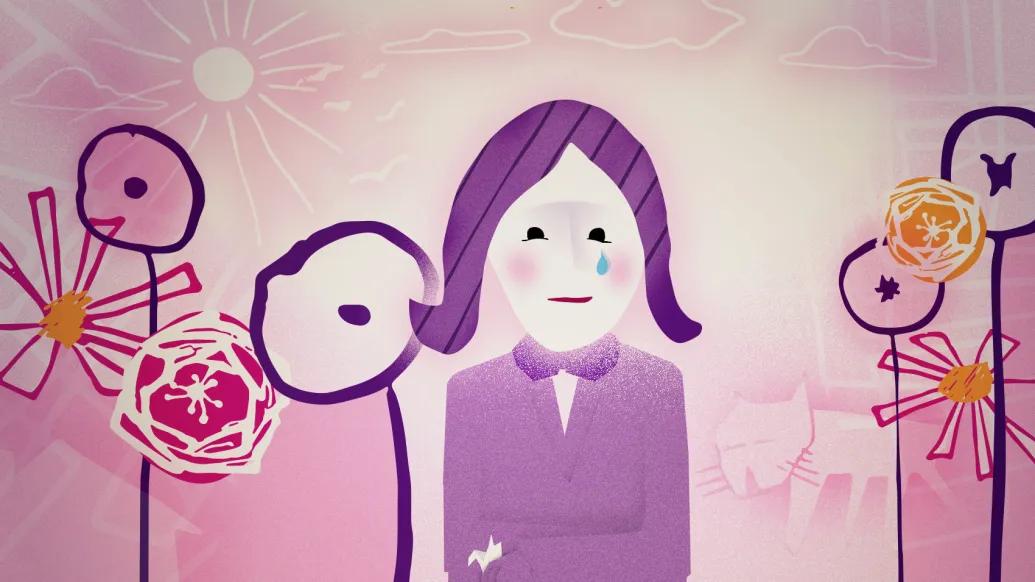
Whether you are facing a medical crisis or someone you know and love just heard life-changing news, chances are you're in a place — both literally and figuratively — that you never imagined.
MORE FROM MICHIGAN: Subscribe to our weekly newsletter
I was 33 when my own life hit a brick wall.
Despite having a master's degree in social work, which prepared me to help other people cope with crisis every day at my job, I was completely lost upon hearing the news that my husband, Roy, had advanced adrenal cancer.
Within days of the diagnosis in 2007, I noticed an unusual clarity and calmness in Roy's demeanor. I, on the other hand, was an emotional wreck and quietly alone. I was holding my breath from one doctor's appointment to the next.
It would take time for me to see things differently.
Opening my eyes to gratitude
During an elevator ride to an early morning appointment at the University of Michigan Comprehensive Cancer Center, we encountered a young boy in a wheelchair, bald and attached to an IV.
SEE ALSO: How Dads Can Cope When a Child Is Sick
His parents hovered protectively, so I resisted crowding into the elevator with them. One parent motioned for me to enter so I pushed Roy's wheelchair forward but avoided eye contact with other passengers.
After the doors opened, I pushed Roy down the hall without a word, fighting back tears. Finally, I had to push him to the side and sprint to the nearest bathroom, where I sobbed with a new intensity.
There was no hiding it from my husband, whose response to my outburst surprised me.
Said Roy: "Seeing that little guy reminds us how much we have to be grateful for, doesn't it?"
Grateful? I desperately wanted to save Roy's life and knew it wasn't possible. The process of entering a state of gratitude at that grave moment was the exact opposite of how I felt.
But he wasn't going to let it go. Roy gently reminded me that we used to exchange gratitude lists before we were married.
So, without missing a beat, he began to compile a new gratitude list: our luck at being seen at a world-class cancer center, how they managed to get us an appointment so early, and how well we had navigated around such a big place.
Indeed, there was plenty to embrace.
Roy clutched my hand and added, "We have each other."
Putting gratitude into practice
Only four weeks after that tender exchange, Roy died.
Even today, I cling to that moment. My husband taught me that what lies beneath the surface of any difficult illness is fierce gratitude. I refer to it as "fierce" because so much happened, and yet Roy nonetheless found comfort in the process.
SEE ALSO: My Lewy Body Dementia Journey with the Love of My Life
When you've faced difficult times or suffered an unspeakable loss, fierce gratitude is a journey that draws courage from your heart. In the depths of your greatest fears there are things, ever so small, that you can control — your breathing and mind, for example.
While I couldn't control the doctor's conclusions or the outcome of Roy's CT scan, I could control my breath by drawing upon a practice I learned in a college yoga class.
It's simple: inhale for five seconds (counting can help), hold it for two more, and let the exhale last longer than the inhale. Repeat. For me, the results were immediate and positive.
Next, I worked to change my state of mind. I would name something or someone (a kind nurse, perhaps) who, even for a moment, made Roy's life or my own slightly more bearable.
Such practice can give your life perspective. In my case, it didn't change Roy's terminal diagnosis, but I noticed my experiences were different when I acknowledged those positive aspects by name.
Finding your gratitude
Fierce gratitude wasn't easy, but the inward journey gave a new light to my caregiving experience. I practiced gratitude because I felt that I had nothing more to lose.
I wasn't calm 100 percent of the time, of course, but Roy remarked that I was less tense. This allowed me to be a better advocate for him, more compassionate and less fearful.
I wish there were five easy steps to gratitude, but it isn't this simple. I even wrote a book about healing based on the experiences of other widows.
When you're emotionally at ground zero, you only have time and energy to engage in the things that matter to you.
And yet, in the dark times, when you remember to name that thing or person who unexpectedly brought you relief, I hope you'll find some comfort as Roy and I did.
When gratitude underlies all that you do, you will start to heal.

Health Lab
Explore thousands of health news & research stories by visiting the Health Lab homepage for more.
Media Contact

Public Relations
Department of Communication at Michigan Medicine
Stay Informed
Want top health & research news weekly? Sign up for Health Lab’s newsletters today!
Featured News & Stories

What’s the latest on 7-OH and kratom availability and addiction care?

Depression in OBGYN residents needs more attention, study suggests
Pain, psychological factors and physical function closely linked in people with systemic sclerosis

A tragedy and a trial shine a spotlight on new moms’ mental health

How to improve mental health safety on social media – not just for young people