Young father survives aortic dissection after delayed diagnosis
The cardiac emergency is rare but can occur in younger patients
5:00 AM
Author |
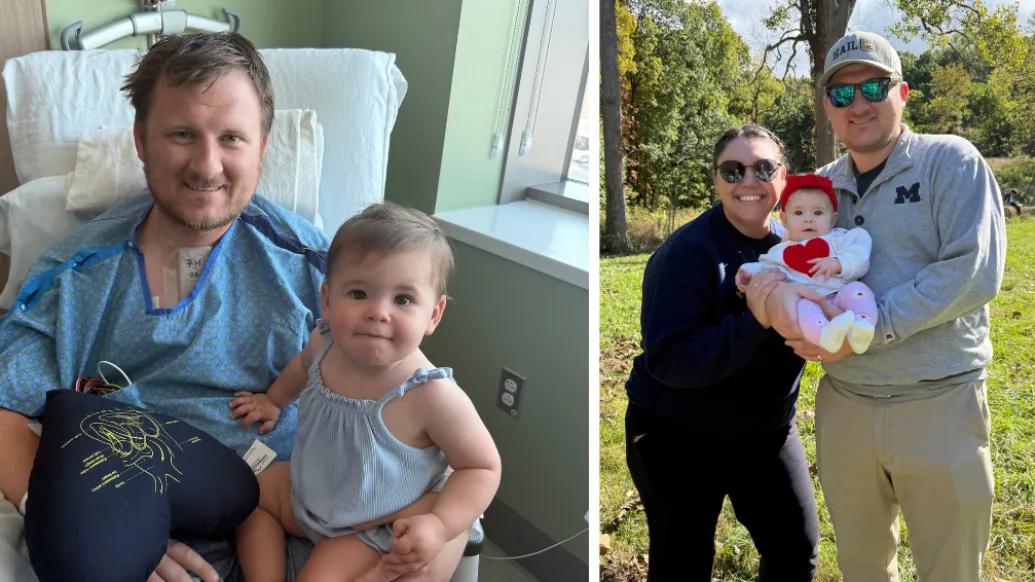
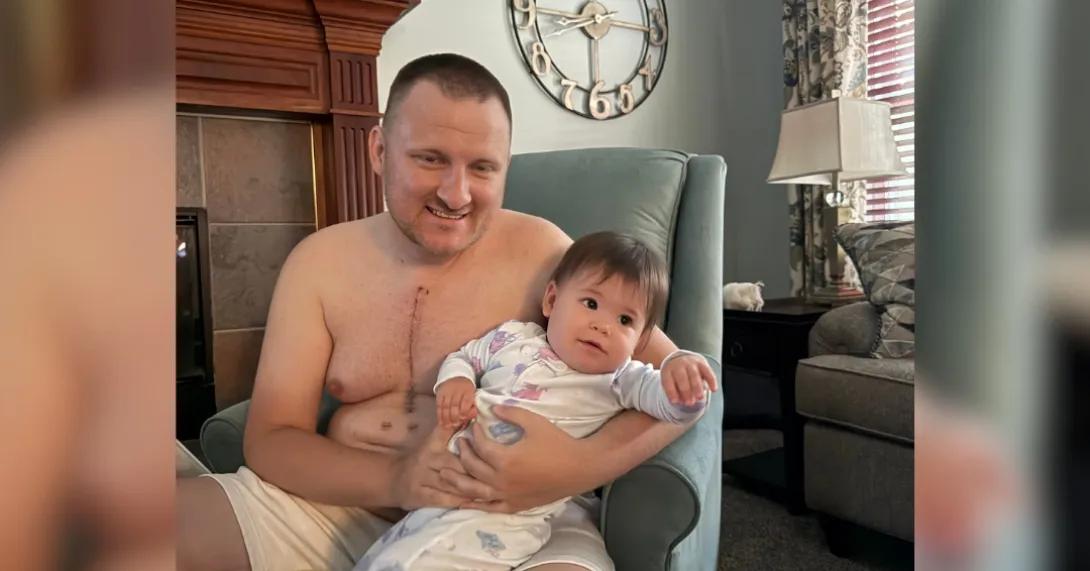
At his home near Flint, Mich., Jacob Connolly holds his two-year-old daughter, Claire, for the first time in over a month.
The 28-year-old was unsure if he would ever get the chance.
In the early morning on July 14, he had barely survived a trip to the operating table to receive surgery for an aortic dissection, a life threatening tear in the body’s largest artery.
“I don’t think most people know this can happen to someone my age,” Connolly said.
At lunch the day before, the financial analyst called 911 for himself.
Connolly spent hours in a nearby emergency room with the worst chest pain he'd ever experienced, only to be told his symptoms were likely caused by anxiety or acid reflux.
At home, his pain lingered and he couldn’t eat.
Finally, his wife, Alison, and her cousin insisted he seek a second opinion at another hospital.
Left to his own devices, Connolly says he would have tried to “sleep it off.”
He says their persistence is the reason he's alive.
Imaging revealed a large aneurysm in his ascending thoracic aorta and an acute type A aortic dissection.
The emergency physician at that hospital called University of Michigan Health, where aortic surgeons immediately accepted the transfer.
Connolly was rushed into an ambulance headed for the Frankel Cardiovascular Center.
By then, more than 12 hours had passed since his first symptoms of a condition that kills up to 50% of patients before they reach a hospital.
As surgical teams rushed him into the operating room, Jacob Connolly says he was in shock.
His worry, however, was less for his torn aorta but more for his wife in the waiting room.
The couple’s son, Warren, had been born with Tetralogy of Fallot, a rare disorder of four separate defects that affect the heart’s structure.
While advances in surgery have greatly improved life expectancy, the condition remains associated with significant long term complications.
Warren passed in December 2023.
“With our son having to go through major surgery, I felt bad for her having to worry and wait through this a second time,” Connolly said.
Emergency aortic dissection repair
At U-M Health, Bo Yang, M.D., a cardiac surgeon who specializes in complex aortic procedures, led the operation.
The weakened, enlarged section of Connolly’s aorta had ruptured, and the blood was compressing his heart.
Yang discovered that Connolly’s aorta had torn once before.
The new aortic dissection was very close to his left main coronary artery, which could cause a massive heart attack.
Yang replaced it with a synthetic graft, a durable tube designed to restore normal blood flow.
The surgical team also found that Connolly was born with a bicuspid aortic valve, meaning his valve had two leaflets instead of three.
This condition is associated with a weak aortic structure and increased risk of aneurysm and dissection.
Yang repaired the aortic valve so it could close properly without leaking, avoiding the need for a mechanical valve and the lifelong use of blood thinners.
“People with bicuspid aortic valve, the most common congenital cardiovascular disease, have up to a 9-times greater risk of aortic dissection,” Yang said.
“Patients with a bicuspid aortic valve who also have an aortic root aneurysm and a leaking valve face an even higher risk. People with family history of bicuspid valve should have their aortic valve checked and should be followed by a cardiologist or cardiac surgeon if they are found to have the condition.”
Despite the delay in care, Connolly’s procedure was successful.
Several of his family members were waiting in the hospital room when he woke up, including Alison — who never left.
“There really aren’t words to describe the relief I felt when Dr. Yang explained how the surgery was successful,” Alison Connolly said.
“After everything our family has been through with our son, being able to bring Jacob home and watch him hold our daughter again is something I will never take for granted.”
Genetic links to aortic dissection
Aortic dissection affects about 6 people per 100,000 each year and occurs most often in adults over age 60.
While infrequent in young people, around 7% of all aortic dissections occur in adults under 40, according to the International Registry of Acute Aortic Dissection.
“When patients show up at the emergency department, people always think heart attack; however, if the patient is younger than 50, we should evaluate for aortic dissection or prove otherwise,” Yang said.
“Young patients frequently have negative workups for heart attacks and are sent home, like Mr. Connolly at the first hospital. Since aortic dissection is rare, people don’t think of it, including patients themselves.”
Family history plays a strong role in risk for aortic dissection.
Nearly 1 in 5 younger adults enrolled in IRAD had a family history of aortic disease.
For Connolly, the link is even more personal: His grandfather, Dexter Petrella, died from an aortic dissection in 2009.
After leaving the hospital, he met with Allison DiBrano, N.P., from the Frankel Cardiovascular Center’s multidisciplinary MI-AORTA program.
She set him up with a genetic counselor for further testing and recommended his first-degree relatives get screened for aortic disease.
“Screening first-degree relatives can identify conditions such as enlargement of the aorta or a bicuspid aortic valve that might otherwise go undetected,” DiBrano said.
“Early identification gives families the opportunity to be proactive, monitor these conditions over time, and take steps to reduce their risk and prevent life threatening complications.”
Signs of aortic dissection
Connolly continues to regain energy and will soon begin cardiac rehabilitation, a supervised program that reduces the risk of future heart-related events.
He says life is getting closer to “relatively normal,” and he will return to work in a few months.
“I’m happy to be here,” he said.
“If I had gone to bed that night, I wouldn’t have woken up. I want people to know that they should get that second opinion and speak up if something doesn’t feel right.”
Symptoms vary depending on the type of aortic dissection but often begin suddenly and require immediate medical attention.
Type A
Sudden, severe chest pain often described as tearing or ripping
Pain that radiates to the upper back
Type B
Severe back pain
Abdominal, mid-back or lower-back pain
Leg pain, weakness or decreased circulation
In 2022, the MI-AORTA Program was established with generous donor support and plays a key role in advancing and expanding our highly regarded aortic disease clinical practice, training and research efforts.
Through this support, it helps fuel the growth of a world-renowned comprehensive aortic program that treats conditions across the aorta — from root to aortic bifurcation — using open and endovascular techniques.

Health Lab
Explore thousands of health news & research stories by visiting the Health Lab homepage for more.
Media Contact

Public Relations
Department of Communication at Michigan Medicine
In This Story

Bo Yang, MD, PhD
Professor
Related

Lifesaving facts about aortic dissection

Death rate for torn aorta drops, still 5 times more deadly without surgery
Stay Informed
Want top health & research news weekly? Sign up for Health Lab’s newsletters today!
Featured News & Stories
Heart of Gold: Rare metal allergy leads to a unique heart device

What’s changing in Medicaid and what can you do?
Small comforts make a world of difference

Jalen Hurts’ blood clot diagnosis: doctors answer common questions

Could a diabetes medication be the next wonder drug?