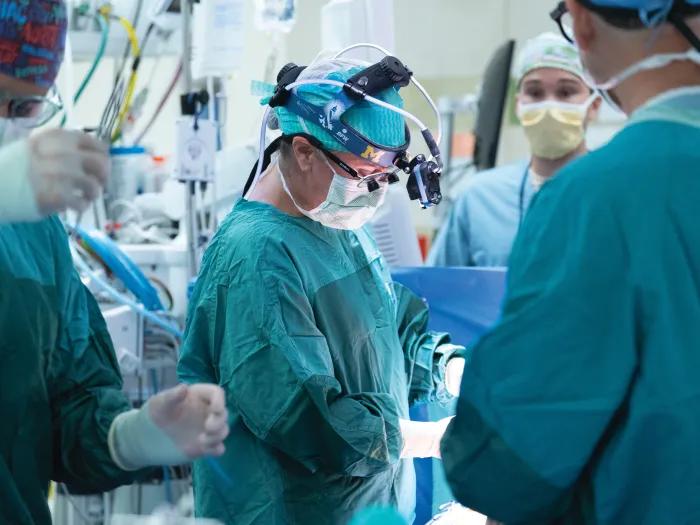
World’s Tiniest Pacemaker Coordinates Heartbeats from Top To Bottom
Patients whose hearts need electrical assistance to sync the atria and ventricles now have another option.
12:00 PM
Author |
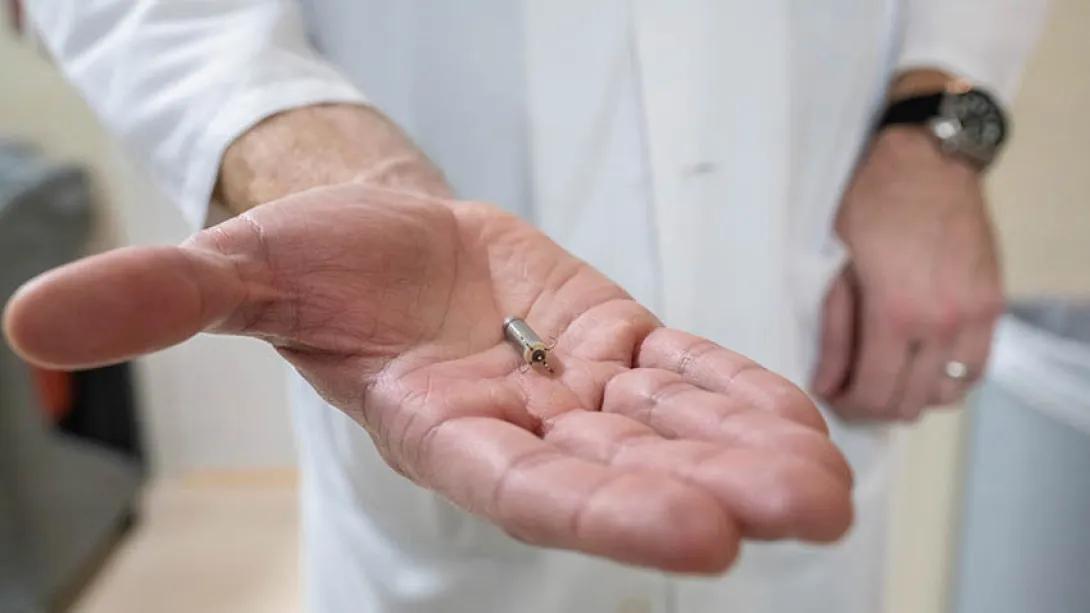
A new pacemaker that's about the size of a nickel gets the heart's upper and lower chambers working together again quickly, with lower risk of complications and less impact on quality of life than traditional pacemakers.
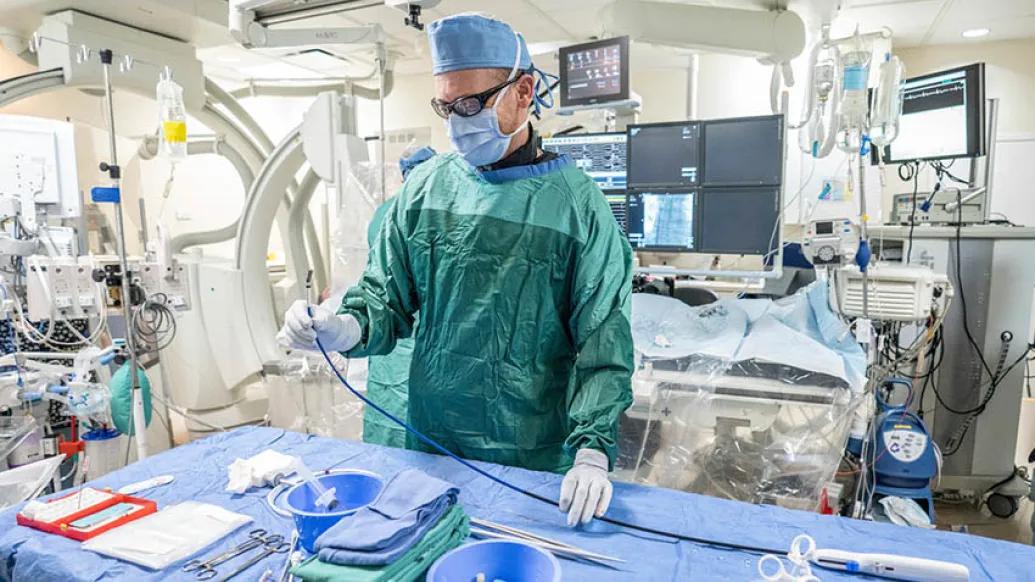
Electrophysiologist Ryan Cunnane, M.D., from the Michigan Medicine Frankel Cardiovascular Center, performed the state's first implantation of the newest leadless pacemaker: Micra AV, by Medtronic. The mid-February case was also one of the first of these catheter-based procedures nationwide.
LISTEN UP: Add the new Michigan Medicine News Break to your Alexa-enabled device, or subscribe to our daily updates on iTunes, Google Play and Stitcher.
Cunnane says he's excited to offer the world's smallest pacemaker to more patients, so they can get back to their lives with minimal disruption, lower risk of complications and no unsightly bulge in the chest. He shares why this innovation, recently approved by the FDA, makes him excited about improving patient care.
What makes this new pacemaker different from what you could already offer your patients?
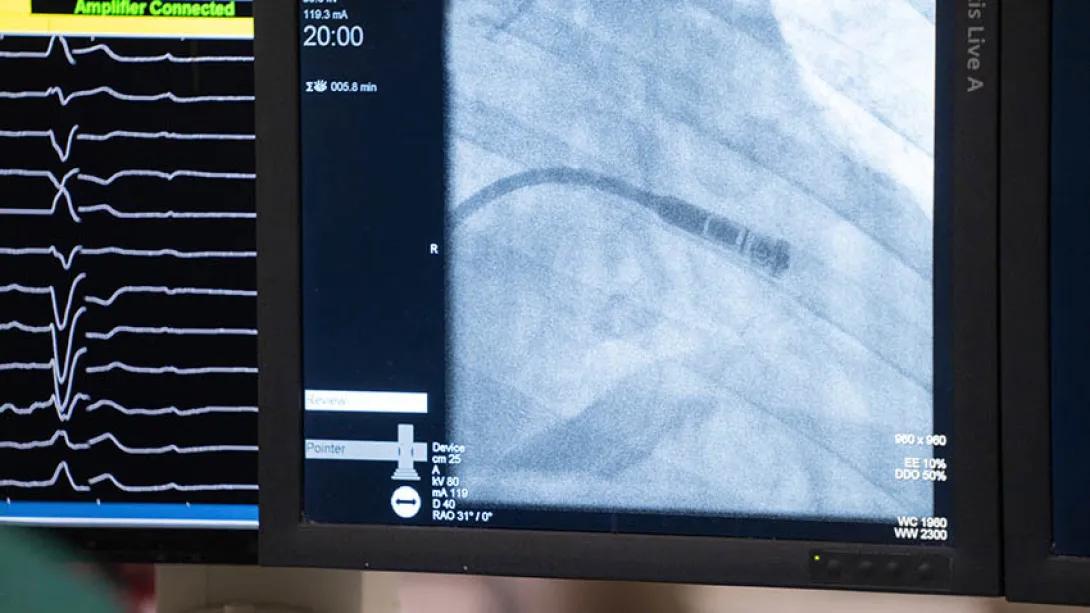
Cunnane: The major innovation is the ability to have one small device implanted right in the heart that's able to sense what's going on in the upper chambers of the heart, and then pace the lower chambers to match.
The natural pacemaker of the heart is located in the right upper chamber (right atrium). In some patients with a condition called AV block this natural pacemaker is working well, but the signal it produces can't make it down to the lower chambers to produce a heartbeat. This new device is able to get that electrical connection going again.
The approach is different, as there's no incision involved with entering from the leg as opposed to the chest.
The majority of problems patients with traditional pacemakers experience are with the wires, which we call leads. This system eliminates those as a long-term source of problems like breakage or the need for wire extraction. There's also less risk of a procedure-related complication, like a cardiac perforation.
It should work for a length of time on par with traditional pacemakers. And from an aesthetic standpoint, people wouldn't even know whether a patient has the device, so that's a real advantage.
SEE ALSO: World's Smallest Pacemaker Can Help Stop Surgical Complications
Which patients are a fit for this pacemaker? Who isn't it recommended for?
Cunnane: Patients ideal for this type of device have AV block, or atrioventricular block, which means the electrical signal that originates in the upper chambers of their heart doesn't make it to the lower chambers.
MORE FROM MICHIGAN: Sign up for our weekly newsletter
That means this system is a fit for patients whose intrinsic heart rhythm is normal but who just have a block between the upper and lower chambers. If the patient's natural pacemaker is too slow, this is not the right system for them.
What other innovations are on the horizon for your patients?
Cunnane: This style of device is going to be the way forward as we imagine the future of cardiac implantable devices. A lot of companies in this space are working to move away from leads, because they're a major source of complication.
The next iteration of the new Micra AV will likely be a dual chamber leadless device that can pace for both the upper and lower chambers. That would be a new option for patients with both AV block and bradycardia, or too slow of a heart rate.
If we can move to a more modular system, we could one day add or subtract components as patients need changes over time. It's a really an exciting thing to be able to envision having more options for each individual patient and tailor treatment to what they need.
Disclosure: Cunnane has advised companies including Medtronic, Inc., the maker of the Micra AV, along with Biotronik, Boston Scientific Corp., and Philips Medical Systems, on medical devices for electrophysiology patients

Health Lab
Explore thousands of health news & research stories by visiting the Health Lab homepage for more.
Media Contact

Public Relations
Department of Communication at Michigan Medicine
Stay Informed
Want top health & research news weekly? Sign up for Health Lab’s newsletters today!
Featured News & Stories

Digital alerts support timely treatment decisions of critically ill cardiac patients

Is the United States Lagging Behind Europe in Memory Improvement?

Reducing infections after heart surgery could save Medicare $441 million per year

Young father survives aortic dissection after delayed diagnosis
Weighing TAVR vs. SAVR for aortic stenosis treatment