Why tendons heal so poorly and how researchers hope to fix them
Tiny “microtendons” help researchers study how tendon disease develops
5:00 AM
Author |
About 30% of adults over age 60 have a rotator cuff tear, making it one of the most common tendon injuries in older adults.
But unlike broken bones, tendons rarely heal completely.
Add Achilles tendinopathy, tennis elbow and other tendon injuries, and millions of Americans will deal with tendon pain or damage at some point in their lives.
These conditions can take months to recover from, and often the tissue never regains its original strength or structure.
That’s led Michigan Medicine researchers to ask: Why are tendons so bad at healing?
A 2025 National Institutes of Health News in Health article, Tendon Trouble: Finding a Fix for Injured Tissue, highlighted several promising areas of research, including work from Michigan Medicine's Adam Abraham, Ph.D.
This latest research builds on those advances, offering clues about what happens inside injured tendon tissue and how those discoveries could one day lead to better treatments.
"Unlike muscle and bone, which usually heal well, tendons rarely fully heal, especially following a severe injury," said Megan Killian, Ph.D., associate professor of orthopaedic surgery and molecular and integrative physiology at the University of Michigan.
"Tendons are typically under constant stretch, acting as levers to anchor muscle to bone."
When a tendon tears, a gap forms that's difficult for the body to bridge.
Tendons also have a limited blood supply, making it harder to deliver oxygen and nutrients needed for repair.
Rebuilding dense collagen, the protein that gives tendons their strength, requires more energy than tendon cells can often provide.
When tendon healing gets stuck
Every tendon contains specialized cells responsible for maintaining and repairing the tissue.
In healthy tendons, those cells constantly respond to changes around them, whether that's exercise, injury or normal wear and tear.
But in chronic tendon injuries, something changes.
"Healthy tendon cells possess the ability to respond to biochemical or biophysical changes in their local environment," Abraham said.
"However, cells from patients with chronic tendinopathy appear to lose plasticity."
Instead, the cells remain in a prolonged state of stress, producing scar-like tissue that further weakens the tendon and limits its ability to heal.
Understanding why that happens has become a focus of Abraham's lab.
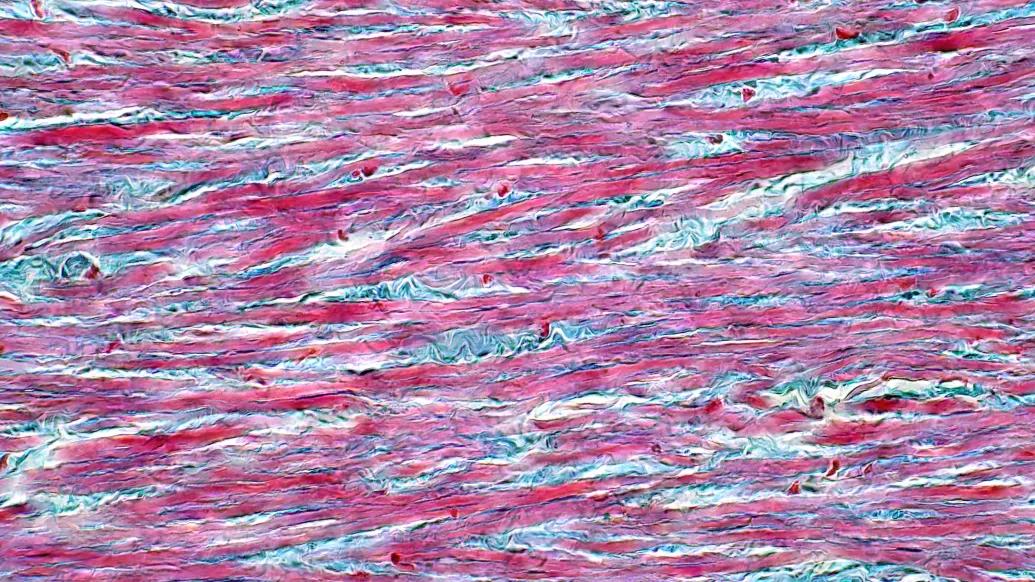
To study the problem, his team has developed what they call "microtendons”, tiny, engineered tendon tissues about the size of a human hair.
Rather than growing a single replacement tendon, researchers can create hundreds or even thousands of these miniature tissues from one patient.
Tendon Trouble: Finding a Fix for Injured Tissue
The platform allows scientists to expose tendon tissue to different drugs and mechanical forces while measuring how well it functions.
"In many ways we are attempting the opposite of traditional tissue engineering," Abraham said.
"We're growing hundreds to thousands of microtendons in parallel from a single donor."
The goal is to eventually screen large numbers of potential therapies that could restore tendon cells to a healthier state.
Looking back to move forward
While Abraham studies what happens after tendons become diseased, Killian's lab is looking even earlier, asking how do healthy tendon attachments develop in the first place?
That question led to a discovery: In a June 2026 study published in the journal Development, Killian's team found that the place where tendon meets bone, called the enthesis, develops in an environment with very little oxygen.
For most tissues, low oxygen is a sign of trouble.
“HIF-1α is a bit of a cellular low-oxygen switchboard.”
–Stephanie Steltzer, Ph.D.
But during development, the tendon-to-bone attachment appears to depend on it.
"What really motivated this project was a long-standing question in the field," said Stephanie Steltzer, Ph.D., lead author of the study and a former doctoral student in Killian's lab.
Why is the native tendon-to-bone attachment so beautifully organized during development, yet so difficult to recreate after injury?"
Killian’s team, in collaboration with Abraham, Yatrik Shah, Ph.D. and Jun Hee Lee, Ph.D., discovered that cells in the developing enthesis rely on a protein called HIF-1α (hypoxia-inducible factor 1-alpha), which helps cells sense and respond to low oxygen levels.
"HIF-1α is a bit of a cellular low-oxygen switchboard," Steltzer said.
"When cells are in an environment with less oxygen, HIF-1α helps them survive, manage energy use and build or organize the surrounding tissue."
When researchers removed HIF-1α in mouse models, the tendon attachment still formed, but it wasn't built correctly.
The collagen became disorganized; more cells died during development and the tendon-to-bone connection was mechanically weaker.
The findings suggest during development, oxygen may also help instruct cells how to build one of the body's strongest mechanical connections.
Building better treatments for tendon repair
The research isn't expected to change patient care tomorrow.
"That does not mean we are ready to treat patients by simply turning HIF-1α on or off," Steltzer said.
"Biology is rarely that polite."
Instead, the findings offer researchers a blueprint.
By understanding how healthy tendons form and how injured tendons lose that ability, scientists hope to develop treatments that encourage regeneration instead of scar formation.
That could include new biomaterials, improved rehabilitation strategies or therapies that recreate some of the biological conditions present during early development.
"We can better understand what it takes for the cells that make tendon to rebuild itself," Killian said.
For Abraham, advances in technologies like single-cell sequencing, proteomics and engineered tissue models are making that goal feel more achievable.
"We've learned that tendons are more complex tissues than we previously thought," he said.
"Defining the regulatory mechanisms, and how they become disrupted with disease, will help us identify more targeted therapeutics and chart new horizons for musculoskeletal care."
For patients recovering from tendon injuries, that research won't shorten rehabilitation today, but each new discovery brings scientists one step closer to understanding why tendons heal poorly and how they might someday heal better.
Additional authors include: Yatrik Shah, Ph.D., Jun Hee Lee, Ph.D.
Paper cited: “The developing tendon and enthesis are hypoxic and rely on hypoxia-inducible factor 1a during postnatal development,” Development. DOI: 10.1242/dev.205458
Sign up for Health Lab newsletters today. Get medical tips from top experts and learn about new scientific discoveries every week.
Sign up for the Health Lab Podcast. Add us wherever you listen to your favorite shows.

Health Lab
Explore thousands of health news & research stories by visiting the Health Lab homepage for more.
Media Contact

Public Relations
Department of Communication at Michigan Medicine
In This Story

Adam C Abraham, PhD
Assistant Professor
Stay Informed
Want top health & research news weekly? Sign up for Health Lab’s newsletters today!
Featured News & Stories
Comprehensive DNA sequencing reveals hidden drivers of cancer

U-M Board of Regents approves construction of Nathan and Catherine Forbes Sports Medicine Institute

Many older adults make Medicare decisions quickly and most don’t change plans, poll finds
‘Molecular glue’ stabilizes protein that inhibits development of non-small cell lung cancer and uterine cancer
What’s the latest on 7-OH and kratom availability and addiction care?