Why donor hearts fail in cold storage — and how to prevent it
Research finds a possible solution to a common problem during cold storage transportation
12:27 AM
Author |
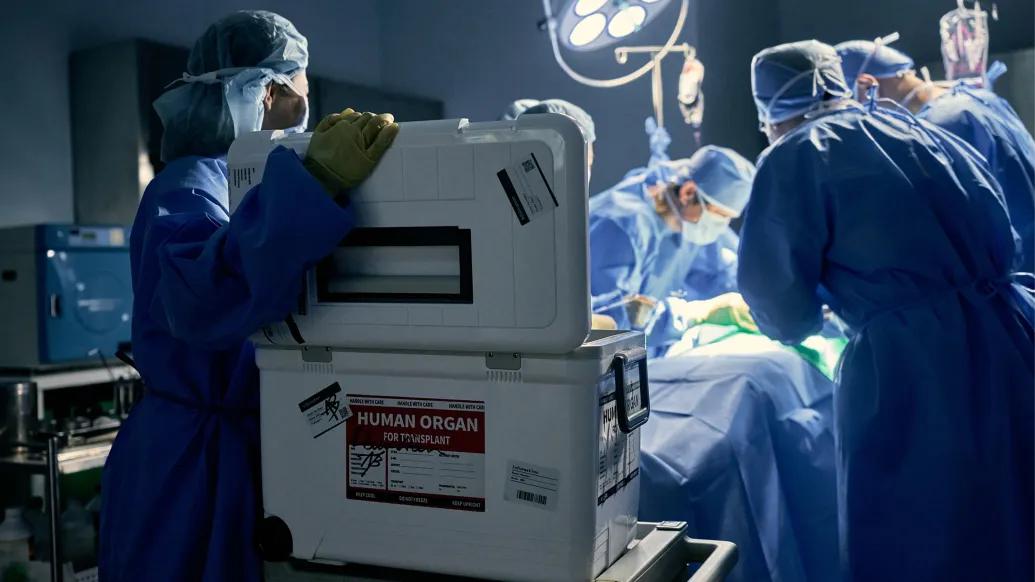
Researchers have discovered a new molecular process that occurs when donor hearts are preserved in cold storage which contributes to failure after transplant, a study in both humans and animals shows.
The team, a collaboration between Michigan Medicine and Mayo Clinic, also found a therapy to reduce that damage using medication that is typically prescribed for high blood pressure.
Investigators say the therapeutic solution can significantly improve the function of donor hearts and increase the distance they can be transported in cold storage.
They also believe the mechanism behind the new therapy could be applied to other transplantable solid organs.
The findings are published in Nature Cardiovascular Research.
“When a donor heart is stored in the cold, physical changes occur in cardiac cells that cannot be seen by the naked eye,” said senior author Paul Tang, M.D., Ph.D., a heart transplant surgeon who conducted research with collaborators at both the University of Michigan Health Frankel Cardiovascular Center and the Mayo Clinic in Rochester, Minn.
“We observed special protein behaviors during cold preservation at the molecular level that accentuate harmful signaling and cause donor hearts to weaken following transplantation. Disrupting this process can greatly improve a donor heart’s resilience to ischemic injury and its function after transplantation.”
How donor hearts fail
During organ transport, the heart is commonly stored in a cooler after being infused with a cold preservation solution that has been used for several decades.
In the study, Tang’s team examined the molecular responses to the cold storage process at the individual cell level.
Researchers identified a promising candidate in the mineralocorticoid receptor, a protein responsible for carrying out the biological effects of hormones like aldosterone and cortisol.
When a heart is placed in cold storage, its tissue lacks oxygen and cells experience stress. Both human and animal hearts respond to this stress by signaling through MR.
Tang’s team found that during cold preservation, the receptor does not require hormones to activate.
Instead, MR protein production greatly increases, which encourages them to cluster together into liquid droplets, or condensates, within the cell nucleus.
The process by which the proteins aggregate together from the rest of the cell is called phase separation. Investigators found that phase separation “autoactivates” the receptors and greatly increases the stress and harm for cardiac cells.
“The donor heart does not realize that we intend to transplant them into another person soon, so it is essentially turning on and supercharging the destructive cellular tools that would be better off left unused,” Tang said.
“This damage increases progressively the longer the heart is preserved. Organ transplantation is a uniquely human activity that never occurred for millions of years in nature until modern times. There is no evolutionary adaptation for this highly unusual situation.”
The inflammation and oxidative stress that occur during phase separation weaken the heart and limit its ability to pump blood. The decline is known as primary graft dysfunction and is responsible for more than one-third of deaths after heart transplant.
How to prevent donor heart failure
To stop the cycle of inflammation from damaging the donor heart, the research team needed to interrupt the MR clustering.
They accomplished this by injecting the cold preservation solution with canrenone, a water-soluble MR inhibitor that is best known as a diuretic but has important cardiac effects.
Canrenone is commonly used in Europe to treat high blood pressure as well as chronic heart failure.
In animal and human hearts, treating them with canrenone stopped the MRs from clustering and reduced cardiac cell death. It also significantly improved donor heart function after four hours of storage, a commonly accepted preservation time threshold.
“Not only did we see improvement at a clinically acceptable threshold of four hours, but the use of canrenone displayed clinical potential of significantly extending cold preservation time beyond what we can currently achieve", said co-author Francis Pagani, M.D., Ph.D., the Otto Gago M.D. Endowed Professor in Cardiac Surgery at U-M Medical School.
The phase separation that triggers a cascade of inflammation leading to donor heart failure is seen in other organs, including the liver, kidney and lungs.
Researchers say the similar findings between mouse, pig and human hearts will allow for accelerated investigation of biotechnologies to improve organ preservation.
“It is critical that we can determine the ‘freshness’ and resilience of donor organs during preservation and transport,” said co-author Eugene Chen, M.D., Ph.D., the Frederick G. L. Huetwell Professor of Cardiovascular Medicine at University of Michigan Medical School.
“Any innovation to preserve the quality of donor organs must be vigorously pursued, and this method brings promise for the improvement of the lifesaving transplantation process.”
Additional authors: Wei Huang, M.D., Liu Liu, Ph.D., Ashraf Abou El Ela, M.D., Mulan Jiang, Jeffrey L. Platt, Ph.D., Marilia Cascalho, Ph.D., Bertram Pitt, M.D., Zhong Wang, Ph.D., and Richard M. Mortensen, M.D., Ph.D., all of University of Michigan, Ienglam Lei, Ph.D., and Hüseyin Sicim, M.D., of both U-M and Mayo Clinic, Wenbin Gao, M.D., Ph.D., Aurora Lee, M.D., and Sahar A. Saddoughi, M.D., Ph.D., all of Mayo Clinic, Emmanuel Noly, M.D., of Université de Montréal, Melissa R. Pergande, Ph.D., Mallory C. Wilson, and Ying Ge, Ph.D., all of University of Wisconsin, and Jordan S. Pober, M.D., Ph.D., of Yale University.
Funding/disclosures: This research project is supported by the National Heart, Lung, and Blood Institute (HL164416, HL166140, HL163672, HL139735, HL159871, HL134569, HL109946) and the National Institute of Allergy and Infectious Diseases (U01-AI132895, AI151588, AI173950) of the National Institutes of Health.
The content is solely the responsibility of the authors and does not necessarily represent the official views of the NIH.
Paper cited: “Mineralocorticoid Receptor Phase Separation Modulates Cardiac Preservation,” Nature Cardiovascular Research. DOI: 10.1038/s44161-025-00653-x
Sign up for Health Lab newsletters today. Get medical tips from top experts and learn about new scientific discoveries every week.
Sign up for the Health Lab Podcast. Add us wherever you listen to your favorite shows.

Health Lab
Explore thousands of health news & research stories by visiting the Health Lab homepage for more.
Media Contact

Public Relations
Department of Communication at Michigan Medicine
In This Story

Francis D Pagani
Professor

Yuqing E Chen
Professor
Related
Donor hearts can be reprogrammed with medication for longer storage, improved transplant outcomes
U-M Health performs its first heart transplant after cardiac death
Stay Informed
Want top health & research news weekly? Sign up for Health Lab’s newsletters today!
Featured News & Stories
The AI is listening: Implications of machine generated clinical notes on health care
Comprehensive DNA sequencing reveals hidden drivers of cancer
‘Molecular glue’ stabilizes protein that inhibits development of non-small cell lung cancer and uterine cancer

Many older adults make Medicare decisions quickly and most don’t change plans, poll finds
What’s the latest on 7-OH and kratom availability and addiction care?