What is looksmaxxing?
From skincare routines to dangerous DIY beauty hacks, what parents should know about the viral trend
11:04 AM
Author |
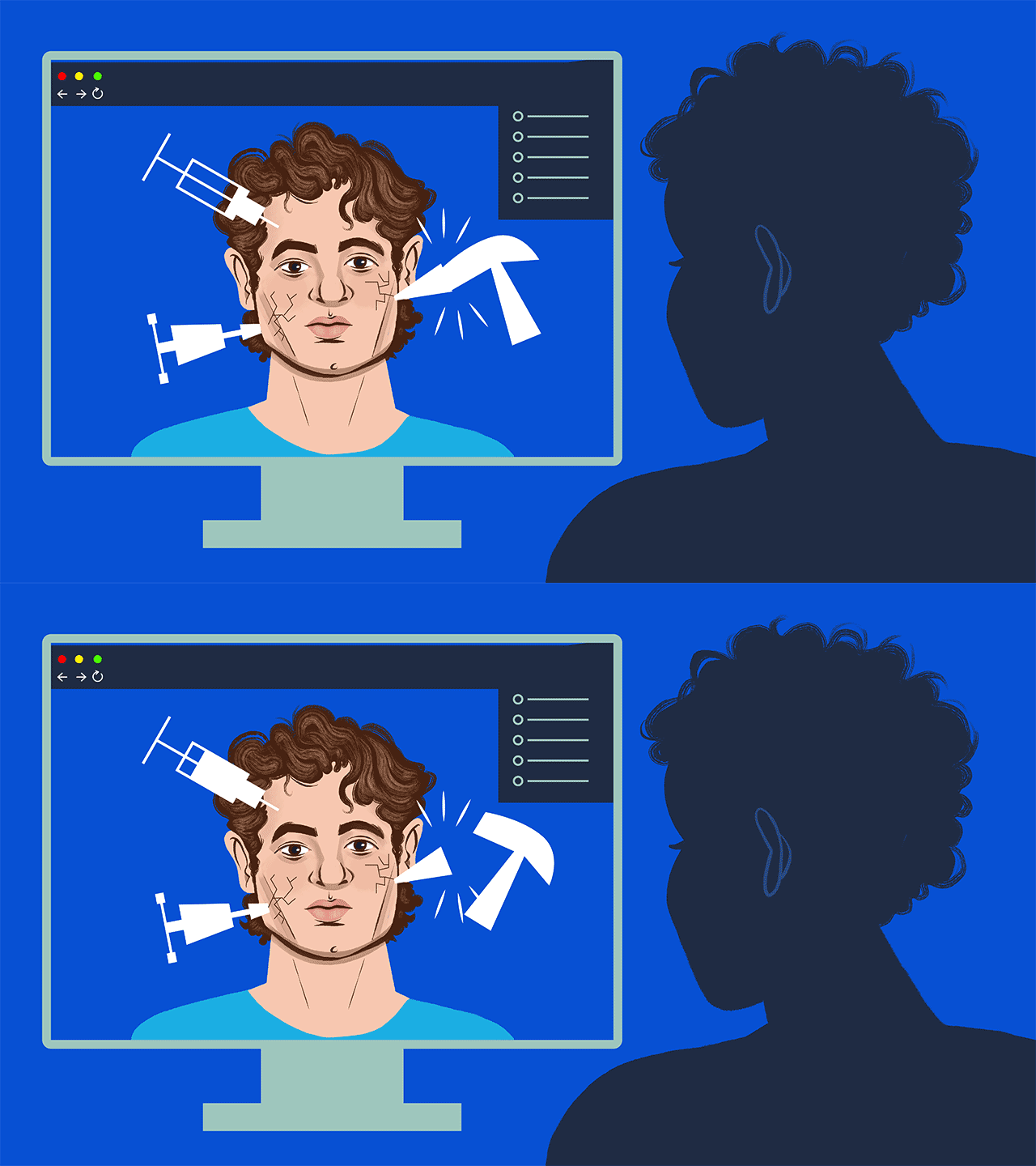
Hitting your face with a hammer to become more attractive.
Taking stimulants to lose weight fast.
Following online advice that promises a "perfect" jawline.
These are just some of the extreme practices being promoted via a social media trend known as looksmaxxing.
Built around the idea of maximizing physical attractiveness, looksmaxxing has gained attention among some teens and young adults.
While aspects of the trend focus on seemingly healthy habits, like skincare, exercise and grooming, in many online communities, it goes much further.
Some social media influencers promote drastic and potentially harmful methods, including unproven techniques that claim to reshape facial features, sharpen jawlines or achieve an "ideal" appearance.
These practices can be dangerous, says Terrill Bravender, M.D., M.P.H., Chief of Adolescent Medicine and Executive Director of the Comprehensive Eating Disorders Program at University of Michigan Health C.S. Mott Children’s Hospital.
“Constant exposure to appearance-focused content may contribute to lower self-esteem, body dissatisfaction and unrealistic expectations about beauty,” Bravender said.
“This trend has raised concern about the lengths some individuals are willing to go to achieve what social media portrays as the ‘ideal’ face or body. In some cases, it encourages young people to take significant risks in pursuit of this unrealistic ideal.”
As the trend continues, Bravender, helps answer top questions about looksmaxxing and its potential impact on young people.
What is looksmaxxing?
Bravender: Looksmaxxing is a very silly term for trying to look the best you can on social media.
I think what's different about looksmaxxing, beyond its silly name, is that it seems to have pulled in a lot of adolescent boys and young men.
We live in a media environment right now where there is an everyday constant competition for attention, and looksmaxxing is one of these issues that's competing for attention.
Why do you think looksmaxxing resonates so strongly with teenagers today in a way that similar appearance-focused trends may not have a decade ago?
Bravender: Looksmaxxing is inextricably linked with social media.
It doesn't matter your age, when people see themselves constantly on video they can't help but monitor themselves. That is going to increase our concerns about how we appear to others.
Social media existed a decade ago, but it didn't have the video-based short-form video content that we have right now, and that is just going to hook kids in even stronger than it would 10 years ago, and certainly more than 20 years ago.
Many teens and young adults also tend to idolize social media influencers and often take their advice seriously, making them more vulnerable to the looksmaxxing trend by targeting physical appearance.
Do you think that constantly consuming appearance-focused content can change the way someone sees themselves permanently?
Bravender: I don't think it's permanent; I think that it may cause harm to young people and to people who are developing obsessions with appearance-based social media influencers, but I don't think it's forever.
We all get older, we all change, and I think acceptance of ourselves is always important. I don't think we, as human beings, can be happy while we aspire to be someone else.
What impact can repeat exposure to an idealized face or body type have on younger generations' self-esteem as they enter adolescence?
Bravender: This emphasis on the perfect ratios and measurements creates an attitude that it’s winner-takes-all.
Rather than looking at the breadth of humanity, it gives young people the idea that there's only a very limited number of people who are attractive to a potential partner, and that everybody else is going to be lonely for the rest of their lives.
That's a sad state of affairs for our culture.
How does looksmaxxing change the way young people define femininity or masculinity?
Bravender: There are very prescribed roles, and there are small boxes of what is acceptable as a masculine man and a feminine woman, and they have very strong boundaries around what that means.
In the looksmaxxing culture people will measure in millimeters the size of almost every facial feature and the distance between them to try to come up with a perfect vision of what people should look like.
The outrageous recommendations that looksmaxxers make are only going to make people feel worse about themselves, which increases engagement.
What does recovery look like for someone who has developed an unhealthy obsession with appearance through a trend like looksmaxxing?
Bravender: I think one of the overall tasks of adolescence is becoming comfortable with oneself, and we know that a normal developmental milestone of adolescence is some wondering about who they could be.
I think social media influencers and looksmaxxers are taking advantage of kids who are participating in those normal trials.
When adolescents or even adults have gone down this rabbit hole of looksmaxxing in a feeling of lack of self-worth, the goal of recovery is to eventually feel comfortable with who they are and accepting themselves for the unique person that they are.
When should parents worry about looksmaxxing?
Bravender: Parents need to be aware of these behaviors and confront them straight on if they see signs their kids are trying them.
These could include dangerous behaviors, such as “bone smashing,” where people try to make micro fractures to get bones to grow stronger and larger, which we know simply does not work.
Social media influencers have advocated other untried drugs that you can buy, such as peptides that have been unproven and have unknown risks.
If parents see a change in their child’s behavior or a change in their interactions with them, these may be signs of social isolation or significant changes in expression of how they perceive themselves.
What should parents do if they notice their teen is interested in this trend?
Bravender: I think it's important that parents speak to their children about what they're seeing online and listen to or be interested in what their children are following.
Keeping lines of communication open is always very important.
I think parents know more about their children than maybe they give themselves credit for, and I think if they're worried about something, they probably should be worried about it.
It’s important to ask their children about what they're seeing and what they're doing online.
Sign up for Health Lab newsletters today. Get medical tips from top experts and learn about new scientific discoveries every week.
Sign up for the Health Lab Podcast. Add us wherever you listen to your favorite shows.

Health Lab
Explore thousands of health news & research stories by visiting the Health Lab homepage for more.
Media Contact

Public Relations
Department of Communication at Michigan Medicine
In This Story

Terrill Bravender MD, MPH
Clinical Professor
Stay Informed
Want top health & research news weekly? Sign up for Health Lab’s newsletters today!
Featured News & Stories

What’s the latest on 7-OH and kratom availability and addiction care?

Depression in OBGYN residents needs more attention, study suggests

Better prenatal care data could help prevent maternal complications, experts say
Pain, psychological factors and physical function closely linked in people with systemic sclerosis
Pediatric patient treated for rare kidney cancer