What is ductal carcinoma in situ breast cancer?
A breast cancer expert answers questions about the very early staged disease
5:00 AM
Author |
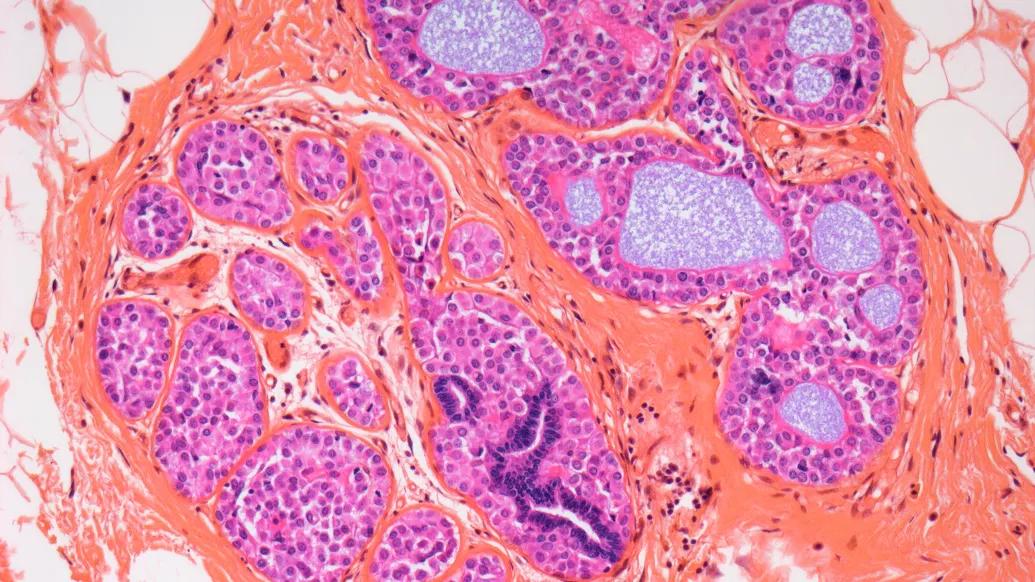
Ductal Carcinoma In Situ, known usually as DCIS, is a very early stage of breast cancer.
In DCIS, abnormal cells are found in the lining of the breast’s milk ducts, but these cells have not spread beyond the ducts into the surrounding breast tissue.
“The word ‘in situ’ means ‘in its original place,” explained Tasha Hughes, Michigan Medicine breast surgeon.
DCIS is considered a non-invasive or pre-invasive breast cancer because the cancer cells haven't yet invaded nearby tissue or spread to other parts of the body.
However, if left untreated, Hughes says, DCIS can sometimes become invasive breast cancer, which means the cancer cells could spread beyond the ducts into other parts of the breast or body.
“DCIS is usually detected through routine breast cancer screening, such as a mammogram, and it is highly treatable,” reassured Hughes.
“Treatment options may include surgery, such as a lumpectomy or mastectomy, anti-estrogen medication, and/or radiation therapy to lower the risk of its return or progression into invasive cancer.”
She notes with early detection and effective treatments available, the prognosis for DCIS is generally “excellent.”
“Our early detection and treatment allows for these high survival rates and lowers the risk it progressing into an invasive-type of breast cancer,” said Hughes.
Is DCIS not considered cancer?
Ductal Carcinoma In Situ is considered a form of breast cancer, says Hughes, but it’s a very early and non-invasive type.
It’s sometimes called ‘pre-cancer’ or ‘stage 0’ breast cancer because the abnormal cells are only found inside the milk ducts and have not spread into the surrounding breast tissue,” Hughes said.
Hughes explains that even some experts argue whether DCIS should even be labeled "cancer" since it doesn’t behave like invasive cancer and could never cause harm if left untreated.
However, the current medical consensus is DCIS is breast cancer because the cells have the potential to become invasive if left alone.
“That's why most physicians recommend treating DCIS in order to prevent the risk of its return or it turning into a more serious situation down the line.”
How common is DCIS?
Ductal Carcinoma In Situ is a common type of breast cancer, explains Hughes, noting DCIS accounts for 1 in every five new breast cancer diagnoses in the United States, according to the American Cancer Society.
“So roughly 20% of all newly diagnosed breast cancers are DCIS.”
The American Cancer Society estimates that approximately 59,000 women in the U.S. are diagnosed with DCIS.
How do you treat DCIS?
Luckily, there are several effective treatment options for DCIS.
“The choice depends on a few factors, such as the size and location of the cancer, the patient’s age and health, and their own personal preferences,” said Hughes.
“The goal is to lower the risk of DCIS coming back or progressing into something more serious.”
DCIS treatment options include:
Surgery, such as a lumpectomy (Breast-Conserving Surgery) or mastectomy
Radiation therapy
Hormone therapy
Active surveillance/watchful waiting
It’s important to discuss each treatment option available with your provider to make the best decision for yourself.
Are certain people more prone to DCIS than other types of breast cancer?
Certain risk factors make some women more likely to develop DCIS, but most of these also increase the risk for other types of breast cancer.
Most risk factors are similar to other risk factors for developing breast cancer, explains Hughes.
“DCIS isn’t typically associated with a completely different risk profile than other breast cancers, but there’s some general factors you should remain aware of and share with your doctor,” said Hughes.
“While there’s no specific group of women significantly more likely to develop DCIS (and not other breast cancers), knowing what factors can raise your overall risk are important to be aware of and alert your doctor of if they apply to you.”
Risk factors of DCIS (and other breast cancers)
Risk factors of DCIS (and other breast cancers) include:
Age. The risk of developing DCIS increases as women get older.
A family history of breast cancer. Women with a close relative (such as your mother or sister) with breast cancer.
Genetic mutations. Inherited mutations, like the BRCA1 and BRCA2.
Certain breast changes. Having certain types of non-cancerous breast changes, such as atypical ductal hyperplasia and extremely dense breast tissue.
Reproductive history. Early onset of menstruation, late menopause, having children later in life or not at all, and not breastfeeding.
Lifestyle factors. Alcohol use, obesity, lack of physical activity and hormone replacement therapy after menopause.

Health Lab
Explore a variety of health care news & stories by visiting the Health Lab home page for more articles.
Media Contact

Public Relations
Department of Communication at Michigan Medicine
Stay Informed
Want top health & research news weekly? Sign up for Health Lab’s newsletters today!
Featured News & Stories
Study explains how colorectal cancer cells maintain high iron levels

Receiving personalized treatment for a rare neuroendocrine tumor

Helping an employee-turned-patient overcome a brain tumor

Stopping Ewing sarcoma relapses where they start
Study sheds light on how early pancreas lesions become cancerous