What Is a Detached Retina?
A U-M expert explains the basics of this eye condition, including causes, treatments and possible long-term outcomes.
5:00 PM
Author |
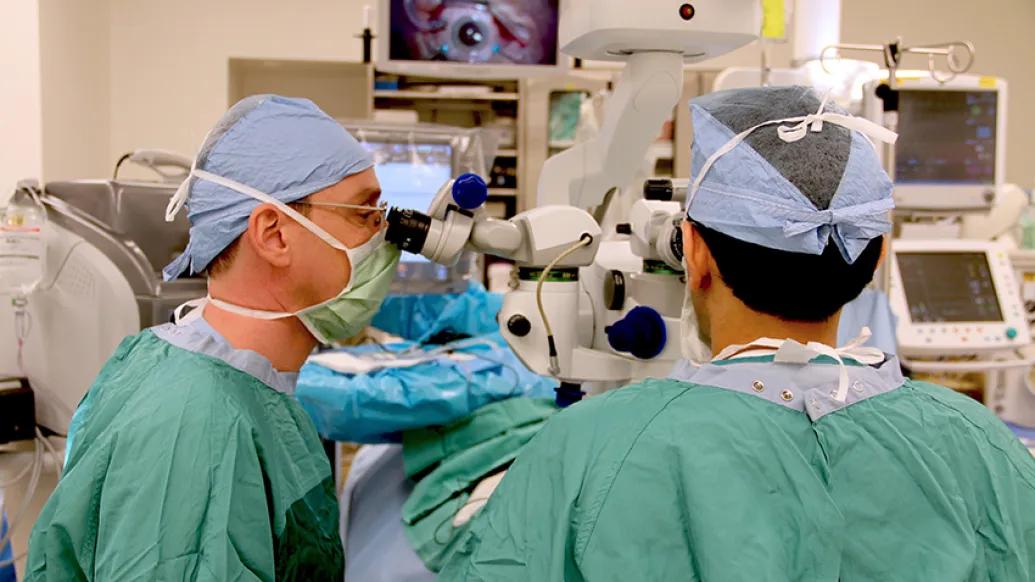
A detached retina is a serious problem that can cause blindness as the retina is pulled away from its normal position in the back of the eye.
It can happen at any age, causing flashes, floaters and impacting peripheral vision, but is more common in midlife and later.
David N. Zacks, M.D., Ph.D., of the University of Michigan Kellogg Eye Center, describes the vision changes as "seeing lightning when there's no storm outside, or fireworks when it's not the Fourth to July."
"As retinal detachment progresses it can lead to a loss of vision," says Zacks, an expert in retinal detachment and diabetic retinopathy, who is pictured in the photo above. "This typically starts in peripheral portion of the visual field, and progresses like a curtain is drawn and is starting to cover the eye. If people experience these symptoms, they should be concerned about retinal detachment."
The risk of experiencing a retinal detachment increases with age. Myopia or nearsightedness, trauma, diabetes or inflammation are also causes.
Treatment and drugs
-
Retinal tears: Retinal holes or tears will usually need to be treated with laser treatment or cryotherapy (freezing) to seal the retina to the back wall of the eye again. These treatments cause little or no discomfort and may be performed in an ophthalmologist's office. This treatment will usually prevent progression to a retinal detachment. Occasionally retinal tears are watched without treatment.
-
Detached retina: Retinal detachments may require surgery to return the retina to its proper position in the back of the eye. There are several ways to fix a detached retina. The decision of which type of surgery and anesthesia (local or general) to use depends upon the characteristics of the retinal detachment. In each of the following methods, your ophthalmologist will locate any retinal tears and use laser surgery or cryotherapy (freezing) around them to seal the tear.
After surgery
Patients can expect some discomfort after surgery for a detached retina. An ophthalmologist will prescribe any necessary medications and advise when to resume normal activity. Post-surgery, patients will need to wear an eye patch for a short time.
If a gas bubble was placed in the eye, patients may have to used specific sleep positions and are restricted from air travel, scuba diving and certain types of anesthesia until after the bubble is gone. A change of glasses may be necessary after the retina has been reattached.
Will vision improve?
"Vision may take many months to improve and in some cases may never fully return," says Zacks. "Unfortunately, some patients, particularly those with chronic retinal detachment, do not recover any vision. The more severe the detachment, and the longer it has been present, the less vision may be expected to return."
Learn more at the Kellogg Eye Center's website.

Health Lab
Explore a variety of health care news & stories by visiting the Health Lab home page for more articles.
Media Contact

Public Relations
Department of Communication at Michigan Medicine
Stay Informed
Want top health & research news weekly? Sign up for Health Lab’s newsletters today!
Featured News & Stories

How LASIK surgery can help athletes perform at their best
LASIK vs. PRK: Which vision correction surgery is right for you?
Pros and cons of LASIK: Are the risks worth the cost?
How to protect your eyes during the total solar eclipse

7-Year-Old Receives New FDA-Approved Retina Gene Therapy