What causes infertility? A doctor answers common questions and clears up misconceptions
From timing and age to stress and lifestyle, a fertility specialist explains what impacts your chances of getting pregnant and when to seek help
10:24 AM
Author |
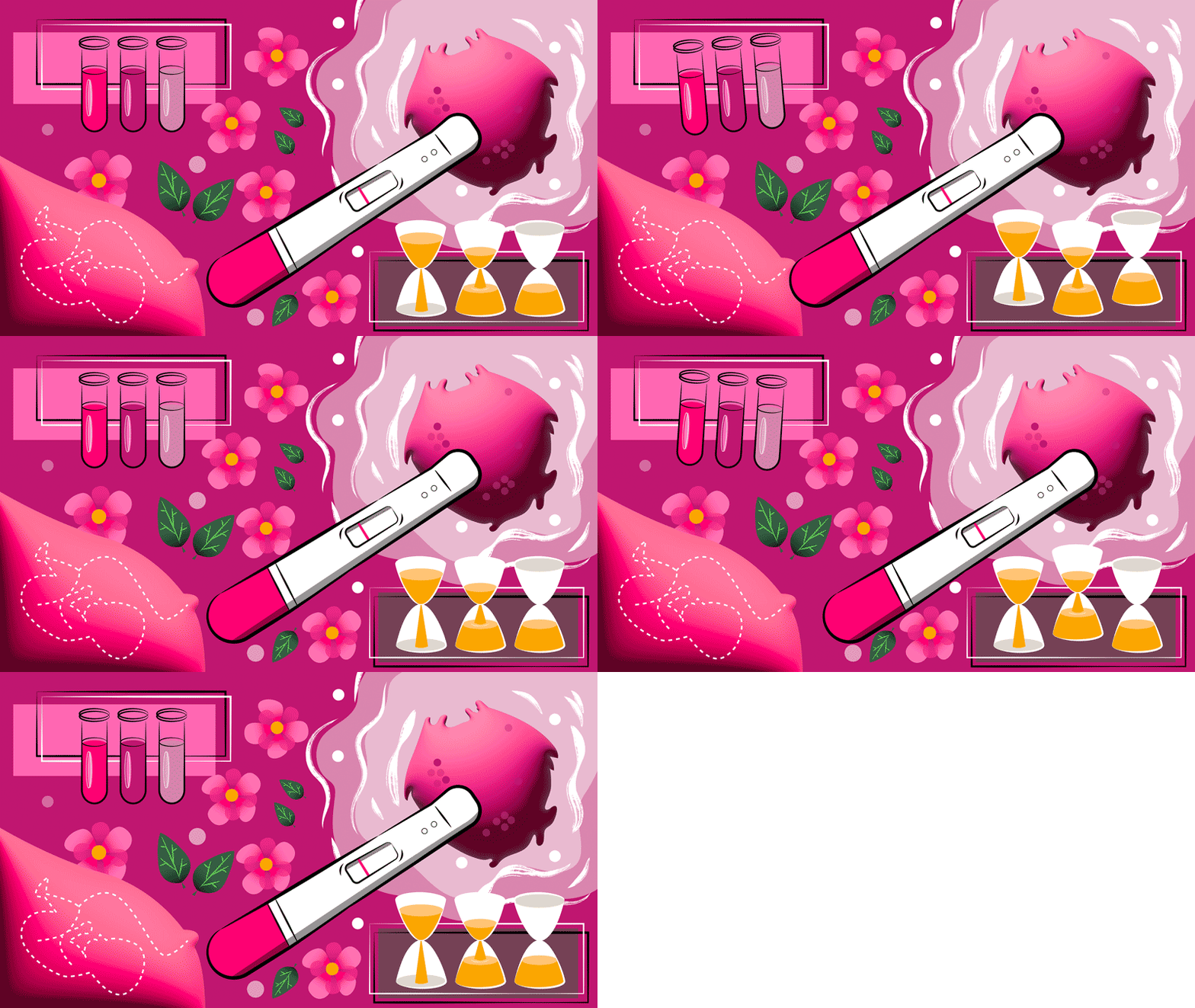
Facing challenges on the journey to start a family, especially when it seems to come easily to others, can feel deeply isolating.
But infertility is far more common than many people realize.
In fact, it affects about one in six couples worldwide.
People trying to conceive are often met with a flood of advice from friends, family and online sources.
Some of it is helpful, but much of it can be confusing or misleading.
As the medical director of the Center for Reproductive Medicine at University of Michigan Health, Natalie Stentz, M.D., MSCE, has heard it all.
“Starting a family is a deeply personal goal for many people,” she said. “When that expectation is not met or takes longer than expected, it can be incredibly difficult.”
“I always remind my patients that they are not alone. Infertility is very common. Even though it may feel isolating, there are many people going through the same experience, and there are resources available. I encourage anyone who is struggling to seek support and schedule an evaluation.”
She answers common questions and addresses some of the most frequent misconceptions about fertility.
What is infertility and when should you seek evaluation?
Stentz: Infertility is defined as the inability to become pregnant without medical assistance.
For heterosexual couples having intercourse at home, evaluation is recommended after 12 months if you are under age 35 and after six months if you are over 35.
Is infertility usually a women’s issue?
Stentz: No. Both male and female factors play a role. A
bout one third of cases are due to female factors alone, one third to male factors alone and one third to a combination of both.
Overall, about half of infertility cases involve a male factor. That’s why it is important that both partners are evaluated.
How common is infertility?
Stentz: Infertility is exceptionally common, affecting about one in six couples.
One of the biggest challenges is that people do not always talk about it.
That can make individuals feel like they are the only ones going through it, when in reality many others are facing the same experience.
Does stress cause infertility?
Stentz: The relationship between stress and infertility is largely unclear but stress alone is not the cause of infertility.
It's very common to hear advice like ‘oh, just relax. It will happen,’ but that's not helpful.
When I talk to my patients, I always acknowledge that stress does affect overall health and there are things we can do to mitigate stress and feel better.
However, I have yet to meet a patient who does not feel some degree of stress about why they came to my office in the first place.
How does age affect fertility?
Stentz: Age is one of the most important factors.
For women, both egg quantity and quality begin to decline in the mid-30s and continue over time.
Many women are unable to conceive about 10 years before menopause, which occurs on average around age 51.
Male fertility is also affected by age, but typically later and more gradually.
Are people having children later in life?
Stentz: Yes. Many people are choosing to have children later due to career, financial and personal factors.
While society has shifted, our biology has not; that means fertility challenges can still arise, sometimes earlier than people expect.
What lifestyle factors affect fertility?
Stentz: Several lifestyle factors can impact fertility.
Tobacco use is one of the most significant, as it affects egg quality, sperm quality and ovarian reserve.
Substance misuse can disrupt hormones and reduce fertility in both men and women.
Weight also plays a role. Obesity can affect ovulation, menstrual cycles and sperm health.
Environmental exposures, such as certain chemicals or heavy metals, may also influence fertility, although research is still ongoing.
Can heat exposure affect male fertility?
Stentz: Yes. Frequent exposure to heat, such as hot tubs, saunas or even prolonged laptop use directly on the lap, can raise scrotal temperature and negatively affect sperm production.
But these effects are often reversible; Reducing heat exposure can improve sperm quality within a few months.
How do weight loss medications affect fertility?
Stentz: For some women with obesity or conditions such as polycystic ovary syndrome, even modest weight loss can improve ovulation and fertility.
Weight loss medications may help support these changes and can be a useful tool when used under medical guidance.
I always remind my patients that they are not alone. Infertility is very common. Even though it may feel isolating, there are many people going through the same experience, and there are resources available.”
-Natalie Stentz, M.D.
Is secondary infertility common?
Stentz: Yes. Secondary infertility, which occurs after a previous pregnancy, is common and can be just as challenging as primary infertility.
It affects about one in 10 couples in the United States and may account for up to half of infertility cases.
What should you look for when trying to conceive?
Stentz: One of the most important indicators is your menstrual cycle.
Are your periods regular and predictable? Are you ovulating?
Tracking your cycle can help identify your fertile window and may also reveal potential issues, such as hormonal imbalances.
Are there overlooked factors that can affect fertility?
Stentz: Yes. Sexual dysfunction is one commonly overlooked factor.
Some couples experience challenges such as painful intercourse, erectile dysfunction or difficulty timing intercourse.
These are medical issues, and they are treatable. It’s important to talk to a physician about them.
What happens during a fertility evaluation?
Stentz: A fertility evaluation typically includes both partners.
This may involve a semen analysis, assessment of egg quantity and imaging to evaluate the uterus and fallopian tubes.
Doctors also review overall health, update labs and recommend prenatal vitamins to help prepare for pregnancy.
How long does fertility treatment take?
Stentz: Fertility treatment takes time.
I often tell patients it’s more of a marathon than a sprint.
Some people have success quickly, but for many, it takes time to understand the cause and find the right treatment.”
What types of fertility treatment are available?
Stentz: Just because you may be struggling at home doesn't mean that we can't do something to help.
There are so many treatments for fertility, spanning a spectrum from medications to help ovulation, insemination and IVF, all the way to using donor eggs, sperm and embryos.
The most important thing is that you have thoughtfully chosen personalized treatment to help achieve your goals within the context of your life.
What emotional challenges can you expect in regards to ?
Stentz: The process can be emotionally difficult.
This isn't something most people expect to struggle with. And because many do not talk about it, it can feel isolating.
Support is available through health care providers, counselors and support groups.
What can you do at home before seeing a fertility specialist?
Stentz: There are several steps people can take:
Take a prenatal vitamin
Use ovulation predictor kits to help time intercourse
Use fertility-friendly lubricants
Work with a doctor to manage underlying health conditions
These small steps can help optimize your chances before seeking care.
What's one of the most important things you should understand before pursuing fertility treatments?
Stentz: Overall health matters. Managing conditions like diabetes, high blood pressure and weight before pregnancy can improve outcomes for both parent and baby.
What's the biggest misconception about infertility?
Stentz: That infertility is rare or that it is caused by something someone did wrong.
It's common, it affects both partners and it is often outside of an individual’s control.
The most important step is seeking evaluation, because there are many options available to help.
Sign up for Health Lab newsletters today. Get medical tips from top experts and learn about new scientific discoveries every week.
Sign up for the Health Lab Podcast. Add us wherever you listen to your favorite shows.

Health Lab
Explore thousands of health news & research stories by visiting the Health Lab homepage for more.
Media Contact

Public Relations
Department of Communication at Michigan Medicine
In This Story

Natalie Clark Stentz MD, MSCE, FACOG
Clinical Assistant Professor
Stay Informed
Want top health & research news weekly? Sign up for Health Lab’s newsletters today!
Featured News & Stories

Top 7 tips for choosing Medicare prescription drug coverage for 2027

U-M-led consortium to receive up to $52 million in NIH funding to study why viral respiratory infections affect children differently
4 in 5 parents say having a baby is too expensive

Many older adults make Medicare decisions quickly and most don’t change plans, poll finds

What’s the latest on 7-OH and kratom availability and addiction care?