Weight loss and surgery restore patient’s throat after near-death brush with likely COVID
Tyler was determined to lose over 350 pounds to aid his recovery
Author |
To show someone his scar, Tyler Henry has to tilt his head straight back and pull down the collar of his shirt.
The small mark is evidence of the four operations he received at University of Michigan Health before his tracheostomy tube could be removed.
His scar also belies a larger health journey — from nearly dying several times in the hospital, to losing 361 pounds and no longer requiring help breathing at night.
“He's back to his old self,” said Lowell Henry, Tyler’s father.
“He's laughing, joking. And we go do things together. We work on the cars together. You know, it's great to have him back as his full-functioning self.”
In December 2019, however, Lowell was worried about any future for his son, much less one in which he recovered better than ever.
Lowell was in Kentucky when Tyler called him from back home in Missouri with stomach pain and shortness of breath. Lowell told Tyler to go to the emergency room. Then he and his wife, Connie, drove through the night to be reunited with their son.
When they arrived, Tyler was being resuscitated — the first of many such emergencies they would witness.
“He coded nine times, and I was there for every one,” Lowel said.
“It's really difficult watching somebody work on your son and not knowing if he's going to come back to you.”
When Tyler had arrived at the hospital, his oxygen and carbon dioxide levels were “flipped.” He had to be intubated and, eventually, sedated.
In hindsight, doctors believe he had an early case of COVID pneumonia, months before emergency rooms were equipped to recognize the virus.
After 45 days, Tyler’s intubation tube came out and doctors performed a tracheostomy, opening a hole in his neck to bypass the narrowing of his airway and allow long-term ventilator support for his breathing.
His stay in the hospital lasted from December 2019 to April 2020.
When he finally returned home, he was still dependent on the tracheostomy hole to breathe, and the long-term intubation had caused scarring and narrowing of his airway.
It would be over a year before Tyler could speak again, using his phone to communicate in the meantime.
In addition to the inherent isolation of the pandemic, his inability to talk to others especially bothered Tyler, whose affability led his father to say he’d “never met a stranger.”
He resolved to make a full recovery, removing the tracheostomy tube and getting off the ventilation system he required to breathe at night.
“The doctors there in Missouri told me the only way you'll ever get the trach out is if you lose a significant amount of weight,” Tyler said.
“And I was like, ‘Well, you got it.’”
Assisting Tyler on his weight loss were his parents, who joined his intermittent fasting routine. The entire family would only eat during one hour of every day.
Meanwhile, Lowell began researching the best otolaryngology departments that could potentially help Tyler.
They decided to reach out to the University of Michigan Health and Tyler was seen by Norman D. Hogikyan, M.D., Director of the University of Michigan Health Vocal Health Center, and his team.
By the time Hogikyan first met the Henrys, Tyler had already lost significant weight.
“I was impressed with his dedication to help himself get better,” Hogikyan said.
“And furthermore, through all of this, he maintained this gentle, kind manner. He wasn't bitter. He wasn't angry. And he certainly had reasons to be either or both of those.”
Tyler had scarring from his intubations, and Hogikyan performed four operations to gradually repair his airway in advance of his tracheostomy finally being removed.
Meanwhile, U-M Health's Assisted Ventilation Clinic helped him with his sleeping.
By 2024, Tyler had reached his weight-loss goal, having gone from weighing 576 pounds to 215. Just before Tyler’s birthday that year, Hogikyan got to deliver the good news that his tracheostomy opening could be closed.
“Having the trach out the day before my 28th birthday was an incomparable feeling,” Tyler said.
“It’s what I imagine winning the lottery feels like. I got, I got my life back, you know, and that's all I could ask for.”
Tyler and his parents moved from Missouri to Michigan to be closer to the Ann Arbor for Tyler’s treatment. He no longer requires appointments with Hogikyan, but they’ve decided to stay.
“It’s a beautiful state,” Tyler said.
“And having the peace of mind that the University of Michigan hospital is 45 minutes down the road is pretty reassuring.”
Sign up for Health Lab newsletters today. Get medical tips from top experts and learn about new scientific discoveries every week.
Sign up for the Health Lab Podcast. Add us wherever you listen to your favorite shows.

Health Lab
Explore thousands of health news & research stories by visiting the Health Lab homepage for more.
In This Story
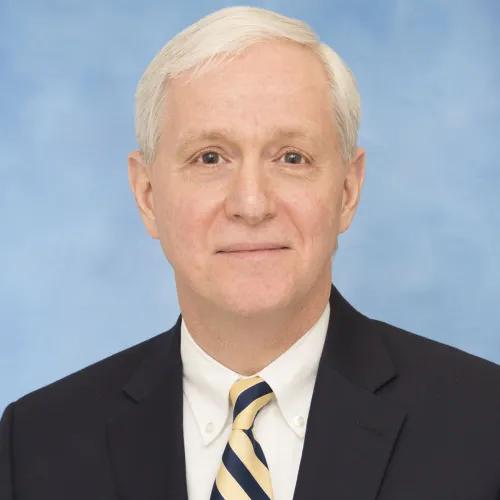
Norman D Hogikyan, MD, FACS, HEC-C
Professor
Featured News & Stories
Research may help better predict outcomes in kids with congenital cytomegalovirus
Human ability to focus on specific sounds not found to originate in auditory nerve, brainstem

U-M Health’s Ann Arbor hospitals recognized as No. 1 in Michigan, among best in nation by U.S. News & World Report
Uncovering the link between a common congenital viral infection and autism
Sleep apnea disparities in kids: Obesity may override impact of race, socioeconomics