Weather emergencies affect older adults' health views
People over 50 who recently experienced an extreme weather event far more likely to express concern about the effects of climate change on their health
10:01 AM
Author |
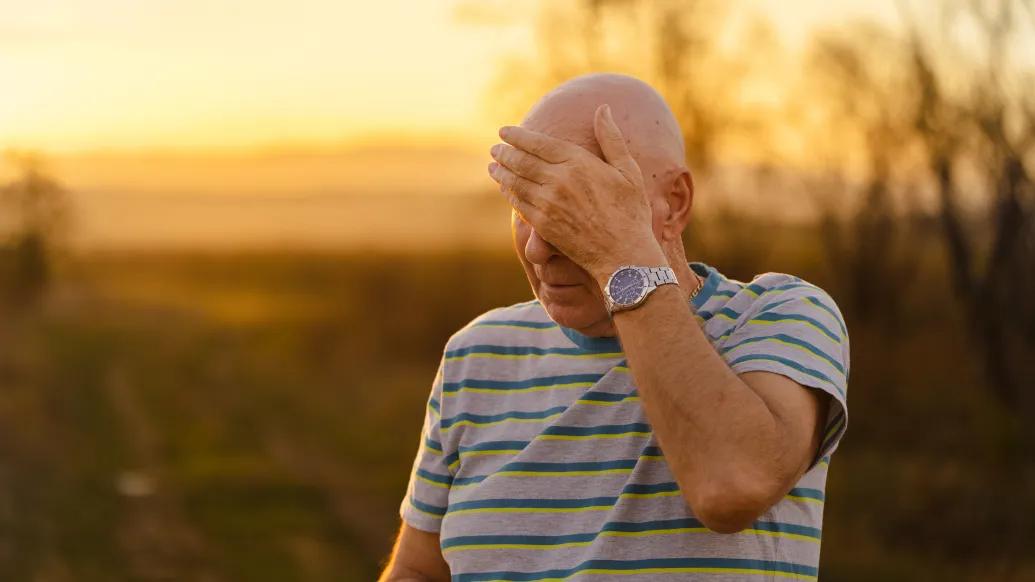
Nearly 3 out of every 4 older Americans have experienced at least one extreme weather event in the last two years, a new University of Michigan poll finds. And living through such an event appears to make a big difference in how they view the potential impact of climate change on their health.
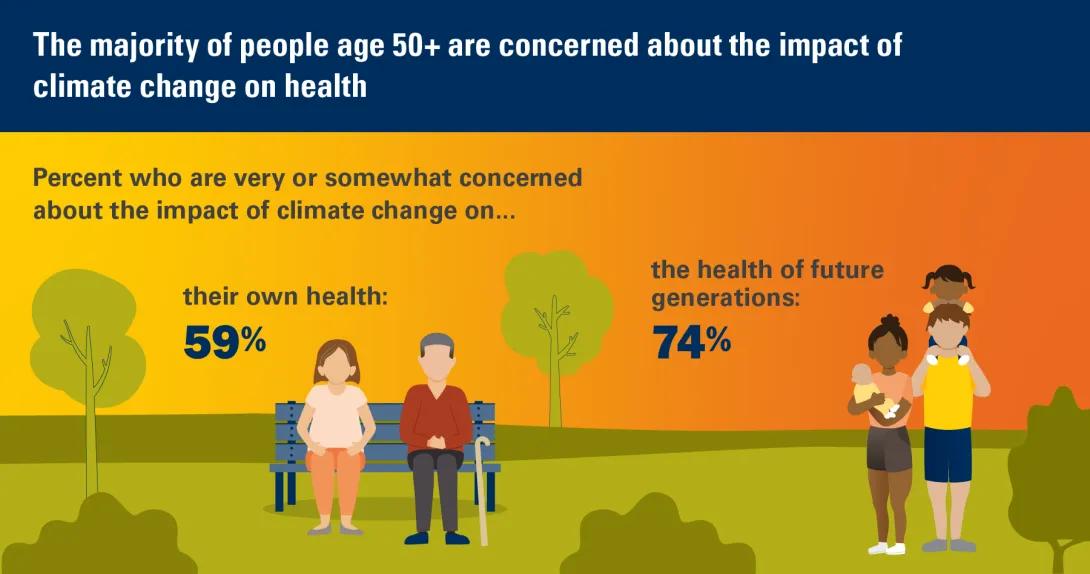
The new findings from the National Poll on Healthy Aging show that 59% of people aged 50 and over are concerned about how climate change could affect their health.
The percentage expressing concern was even higher among those who had recently lived through a weather emergency such as a wildfire, extreme heat, severe storm or power outage lasting more than a day. In all, 70% of those who had experienced at least one such event in the past two years expressed concern about climate change and their health, compared with 26% of those who had not lived through such an event.
Other groups of older adults were also more likely to say they are concerned about the effects of climate change on their health, including women, those reporting fair or poor mental health, and those who live in urban areas.
Only 6% of people over 50, though, had talked with a health care provider about how extreme weather might affect their health and how they could prepare or protect themselves.
This finding suggests more opportunity for older adults to ask their doctors and other health care providers about things like how to protect their lungs from wildfire smoke, how to prepare for prolonged disruptions to their supply of medications or the electricity that powers their medical equipment, or how to know where to find cooling centers, warming centers and emergency shelters in their community.
“Our findings suggest a need to help more older adults understand and take steps to prepare for the impacts of wildfires, hurricanes, tornadoes, extreme heat waves, winter storms and more, especially when it comes to the medications, medical supplies, electricity and access to care that these emergencies can disrupt,” says Sue Anne Bell, Ph.D., FNP-BC, a nurse practitioner and associate professor at the U-M School of Nursing who worked with the poll team. Bell specializes in studying the impacts of disasters and public health emergencies among older adults.
The poll is based at the U-M Institute for Healthcare Policy and Innovation, and supported by Michigan Medicine, U-M’s academic medical center.
In addition to the national poll report, the team compiled data for Michigan adults aged 50 and older compared with those in other states; an interactive data visualization is available at https://michmed.org/MDKQ2. An article summarizing the Michigan findings is available at https://michmed.org/28dbD.
The poll was conducted in August 2024, before some of the most extreme climate-related emergencies of the past year, such as September’s Hurricane Helene – the deadliest hurricane to strike the U.S. since Hurricane Katrina in 2005 – and the wildfires in the Los Angeles area in January of 2025.
In all, 2023 and 2024 were nearly tied for the number of weather and climate disasters with costs of more than a billion dollars, and the number of disasters of such magnitude has grown over the lifetimes of today’s older adults.
In addition to concern for their own health, 74% of people aged 50 and over say they are concerned about the potential impact of climate change on the health of future generations. That includes 43% who say they are very concerned, and 31% who are somewhat concerned.
Those older adults who had lived through a weather emergency in the past two years were more likely to express concern about future generations, with 83% of them saying they’re concerned, compared with 45% of those who had not experienced a weather emergency.
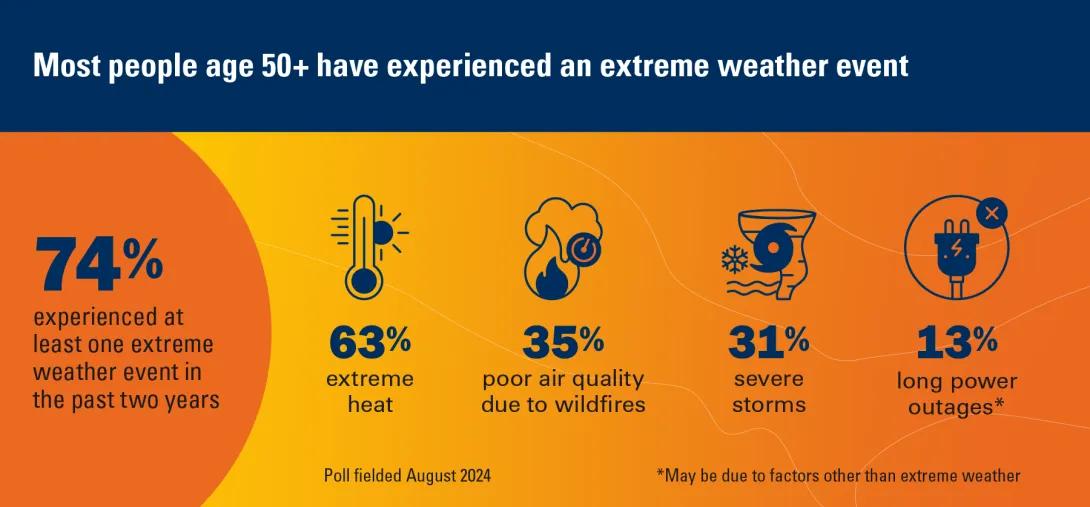
Extreme heat was the most common extreme weather event experienced by poll respondents, with 63% saying they had experienced at least one major heat wave in the past two years.
Poor air quality due to wildfire smoke was next most common, at 35%, and 31% had been in the path of a severe storm. Prolonged power outages (lasting more than one day) were next most common, at 13%; power outages may be due to factors other than extreme weather.
The poll also asked older adults which potential future effects of climate change concerned them most. The most-cited potential future effect was more extreme heat events (70%), followed closely by air pollution and poor air quality (69%), loss of basic infrastructure like power and water (68%), more frequent severe storms (68%), and changes in infectious diseases (66%).
“These kinds of events can affect an older adult’s health directly – for instance, people with asthma and other lung diseases can have trouble breathing due to wildfire smoke, home medical equipment can be affected by power outages, and older adults can be more vulnerable to extreme heat and cold,” says poll director Jeffrey Kullgren, M.D., M.P.H., M.S., a primary care physician at the VA Ann Arbor Healthcare System and associate professor of internal medicine at U-M.
“But there are also indirect effects, including mental stress, lack of access to medications and medical care, and in extreme cases, lack of ability to evacuate safely or find shelter,” he added.
Bell notes, “Planning and preparing for emergencies is especially important for those with complex health conditions and disabilities, who should ask their regular health care provider for advice as well as seek information from their local and state emergency preparedness authorities.”
Poll respondents reporting a health problem or disability that limits their daily activities were slightly more likely than other older adults to say they had spoken with a health care provider about how to prepare for a climate-related emergency, at 8% vs. 5%. Among all older adults who had had such discussions, 64% had taken at least one action to prepare.
The U.S. government’s Ready.gov website offers information about how to prepare for and cope with extreme weather events and other emergencies.
Bell previously worked with the poll team to explore what older adults have done to prepare for emergencies; read the report here.
The poll findings come from a nationally representative survey conducted by NORC at the University of Chicago for IHPI and administered online and via phone in August 2024 among 3,486 adults ages 50 to 94 across the U.S. The sample was subsequently weighted to reflect the U.S. population. Read past National Poll on Healthy Aging reports and about the poll methodology.

Health Lab
Explore thousands of health news & research stories by visiting the Health Lab homepage for more.
Media Contact

Public Relations
Department of Communication at Michigan Medicine
In This Story
Jeffrey Todd Kullgren, MD, MS, MPH
Professor
Related
Operating rooms are the climate change contributor no one’s talking about
Many Older Adults Aren’t Fully Prepared for Emergency Situations, Poll Finds
Featured News & Stories
Better prenatal care data could help prevent maternal complications, experts say
Many hospitals still don’t do enough to prevent UTIs from catheters

Digital alerts support timely treatment decisions of critically ill cardiac patients
What’s changing in Medicaid and what can you do?
Rabies is on the rise: Experts offer advice