Vascular STING activation facilitates natural killer cell anti-tumor immunity in small cell lung cancer
Small cell lung cancer is an aggressive form of lung cancer
5:00 AM
Written by Anastazia Hartman and originally written for the Department of Pathology.
Small cell lung cancer is an aggressive form of lung cancer, in part because many tumors evade the immune system.
SCLC does this by shutting down MHC-I, a molecule that normally acts like a “red flag” to alert T cells to recognize and attack cancer cells.
Ironically, this should make SCLC vulnerable to another type of immune cell, natural killer cells, which are designed to detect and destroy cells that lack MHC-I.
Natural killer cells can kill SCLC cells in laboratory settings; however, in SCLC patients, natural killer cells are largely absent from the tumor environment.
Navin R. Mahadevan, M.D,, Ph.D., Assistant Professor, University of Michigan Department of Pathology, and David A. Barbie, M.D., Director of the Lowe Center for Thoracic Oncology at Dana-Farber Cancer Institute, are the researchers behind these findings.
To figure this out, they turned to high-resolution spatial mapping of patient samples and a realistic “tumor-on-a-chip” model that recreates SCLC tumors surrounded by blood vessels.
"Integrative analysis of patient samples along with 3D “tumor-on-a-chip” models allows us to understand how tumors evade the immune system as well as the development of strategies to make tumor cells vulnerable to immune attack again," said Mahadevan.
"I’m excited about finding ways to reprogram tumor cells to make them more visible to the immune system."
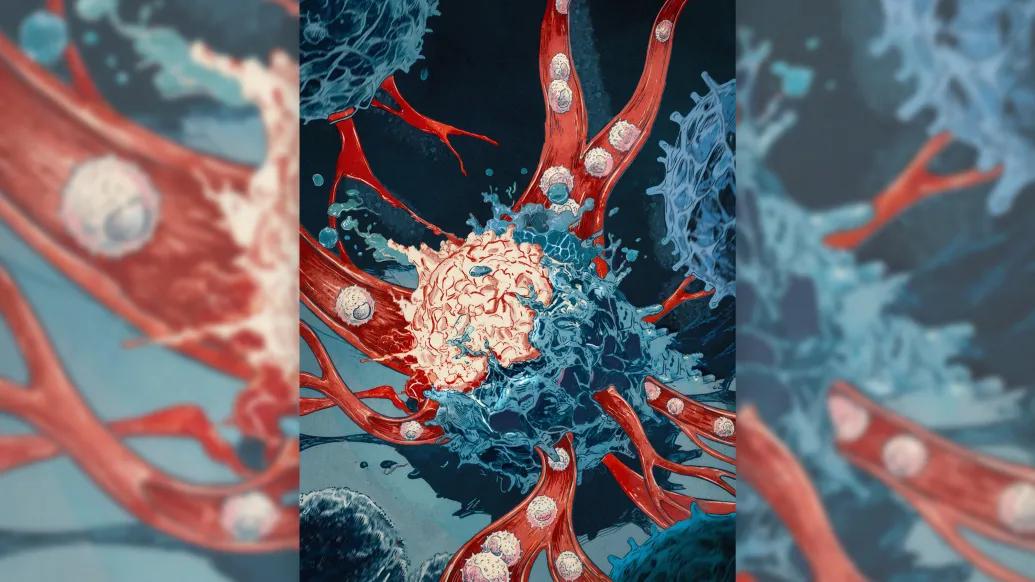
They identified that the main barrier is the inert tumor vasculature, which acts as a closed gate, preventing natural killer cells from exiting the bloodstream and entering the tumor.
When an immune alarm pathway called STING, especially in the blood-vessel lining, is activated, the vascular gate opens, allowing natural killer cells to exit the vessels, enter the tumor neighborhood, and kill cancer cells.
When combined with engineered natural killer cell therapy targeting DLL3, which is present in most SCLC tumor cells were killed more effectively, providing a compelling strategy to enhance natural killer-based immunotherapies.
While this discovery doesn’t immediately change current patient care, it helps explain why earlier immune cell therapies, including natural killer cell therapies, have underperformed in SCLC.
Combining STING activators with natural killer cell therapies could improve treatment responses and support more personalized approaches by identifying those most likely to respond.
Looking ahead, researchers are focused on making natural killer cell therapies more durable and effective.
This includes improving natural killer cell persistence and activity in the body, identifying safe and effective STING-activating drugs for clinical use, and developing biomarkers to select patients most likely to benefit, particularly those with MHC-I–low tumors.
The most striking insight from this work is that natural killer cells aren’t failing because they lack the ability to kill SCLC cells.
Instead, they are being physically excluded from tumors, creating an “immune-cold” environment driven by the cancer itself.
By overcoming this barrier, future therapies may finally unlock the full potential of natural killer cells to treat SCLC and other immune-cold tumors.

Health Lab
Explore thousands of health news & research stories by visiting the Health Lab homepage for more.
Media Contact

Public Relations
Department of Communication at Michigan Medicine
Stay Informed
Want top health & research news weekly? Sign up for Health Lab’s newsletters today!
Featured News & Stories

Circadian rhythm drives the release of important immune cells
Candida auris: The deadly fungus on the rise

The AI is listening: Implications of machine generated clinical notes on health care
Comprehensive DNA sequencing reveals hidden drivers of cancer

Many older adults make Medicare decisions quickly and most don’t change plans, poll finds