Using telehealth to serve disparate populations
With some creativity, a telemedicine partnership is successfully serving uninsured, under-insured and refugee populations
5:00 AM
Author |
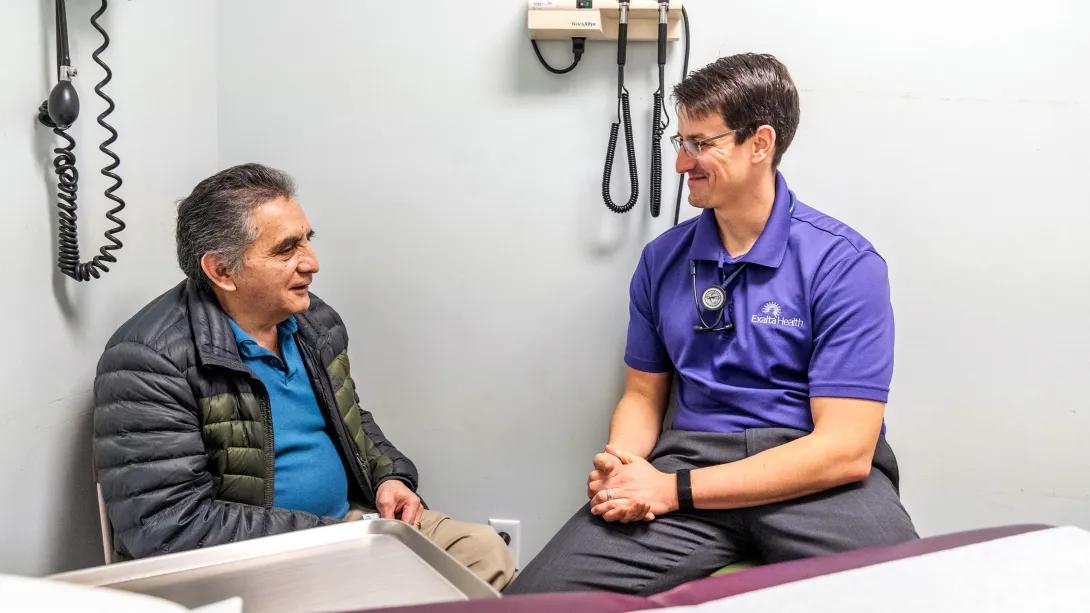
Armando Ruiz is like many who walk through the doors of Exalta Health, a non-profit clinic: an elderly man greeted in his native Spanish by a bilingual marquee.
He’s also one of many Exalta patients who took advantage of a partnership with a local hospital to receive needed specialty care through an unusual hybrid remote and in-person model.
The partnership between Grand Rapids, Mich, based Exalta and University of Michigan Health-West, part of Michigan Medicine, serves a variety of business objectives for both providers.
Ruiz, an uninsured immigrant from Guatemala, might not have received a proper diagnosis for his combination of chest pains and respiratory problems without seeing a specialist ― an appointment that would ordinarily be unaffordable and take him outside of Exalta’s facility.
Ruiz first met with Laura Kass, a physician assistant who travels from University of Michigan Health-West’s campus to Exalta once a week.
With help from an on-site interpreter, Kass was able to order tests for Ruiz and refer him to a cardiologist at UM Health-West.
Ruiz’s appointment with the cardiologist was then conducted at Exalta using a remote video call with help from the interpreter.
Given the experience of Ruiz and others, this hybrid care model could be instrumental in addressing the challenge of treatment adherence among uninsured and underinsured patients in the area.
Addressing challenges
Exalta describes itself as a "faith based nonprofit healthcare center that offers accessible, compassionate care for the whole person."
The majority (59%) of its primary care physicians and volunteers speak one of 18 languages other than English, primarily Spanish.
Sixty-four percent of Exalta patients have no insurance. Fourteen percent receive Medicaid benefits.
There is little overlap between Exalta and U-M Health-West, enabling each provider to address a challenge for the other.
For U-M Health-West, Exalta’s patient base represented a subsection of the community they were unlikely to attract through traditional outreach.
For Exalta, U-M Health-West had specialty care providers on staff who could provide follow up care for patients with two commonly diagnosed heart conditions: hypertension and diabetes.
But connecting Exalta’s patients to U-M Health-West’s campus posed another challenge.
Embracing remote care
Pre-pandemic, low income Spanish speakers were among the demographic groups least prepared to use telehealth services.
Exalta’s reputation among its mostly Spanish speaking patients allowed it to bridge the technology gap. Forty percent of Exalta’s staff speaks Spanish.
If a patient speaks a language other than Spanish or English, and no in-person interpreter is available, Exalta can use Voices for Health, which provides an interpreter over the phone.
Some Exalta patients were raised in cultures where institutional medicine is a foreign concept. Others were unable to find a primary care provider who could serve them in their native language. For these groups, establishing trust with a medical provider can be challenging.
The limits of Exalta’s basic patient services posed another obstacle: Drop-off was not uncommon when patients were referred to an outside specialist.
Through a mutual connection, U-M Health-West broached the subject of using telehealth to bridge this gap, matching its specialty care staff to the most pressing needs of Exalta’s patients.
Some had already received medical advice over their phone in the early days of the pandemic.
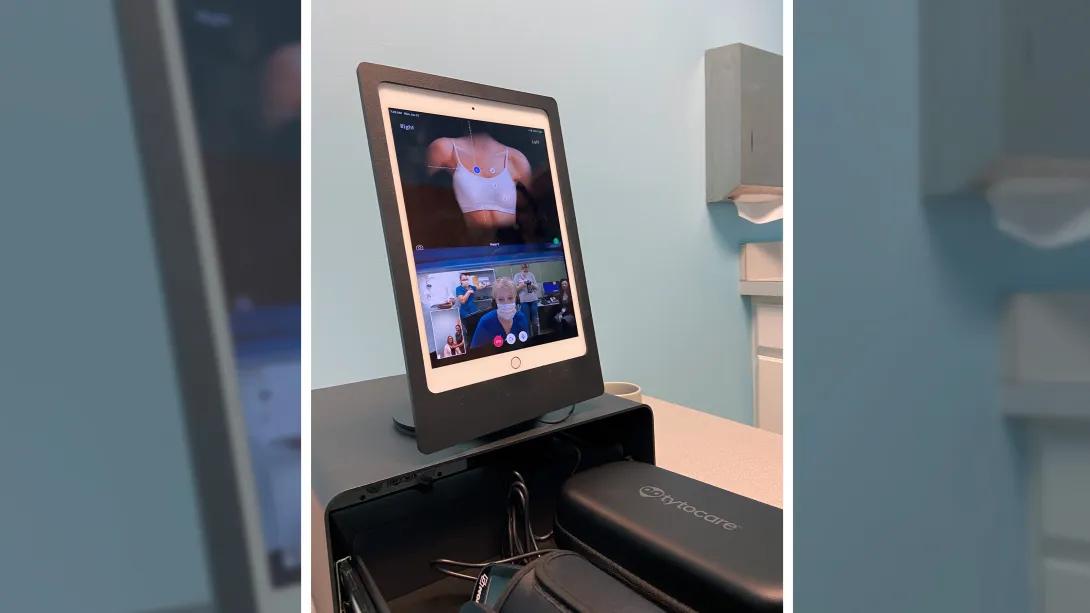
Once in-person visits returned, the next step for patients was relatively small. Beginning in July 2020, U-M Health-West sent a physician assistant to Exalta. She used her one shift a week to flag patients seeking treatment for heart related symptoms.
When one was referred to a cardiologist, a doctor at Exalta would schedule an advance televisit remotely with U-M Health-West.
TytoCare, a remote patient monitoring platform, connected the U-M Health-West cardiologist with the Exalta patient for a video exam.
The patient sat on-site at Exalta’s clinic while the cardiologist sat at the U-M Health-West facility. If the physician recommended additional appointments or procedures, that could be done during the exam.
This multi-tiered approach paid immediate dividends.During the first remote appointment, a U-M Health-West cardiologist was able to diagnose an Exalta patient’s heart murmur.
Cost benefit analysis
Remote patient monitoring facilitates appointments between any two points around the globe.Why would a clinic strive to serve its own community remotely, when the doctor and patient are only a few miles apart?
For U-M Health-West, the answer lies in increasing its visibility among patients unlikely to travel far to seek care. Although telehealth itself relies on new technology, the marketing component is old school, relying on patient word of mouth to spread brand awareness among friends and family.
The efficacy of this strategy is more difficult to quantify than an email marketing campaign, but the cost to U-M Health-West is relatively little: a physician assistant for one shift a week, the TytoCare tool and the time out of their cardiologists’ regular schedule.
As hospitals and health systems seek to lower costs, reduce burdens on their staff and treat patients more efficiently, the need to leverage remote patient monitoring has never been greater.
In the case of U-M Health-West, that required a closer look at their own community combined with a dash of creativity.
This story originally ran in Michigan Medicine’s internal publication Headlines. Navya Yerrapu additionally edited the piece to appear on Health Lab.
Sign up for Health Lab newsletters today. Get medical tips from top experts and learn about new scientific discoveries every week by subscribing to Health Lab’s two newsletters, Health & Wellness and Research & Innovation.
Sign up for the Health Lab Podcast: Add us on Spotify, Apple Podcasts or wherever you get you listen to your favorite shows.

Health Lab
Explore thousands of health news & research stories by visiting the Health Lab homepage for more.
Media Contact

Public Relations
Department of Communication at Michigan Medicine
Stay Informed
Want top health & research news weekly? Sign up for Health Lab’s newsletters today!
Featured News & Stories
How to improve mental health safety on social media – not just for young people

What’s the latest on 7-OH and kratom availability and addiction care?

Born with half a heart, headed to college with a full life

Waiting for a bed, but not for care: ED boarding study finds wide variation in handoffs

More leucovorin prescribed to kids after federal officials touted its unproven benefits for autism