Using culture to encourage exercise can help close a cancer survival gap – and improve quality of life
Wielding cultural insights to encourage physical activity, an expert works to improve survival rates for Black breast cancer survivors
5:00 AM
Author |
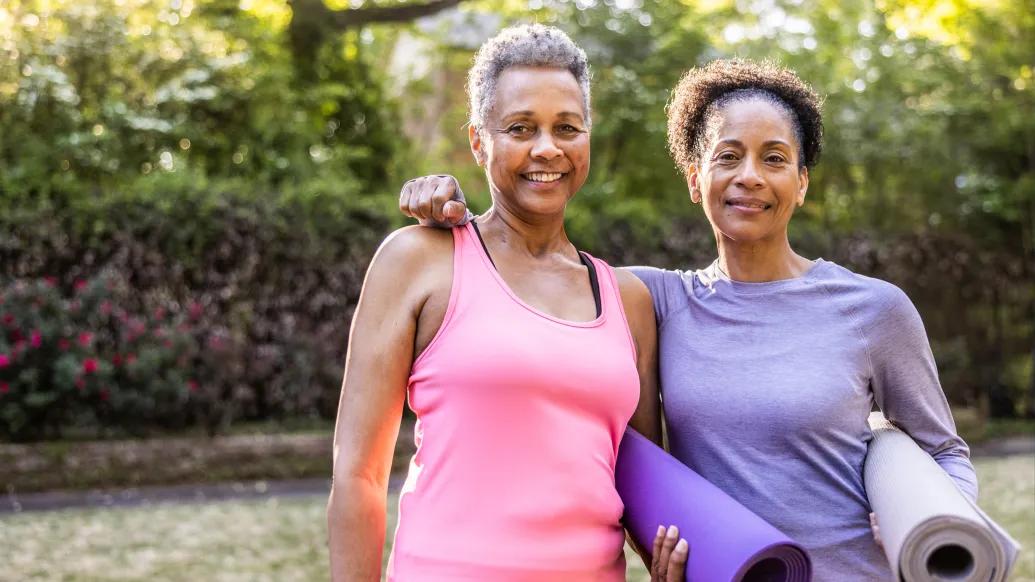
Doctors and scientists have long known that exercise and physical activity can help prevent the recurrence of cancer.
However, experts have also found that people from racialized and historically marginalized groups are less likely to engage in physical activity than their white counterparts – with consequences that may impact their five-year relative survival rate.
In cases involving breast cancer, for example, the National Institutes of Health note that the five-year relative survival rate for Black women hovers at 81%, but the rate for white women stands at 92%.
Researchers such as Angela Fong, Ph.D., an assistant professor of applied exercise science at the University of Michigan School of Kinesiology and a member of the University of Michigan Health Rogel Cancer Center, says a variety of factors can contribute to a lower five-year survival rate among members of racialized and historically marginalized groups.
“Black women with breast cancer are often diagnosed with later-stage tumors,” said Fong, director of the Exercise and Health Behavior in Oncology Laboratory.
“That can lead to treatments that are way more intense and have worse side effects.”
And that, in combination with a variety of cultural and societal factors, can make it more difficult for Black breast cancer survivors to become or stay active.
Fong’s research is aimed at helping cancer survivors live longer and better lives by incorporating exercise and other physical activity into their everyday routines.
Where this ends is where Black women are living just as long, if not longer – and while those years are long, they’re good quality years, as well.”
As so, Fong has been using her lab to tease out cultural influences on physical activity programs that can help Black women do just that.
Some of those influences included learning that many Black women preferred strength training to cardio training, in part because perspiring less heavily doesn’t take as harsh a toll on their hair maintenance routine.
So while Fong could, for example, suggest that women remind themselves to exercise by leaving a water bottle and gym shoes by the door, a more culturally resonant approach might be to share some tips about protecting Black hair during a workout.
“When we think about culturally tailoring interventions like this, the tendency is to do it at a surface level,” Fong said.
“Hiring Black women as fitness instructors, or having advertisements using images of Black women, that’s a good start, but where we’re missing the mark is with these deeper cultural factors and norms.”
“The more I talk to Black women about the research, the more we get really excited about it,” Fong said.
“Where this ends is where Black women are living just as long, if not longer – and while those years are long, they’re good quality years, as well.”

Health Lab
Explore thousands of health news & research stories by visiting the Health Lab homepage for more.
Media Contact

Public Relations
Department of Communication at Michigan Medicine
Stay Informed
Want top health & research news weekly? Sign up for Health Lab’s newsletters today!
Featured News & Stories
U-M alumni return from Central Asia to seek treatment for their child at Mott
Specialized care helps patient navigate rare liposarcoma diagnosis
Blood-based multi-cancer screening tests: Ready for primetime?

New oral nanomedicine boosts effectiveness of cancer immunotherapies

School night bedtime tips every parent should know