Urine-based test detects aggressive prostate cancer
The test can differentiate between various grades of cancer, helping men avoid unnecessary biopsies
8:00 AM
Author |
This story was originally published on January 28, 2025.
Traditional approaches to prostate cancer screening involve blood tests, MRI, and biopsies.
However, in addition to being uncomfortable, some of these procedures result in overdiagnosis of low-grade cancers.
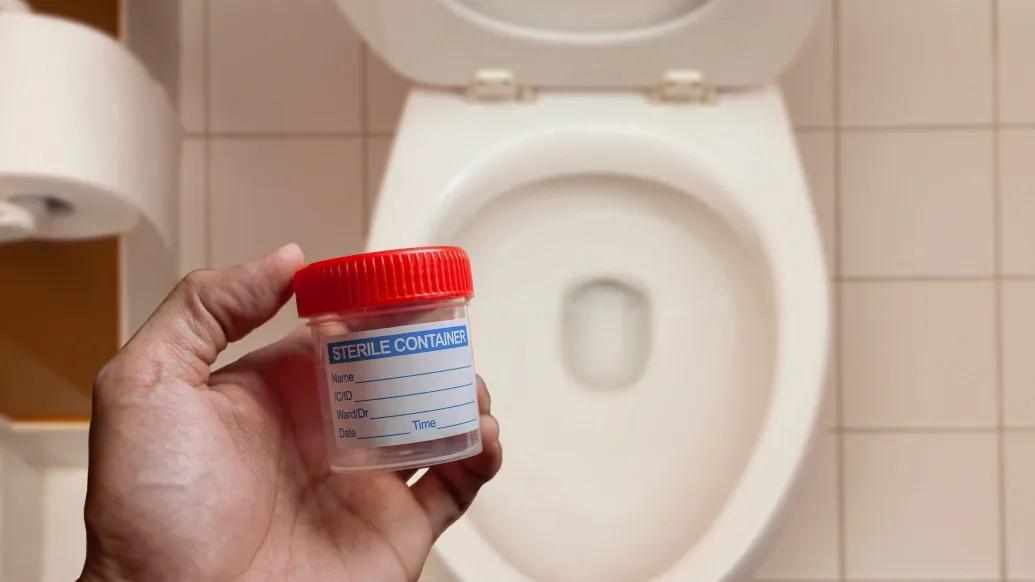
Researchers at the University of Michigan Health Rogel Cancer Center have clinically validated a previously developed urine test, which can potentially bypass these invasive procedures among men who are unlikely to benefit.
Prostate cancers are categorized based on their Gleason Grade or Grade Group.
Those with Gleason 3+4=7, or Grade Group 2, or higher are more likely to grow and cause harm in comparison with Gleason 6 or Grade Group 1 prostate cancers, which are considered non-aggressive.
The urine test, called MyProstateScore 2.0, or MPS2, looks at 18 different genes linked to high-grade prostate cancer.
The researchers had previously demonstrated that the test was effective in identifying GG2 or higher cancers, helping patients avoid unnecessary biopsies.
However, in that study, urine samples were obtained after a digital rectal examination.
Its primary benefit is that the test can accurately predict your probability of developing aggressive prostate cancer, putting both the patient and physician at ease.”
-Ganesh Palapattu, M.D.
“The process requires the prostate to be compressed, causing the release of cellular debris into a urine sample that the patient provides after the rectal exam,” said Ganesh S. Palapattu, M.D., a professor of urology.
Such an examination may not be practical for many and is associated with some discomfort.
Developing a potential at-home test
In the study, published in The Journal of Urology, the team modified the urine collection approach so that the MPS2 test could detect markers for prostate cancer, without requiring a prior rectal exam.
SEE ALSO: Development and Validation of an 18-Gene Urine Test for High-Grade Prostate Cancer
Using urine samples from a cohort of 266 men who did not undergo a rectal exam, they found that the test could detect 94% of GG2 or higher cancers and was more sensitive than blood tests.
Further, the team used mathematical models to demonstrate that the use of MPS2 would have avoided up to 53% of unnecessary biopsies.
“These results show that MPS2 has promise as an at-home test,” Palapattu said.
“Its primary benefit is that the test can accurately predict your probability of developing aggressive prostate cancer, putting both the patient and physician at ease."
MPS2 can also help patients save on healthcare costs since it is significantly cheaper than an MRI.
The team is interested in repeating the study and corroborating their results with a larger, diverse population of men.
“MPS2 could potentially improve the health of our patients by avoiding overdiagnosis and overtreatment and allowing us to focus on those who are most likely to have aggressive cancers,” Palapattu said.
Test outperforms MRI during active surveillance
Active surveillance is widely used for men with low-risk prostate cancer, but existing tools have limitations and monitoring relies on repeated biopsies that are invasive.
A version of the test, called MyProstateScore 2.0 - Active Surveillance or MPS2-AS, was used in a different study that was also published in The Journal of Urology.
It was evaluated in over 300 patients on active surveillance for GG1 prostate cancer and was found to outperform multiparametric MRI, which is a special type of MRI that provides a more detailed picture of the prostate.
Use of the test to determine the need for repeat “monitoring” biopsies would have avoided up to 64% of unnecessary biopsies while maintaining timely detection of higher-grade cancers that merit treatment,
MPS2 is currently available through Lynx Dx, a University of Michigan spin-off company that has an exclusive university license to commercialize MPS2. Patients interested in learning more can call the Michigan Medicine Cancer AnswerLine at 800-865-1125.
Additional authors: First study included Jeffrey Tosoian, Yuping Zhang, Jacob Meyers, Spencer Heaton, Javed Siddiqui, Lanbo Xiao, Keavash Assani, Daniel Barocas, Ashley Ross, Zoey Chopra, Grace Herron, Jacob Edelson, Nathan Graham, Udit Singhal, Simpa Salami, Todd Morgan, John Wei and Arul Chinnaiyan.
Second study included Jeffrey Tosoian, Jacob Meyers, Bradley Moore, Cameron J. Britton, Kent Chevli, Walter Rayford, Adam Gadzinski, Jean Joseph, Pratik Patel, Ali Kasraeian, Prithipal Sethi, Hunter Robinson, Keavash Assani, Vijay Rings, Janene Pierce, Kristen Scarpato, Kelvin Moses, Daniel Barocas, Sam Chang, David Penson, Martin Sanda, Ashley Ross, Matthew Cooperberg, Keyan Salari, Michael Liss, Yuping Zhang, Javed Siddiqui, Udit Singhal, Simpa Salami, Todd Morgan, Ganesh Palapattu, John Wei, Jingyi Cao, Vikram Bala, Younggook Oh, Spencer Heaton, Yingye Zheng, and Arul Chinnaiyan.
Funding: Michigan-Vanderbilt Early Detection Research Network Biomarker 369 Characterization Center under U2C CA271854 and a Prostate Cancer Foundation Young Investigator 370 Award under 20YOUN11. Other sources of funding not directly involved in the conduct of this study include Prostate Cancer Foundation Young Investigator Awards, Michigan Prostate Specialized Program of Research Excellence, National Cancer Institute Outstanding Investigator Award, Howard Hughes Medical Institute and the American Cancer Society.
Disclosures: Chinnaiyan serves on the advisory boards of Tempus, Lynx Dx, Ascentage Pharmaceuticals, Medsyn therapeutics, Esanik and RAAPTA therapeutics. Lynx Dx has obtained an exclusive license from the University of Michigan to commercialize MPS2. Tosoian and Chinnaiyan are equity holders and scientific advisers to Lynx Dx. Siddiqui, Zhang and Xiao have served as scientific advisers to Lynx Dx. Barocas is on the advisory board for Pfizer, Lantheus, Lynx Dx, and Pacific Edge. Cooperberg is a scientific advisor to Tempus, Veracyte, GlaxoSmithKline, Pfizer, Bayer, and Janssen as well as equity holding in Lynx Dx. Morgan is on the advisory board for Cleveland Diagnostics. Palapattu is on the advisory board for Continuity Biosciences, SynDevRx, Taurus Diagnostics, and Lynx Dx, and investment in Continuity Biosciences and ImmunityBio. Ross is a consultant or speaker for Astellas, Blue Earth, Bayer, Janssen, Pfizer, BilliontoOne, Lantheus, Veracyte, and Boston Scientific. Salami is on the advisory committee for Bayer Pharma. Salari reported research funding support from Convergent Genomics. Meyers, Moore, Cao, Bala, Oh, Heaton are employees of Lynx Dx.
Papers cited: “Clinical validation of MyProstateScore 2.0 testing using first-catch, non-DRE urine,” The Journal of Urology. DOI: 10.1097/JU.0000000000004421 and “Non-Invasive Urine Test Predicts Grade Group Upgrading in Patients on Active Surveillance for Prostate Cancer: Multisite Validation and Comparison with MRI,” The Journal of Urology. DOI: 10.1097/JU.0000000000005095
Sign up for Health Lab newsletters today. Get medical tips from top experts and learn about new scientific discoveries every week.
Sign up for the Health Lab Podcast. Add us wherever you listen to your favorite shows.

Health Lab
Explore thousands of health news & research stories by visiting the Health Lab homepage for more.
Media Contact

Public Relations
Department of Communication at Michigan Medicine
In This Story

Ganesh S Palapattu, MD, FACS, FRCS(Glasg)
Professor
Related
What you need to know about prostate cancer
Stay Informed
Want top health & research news weekly? Sign up for Health Lab’s newsletters today!
Featured News & Stories

Long friendship inspires urology resident fund

Researchers create new path to target hard-to-drug prostate cancer protein

Model predicts long term mortality risk from prostate cancer

What does Joe Biden’s prostate cancer diagnosis mean for older patients?
What you need to know about prostate cancer