Unique approach to selective dorsal rhizotomy surgery transforms lives for kids with cerebral palsy
The minimally invasive procedure treats spasticity and tone
5:00 AM
Author |
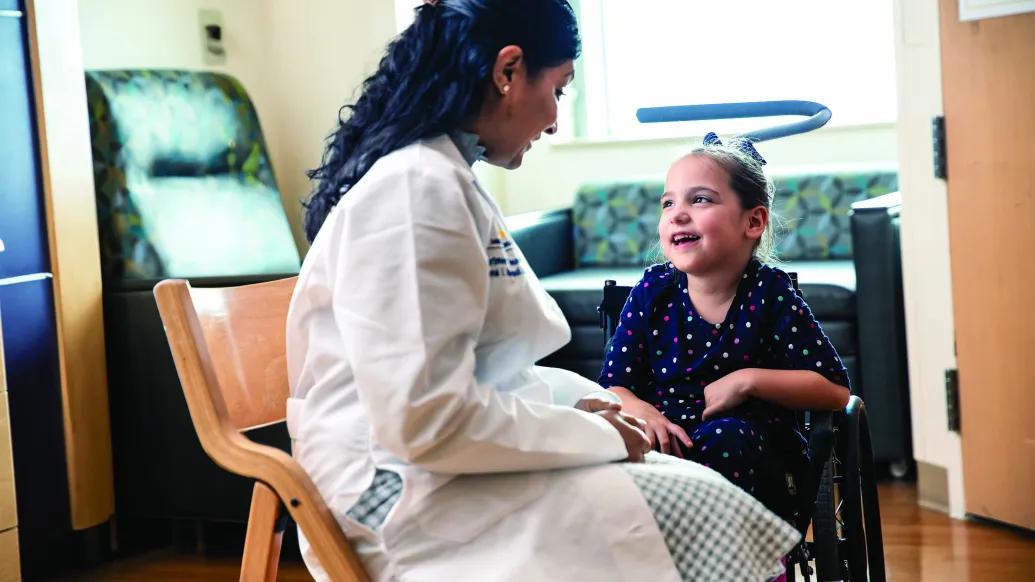
“I am not going to give up.”
That’s what six-year-old Emerson “Emmy” Dudley told her therapists after a fall to her knees during a recent rehab session.
It’s a phrase that perfectly captures her spirit, and the life changing journey she and her family have taken with selective dorsal rhizotomy surgery at University of Michigan Health C.S. Mott Children’s Hospital.
Emmy was born at just 27 weeks to Sarah and Cory Dudley of Britton, Michigan.
She was a twin diagnosed with twin-to-twin transfusion syndrome.
While her twin sadly didn’t make it, Emmy spent 110 days in the neonatal intensive care unit and came home with an uphill path ahead.
Diagnosed with cerebral palsy around her first birthday, Emmy faced the daily challenges of muscle tightness, or tone, which affected her mobility and caused pain.
A surgical approach to tone management
Neena Marupudi, M.D., an associate professor in the department of neurosurgery at the University of Michigan and a pediatric functional neurosurgeon at C.S. Mott Children’s Hospital, leads the surgical spasticity program.
This multidisciplinary team, composed of physicians, therapists, and social workers, is dedicated to evaluating and caring for children who may benefit from selective dorsal rhizotomies or other surgical interventions.
She says Selective Dorsal Rhizotomy, or SDR, can make a dramatic difference for children with CP.
“Selective dorsal rhizotomy, or SDR, is a surgical procedure that helps reduce muscle stiffness and improve movement in people with certain types of cerebral palsy by cutting specific nerve fibers in the spine that contribute to spasticity. This can lead to improved mobility and comfort for those affected,” she said.
“By targeting those rootlets that are sending abnormal signals from the brain, we are loosening the child’s legs and improving range of motion. Once the spasticity is gone, they can work to build strength in the muscles that previously couldn’t get strong due to underlying tone. They almost have to learn to walk all over again. However, the process is rewarding because the work they do with physical medicine and rehabilitation, physical therapy, and occupational therapy not only helps them get strong, but also helps them improve their walking skill, including their gait style and endurance over time.”
In Emmy’s case, she used a wheelchair and a walker and crawled at home prior to surgery.
Around age 4, she started Botox injections in her legs to reduce tightness, but the effects were temporary (and regular injections can be arduous for a young child.)
“She was starting to have pain,” her mother Sarah Dudley recalled.
“That’s when we started seriously talking about SDR.”
In September 2024, the family met with Marupudi and the rest of the multidisciplinary team.
In November, at age 5, Emmy had the surgery, planning for a four- to six-week hospitalization afterward.
The decision to have the surgery was “very scary at first,” Sarah said.
Emmy had three days to recover from the surgery, followed by multiple weeks of intensive inpatient therapy—three hours a day, five days a week, plus weekend therapy sessions.
But she was able to go home after three-and-a-half weeks, and the payoff has been extraordinary.
“It was like a full-body reset. We are seeing amazing results,” Sarah said.
“We notice every day that she’s doing things she couldn’t do before, like sitting flat on the ground, stretching like she couldn’t stretch before, and starting to walk. Her walking is so much better, and she’s not in pain from the tightness anymore, so there’s been huge results from it.”
A custom plan for each child
Selective dorsal rhizotomy surgery has been around since the 1960s.
But over the past seven years, Marupudi has pioneered a more minimally invasive approach that’s highly personalized to each individual patient’s needs.
"Emmy had three specific muscle groups contributing to her tone—hip adductors, foot flexors, and quadriceps. We tailored her surgery precisely to target those," she said.
Marupudi’s technique involves a minimal incision—just 2 to 2.5 centimeters—and an interlaminar approach, where the entry into the spine is between two levels of bone, which avoids significant bone removal.
"For the past six to seven years, I've been performing the procedure in this manner, and it has not resulted in any new spinal deformities for our patients. This approach is less painful, minimally invasive, and better tolerated, which can assist families in deciding to proceed with the surgery."
"With this approach, children can be far more active and build core strength a lot faster in the immediate post-op period. In addition, the surgery is tailored to each child, customizing which nerve rootlets to target to optimize their functional outcomes," she said.
That personalization extends beyond the operating room.
C.S. Mott Children’s Hospital’s surgical tone intervention and rehabilitation clinic functions as a one-stop shop: families meet with neurosurgery, physical medicine and rehabilitation, occupational therapy, speech therapy, and physical therapy all in one coordinated visit.
This allows the team to develop a shared plan, reducing logistical burdens for families and ensuring parents can get all of their questions answered.
“It’s a known, proven, and life-altering procedure in so many cases, but allowing a physician to alter the signals at the level of the spinal nerve roots is a really big decision for caregivers and parents,” Marupudi said.
“Having multiple providers answer questions in one sitting can help the family come to their decision.”
After surgery, it is a long-term team effort.
It can take between 6 months to two years of effort for kids to gain function back after the surgery and progress forward over what they had before.
Angeline Bowman, M.D., a clinical assistant professor and physical medicine and rehabilitation specialist at U-M Health, says patients come back to the multidisciplinary clinic every three months for two years following surgery.
It’s another benefit of the Michigan approach: The same providers are evaluating patients over and over.
“That reliability and consistency is really good for the patients and their evaluations,” said Bowman.
“We can keep a really close eye on what they’re doing and correct anything right away. Knowing these patients and what needs to be done for them can optimize their outcomes.”
Long term, the hope is no additional surgeries, oral medications, or interventions like Botox injections are needed to control tone in the future though sometimes these treatments may be necessary.
Bright light ahead
Emmy’s determination inspires everyone around her.
She’s moved to using a less-assistive walker and is thriving in therapy.
“She always has a smile on her face and pushes through. There are days that are really hard for her, and she gets tired really fast. But overall, she pushes through and is always smiling, excited, and happy to be around people,” Sarah said.
“She’s such a light and a joy. She’s amazing, and I’m thankful for that.
“Overall, we are beyond happy with the surgery and results, giving her the opportunity to do things that she couldn’t do before—even just sitting butterfly or crisscross on the floor, now she can do that no problem without even thinking about it. That kind of stuff is amazing to see. She's thriving.”
As for the team at U-M Health, they’re inspired by outcomes like Emmy’s.
“Her surgery is recent—she hasn't been in rehab that long, but she's already pushing herself,” says Bowman. “Just to see the motivation in her eyes, her feeling in her body that she can now do more is just amazing.”
Added Marupudi: “[Our patients] want this so badly—all the grit, drive, and determination because they want to walk. These are the kids who will shape the future of our world, all because we've given them just a little extra support. Witnessing their energy, the inspiration they provide, and their unwavering belief in their own potential is both humbling and awe-inspiring.”
Sign up for the Health Lab Podcast. Add us wherever you listen to your favorite shows.

Health Lab
Explore thousands of health news & research stories by visiting the Health Lab homepage for more.
Media Contact

Public Relations
Department of Communication at Michigan Medicine
In This Story
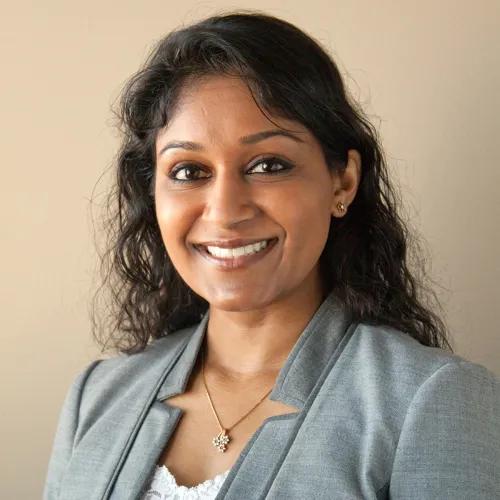
Neena Ishwari Marupudi, MD, MS
Clinical Associate Professor
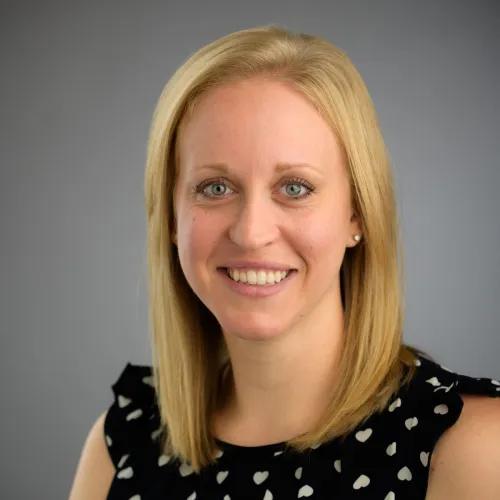
Angeline Bowman, MD
Clinical Assistant Professor
Stay Informed
Want top health & research news weekly? Sign up for Health Lab’s newsletters today!
Featured News & Stories
Rheumatologist finds contentment and community through family farm
U-M alumni return from Central Asia to seek treatment for their child at Mott
C.S. Mott Children’s Hospital first in country to implant expandable heart valve during FDA review phase

Many parents face challenges getting kids to eat a healthy breakfast before school

5 ways to prepare your child for kindergarten