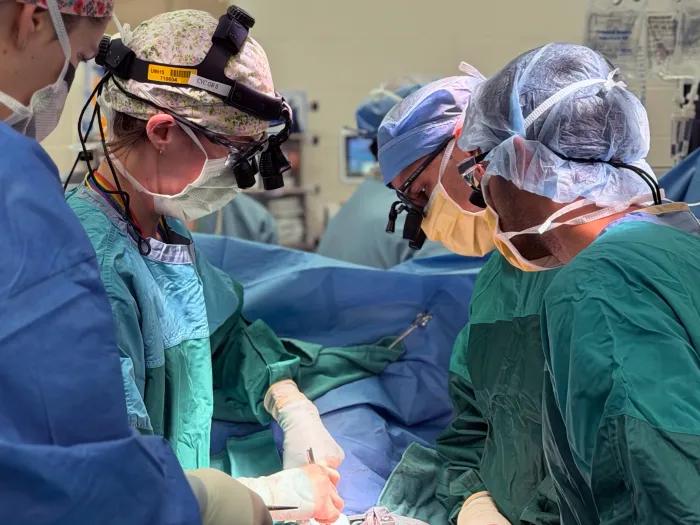
Unique Approach Removes Stents to Fix Man’s Heart
When he had no options left, a rare surgery gave this man his quality of life back.
5:00 AM
Author |
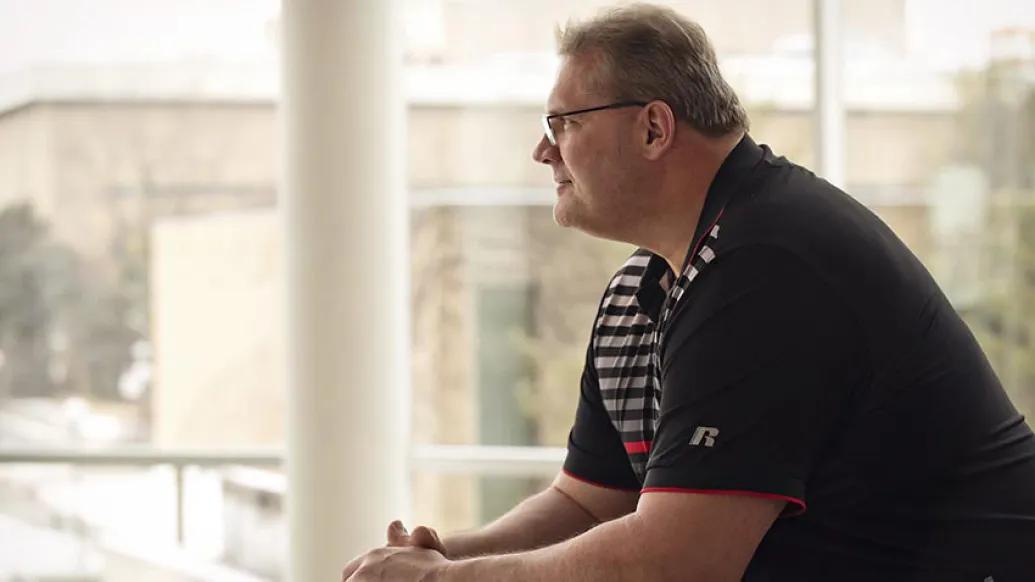
Michael Romback had already had three heart attacks, and his heart was full of stents that weren't working anymore. Because of those failed procedures, doctors didn't have anywhere else to go inside Romback's heart to fix it.
"I'd had multiple catheter procedures, but they couldn't get the stents to stop closing," Romback says. Told he was out of options, he came to Michigan Medicine's Frankel Cardiovascular Center, in a last-ditch effort to get different news.
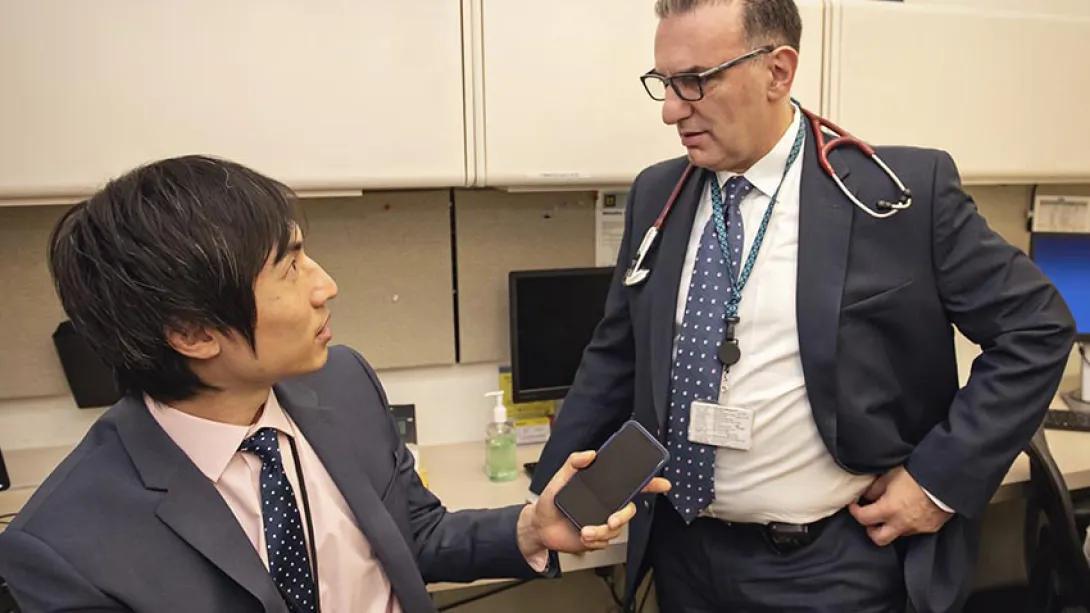
His U-M cardiologist, Stanley Chetcuti, M.D., says he knew it wouldn't be possible to revisit the stents, but thought a different approach would be worth considering. He called in a surgeon who had recently joined the faculty at the Frankel CVC to talk about partnering on Romback's care.
"There was nothing more we could do in the cath lab," says Chetcuti, an interventional cardiologist who directs the cardiac catheterization laboratory. "It was one of the few options remaining, but Shinichi (Fukuhara, M.D.) said he could do it."
A 'very rare' approach
Instead of trying to work around the stents, Fukuhara told Romback he wanted to take them out. He'd perform a procedure called a coronary endarterectomy on his heart. Fukuhara says this procedure consists of unroofing the diseased blood vessel, removing the obstructed stents and/or blood vessel plaque, and then patching the unroofed blood vessel with the patient's own tissue.
Fukuhara had done a few procedures like this before, and he says precision is key. That's because surgeons have to navigate the risk of damaging the patient's artery while taking out the stents.
MORE FROM MICHIGAN: Sign up for our weekly newsletter
"It's a very rare and one of the most technically demanding approaches, but those patients like Michael typically have nowhere to go," says Fukuhara, a cardiac surgeon at the Frankel CVC. "I removed the stents and the surrounding disease, in order to re-open the branch of the coronary artery that was blocked."
It's a very rare and one of the most technically demanding approaches, but those patients like Michael typically have nowhere to go.Shinichi Fukuhara, M.D.
He re-opened Romback's left anterior descending artery, the branch that's located within the left coronary artery and known as the widowmaker. Then, Fukuhara performed a long-segment bypass graft, transferring a vein from Romback's leg to fill the new hole in his heart. That part is similar to what happens during traditional heart bypass surgery.
"It was his only option," Fukuhara says. "He's asymptomatic now."
Chetcuti and Fukuhara agree that the strong partnership between surgeon and cardiologist was the key to Romback's great outcome.
"The two doctors are in a league of their own and their ability and willingness to work together on a solution for their patients is unrivaled," Romback says.
An easy decision
Romback wasn't prepared to debate between hospice and open-heart surgery at the age of 52.
"I knew I wasn't feeling well, and I knew my heart was getting worse, but it was a little bit eye-opening to find out I'd have only a month or two to live if I didn't do something," he says. "It wasn't a very hard decision to try the procedure."
Like Podcasts? Add the Michigan Medicine News Break to your Alexa-enabled device or subscribe for daily updates on iTunes, Google Play and Stitcher.
Besides, anything would be better than being constantly tired, even napping all evening before heading to bed, Romback reasoned.
"I was a fairly active person before, and it all came to a halt," he says, about a year before his 2018 surgery when his symptoms worsened. "There was no quality of life."
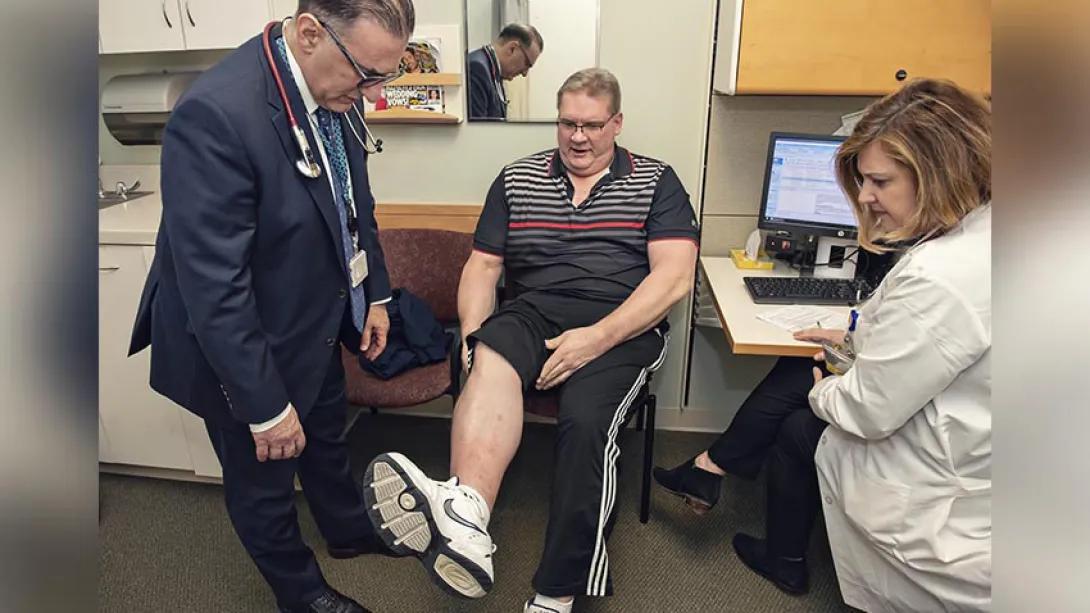
The corrections officer from southeast Michigan has been back to work for some time now, and after his leg healed from the vein graft he was able to get back to riding bikes, golfing and going for walks with his family.

Health Lab
Explore a variety of health care news & stories by visiting the Health Lab home page for more articles.
Media Contact

Public Relations
Department of Communication at Michigan Medicine
Stay Informed
Want top health & research news weekly? Sign up for Health Lab’s newsletters today!
Featured News & Stories
Aortic valve replacement: Understanding TAVR and SAVR

Heart failure ‘polypill’ improves cardiac function, cuts hospitalization risk
Texas man walking on ‘new legs’ after complex vascular procedures
How a temporary heart pump can support high risk cardiac surgery
Fighting rejection antibodies to make heart transplant possible