Understanding why kids with Fontan heart procedures face higher risks after heart transplant
Strongest risk factors for poor outcomes include low oxygen levels, hospitalizations and significant mental health challenges, research suggests
5:00 AM
Author |
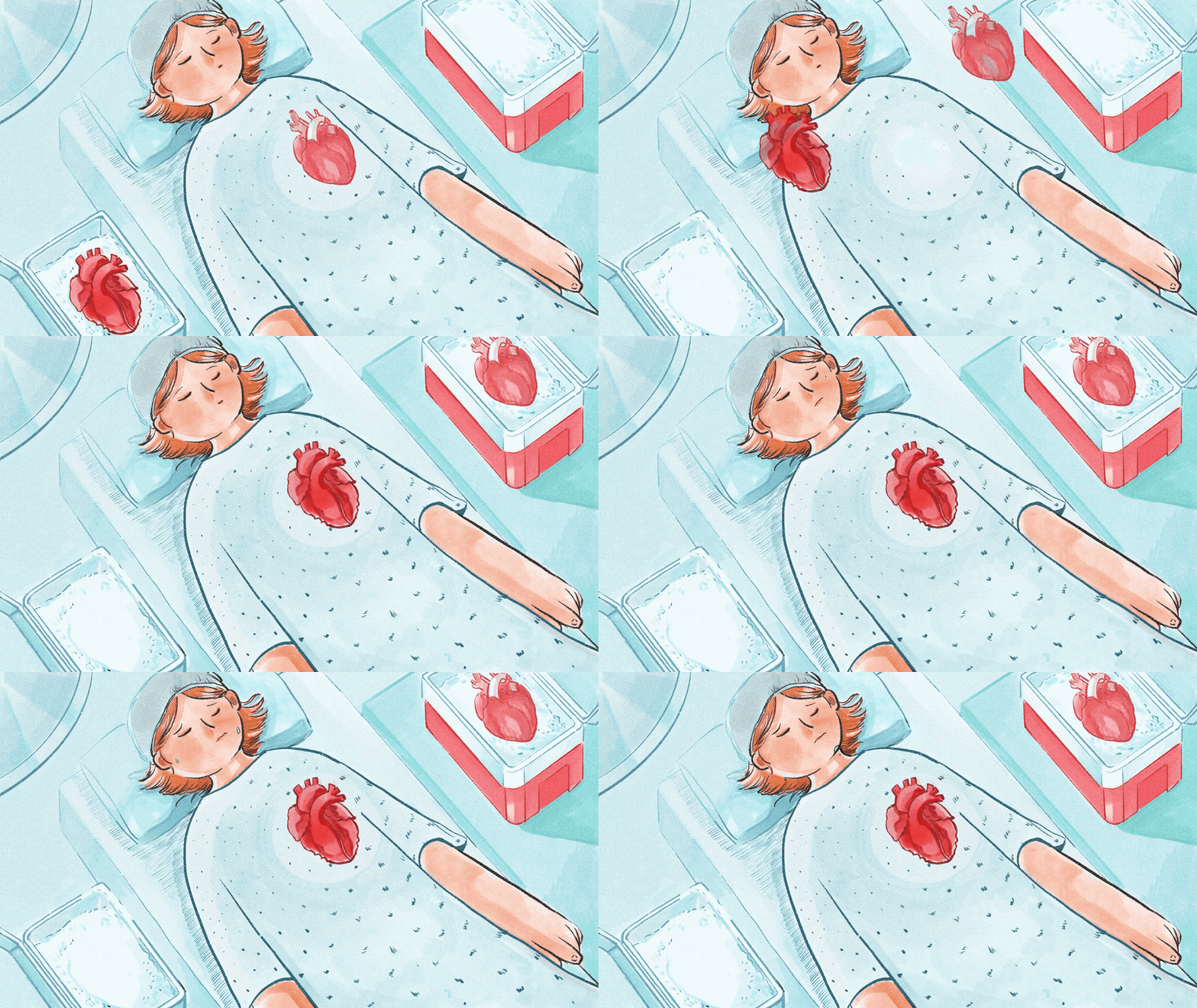
Children who undergo the complex Fontan heart surgery to survive congenital heart disease eventually need a heart transplant later in life— but they face some of the highest risks of complications and death after receiving a new heart.
The reasons behind these poor outcomes have remained unclear.
Now, a multi-center study led by University of Michigan Health C.S. Mott Children’s Hospital is shedding light on key risk factors that may explain why survival rates after transplant are lower for these patients compared to others with different forms of heart disease.
While the research, published in Circulation, suggests that overall survival among Fontan patients has improved over time, the risk of death—from the time of being placed on the transplant waitlist to one year after transplant—remains significant.
The study highlights two major predictors of poor outcomes in this group: low oxygen levels – a condition known as cyanosis – and hospitalizations for any reason in the year leading up to transplant.
Researchers also found that mental health conditions requiring treatment were linked to negative outcomes.
“This is a uniquely complex group of patients with abnormal circulation, and their risk of death after transplant is higher than that of almost any other type of congenital heart disease,” said lead author Kurt Schumacher, M.D., pediatric cardiologist and medical director of the pediatric heart transplant program at the U-M Congenital Heart Center at Mott.
“It’s difficult to optimize care before transplant when we don’t know which factors matter most. Our findings confirm just how diverse and wide-ranging the medical challenges are for these patients.”
A high risk population
Children born with single ventricle heart defects often undergo the Fontan procedure, the final stage in a series of surgeries that help manage blood flow when only one ventricle is functioning.
The procedure reroutes blood directly to the lungs, bypassing the heart chamber that can’t effectively pump blood to both the lungs and the body.
This is a uniquely complex group of patients with abnormal circulation, and their risk of death after transplant is higher than that of almost any other type of congenital heart disease.”
-Kurt Schumacher, M.D.
The Fontan procedure is designed to improve oxygen levels and reduce strain on the heart, enabling many children with single ventricle defects to live longer, healthier lives.
However, over time, a condition known as Fontan circulatory failure can develop.
This progressive, chronic state can lead to heart failure and widespread multi-organ dysfunction – often making a heart transplant the only viable option.
The challenge, explains Schumacher, is that Fontan failure doesn’t happen suddenly.
“It progresses slowly, which means by the time many patients show signs of heart failure, they’re already quite sick and no longer in the best condition for transplant,” he said.
“Identifying risk factors earlier helps raise awareness in the field about what to watch for and when to bring in the heart failure or transplant team. Our goal is to intervene before patients decline too far, because going into transplant in a weakened state makes the entire process more complicated.”
Intervening at the right time
The study is believed to be the most comprehensive report to date focused specifically on heart transplant outcomes for people with Fontan circulation failure.
Researchers looked at data from 409 patients with Fontan physiology who were listed for a heart transplant across 20 centers. Of those, 24 patients (6%) died while waiting for a transplant. Among the 341 who did receive a transplant, 27 (9%) died within a year.
The silver lining: survival rates have improved. Earlier studies showed that between 12% and 26% of patients died on the waitlist, compared to 6% in the recent cohort. One-year survival after transplant has also climbed to 92%, up from earlier estimates of 76% to 89%.
“Survival both on the waitlist and after transplant was better than we’ve seen in past studies, which shows we’re making progress,” Schumacher said. “But the mortality rate from the time of waitlist to a year after transplant remain considerable.”
“We hope this research empowers cardiologists and other providers to take proactive steps that ultimately improve outcomes and ensure patients receive the right care at the right time.”
Mental health plays a critical role in outcomes
Researchers also found that mental health has a significant influence.
Patients in the cohort who had a mental health condition serious enough to require treatment were nearly twice as likely to die within a year of their transplant.
“Patients with Fontan palliation face not only complex medical challenges, but they also experience higher risk for mental health concerns when compared to others with heart disease,” said senior author Melissa Cousino, Ph.D., pediatric psychologist and program director for the U-M Congenital Heart Center Psychosocial and Educational Program.
“As clinicians we’ve long seen how closely physical and mental health are connected in this population. Our research findings validate the work we’re doing at our center to prioritize mental health care for young people with heart disease.”
Cousino says data continue to support the importance of measuring mental health and resilience and how these factors impact the body and physical strength before and after a transplant.
“Unlike some physical risk factors that aren’t modifiable, mental health is something we can address,” she said.
“By focusing on prevention and integrating mental health support early and often, we have an opportunity to improve outcomes for this higher risk group.”

Health Lab
Explore thousands of health news & research stories by visiting the Health Lab homepage for more.
Media Contact

Public Relations
Department of Communication at Michigan Medicine
In This Story

Melissa K Cousino, PhD
Clinical Professor
Related
The dangerous intestinal disease fatal to premature babies and vulnerable infants
Stay Informed
Want top health & research news weekly? Sign up for Health Lab’s newsletters today!
Featured News & Stories
Social, financial barriers linked to reduced treatment for dangerous blood clots

Early instruction in scientific reasoning skills can help teens develop greater health literacy and confidence

Lung health expert weighs in on Zyn and other nicotine pouches

Many young adults may not be ready to manage their own health care

E-bikes are faster than ever. Are families prepared for the risks?